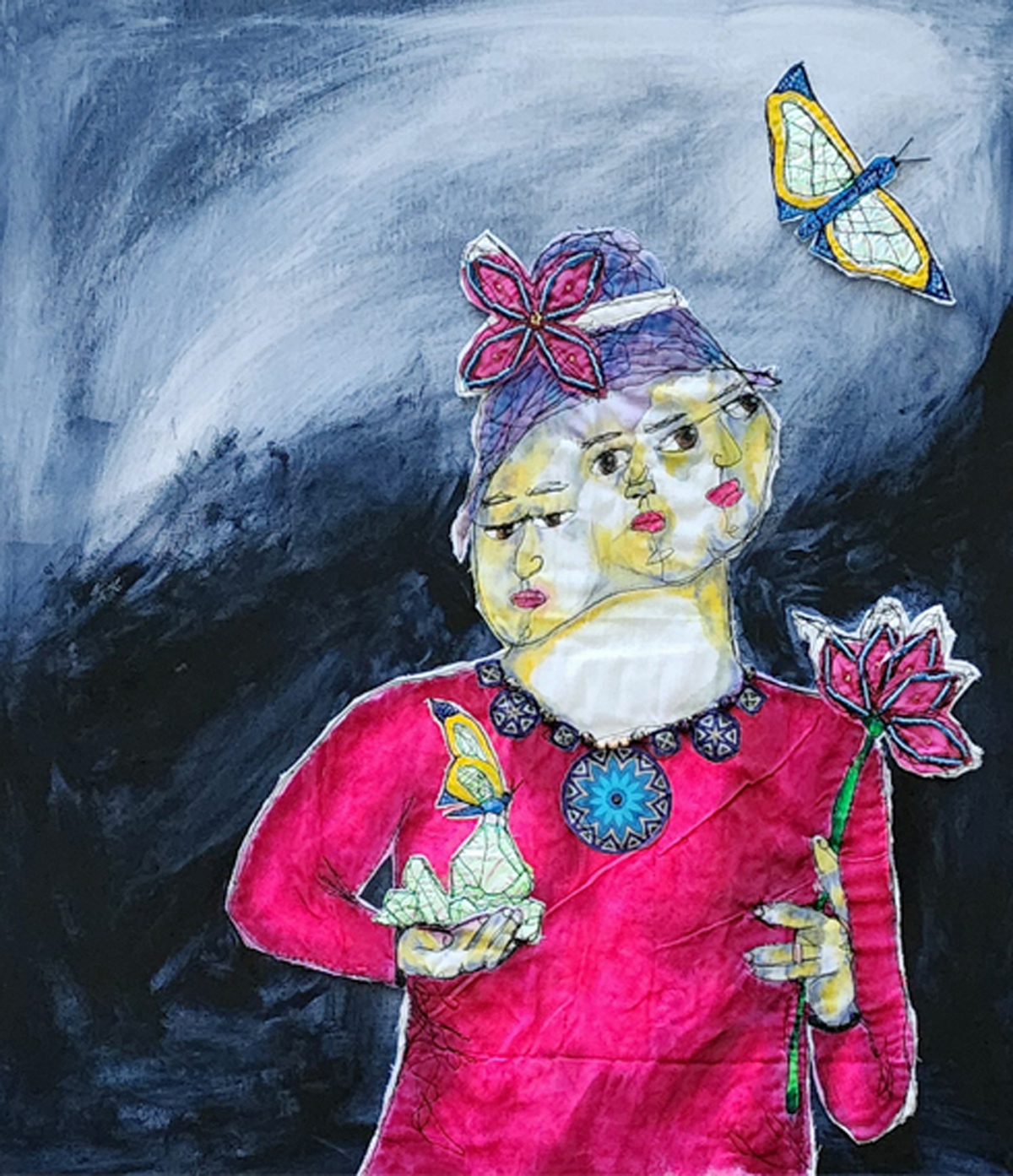
Christy Strickler, Albania/ US
Contemplating Transformation, 2024
Fabric, acrylic paint, watercolor paint, thread, glass beads, 60×70 cm
This piece captures a woman navigating middle age against a background painted to represent a whirlwind of emotions. The figure features three faces contemplating her past, present, and future. She looks downward at a butterfly emerging from a protective crystal shell, faces the viewer in the present, and turns upward toward flight, questioning the myth of post-transformation wisdom. Stitched with freehand machine embroidery, the figure incorporates custom fabric made from images of my previous artwork, layered with acrylic paint, watercolor, and glass beads.
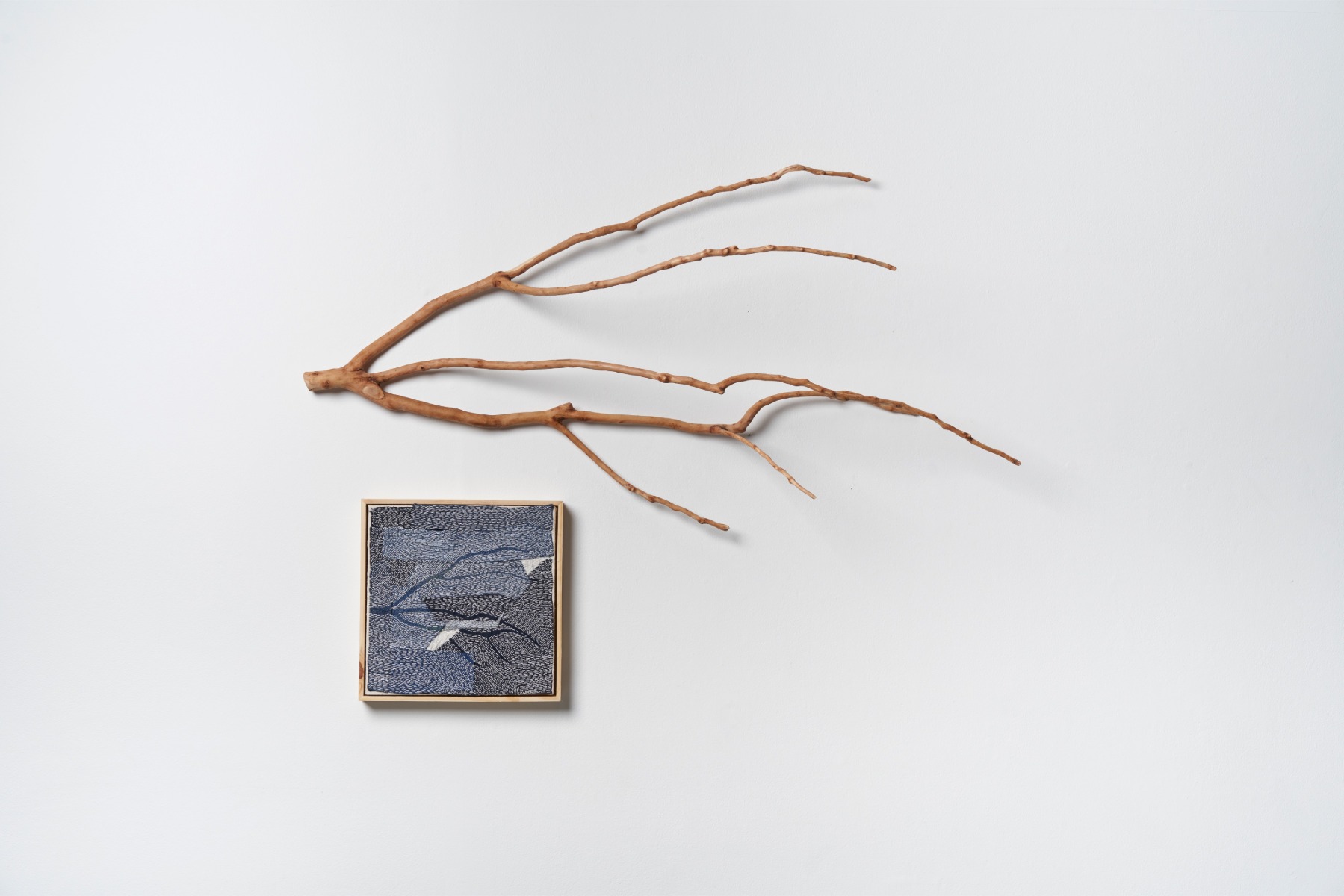
Luisa Stocco, Australia
The Space In Between, 2026
Eucalyptus branch, beeswax, repurposed textiles and cotton, 115cm x 55cm x 20 cm
For this work, the starting point was the eucalypt branch I collected. Gradually over the months of it being on my studio wall, I pruned, sanded, and waxed it. Its form and shape revealing itself over time. From the lineal structure of the branch, I stitched on to pieced repurposed textiles. I stitched and filled the the negative space or the ‘space in between;’ the shapes surrounding trees, their branches, and leaves. The continuous, meditative running stitch, making prominent the invisible - the life-giving oxygen existing within.
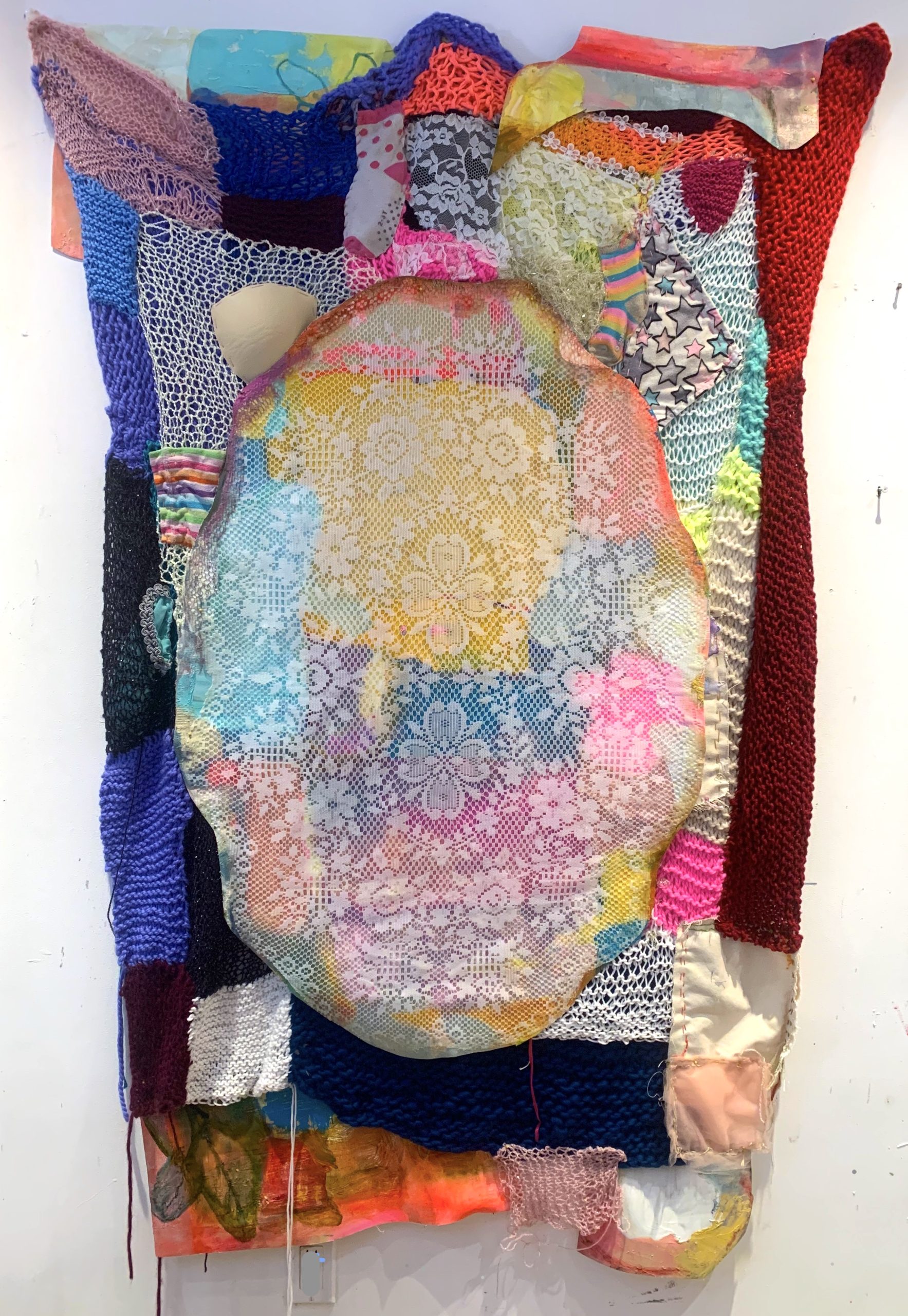
Julianne Gladstone, Canada
Double Sided Mirror, 2026
Knit wool, oil paint on canvas, repurposed domestic fabrics and baby clothing, 68" x 36"
This artwork is built on a framework of interdisciplinary art as a research method for intergenerational portraiture, repair, cartography and material research. This mixed media textile painting composed of knitting, oil painting, found domestic textiles and hand stitching; questions boundaries and hierarchies between creative disciplines. Extending the groundwork of modernist assemblage into a feminist framework, my practice centres narratives of mothering and caregiving, and the demands of doing so while maintaining a creative practice. I respond to this fragmentation through an aesthetics of repair: stitching, layering and bringing together materials and ubjects that appear disparate, but through deliberate compositional arrangements come into a kind of harmsonious tension.
Coleen M Davidson, Canada
Between the Tide , 2025
Hand painted steam set silk, silver leaf, machine embroidery, 7 panels various sizes 76 cm w x 162 cm h
“Between the Tide”, captures the moment of pause, the brief interval between the receding tide and the suspended stillness before its return to shore. In this moment the ocean floor and tidal pools reveal a microcosm of rich remnants. This moment mirrors the pause between our in and out breath, inviting us to tune into the rhythm of the ocean.
Hannah Rothschild, Canada/Israel
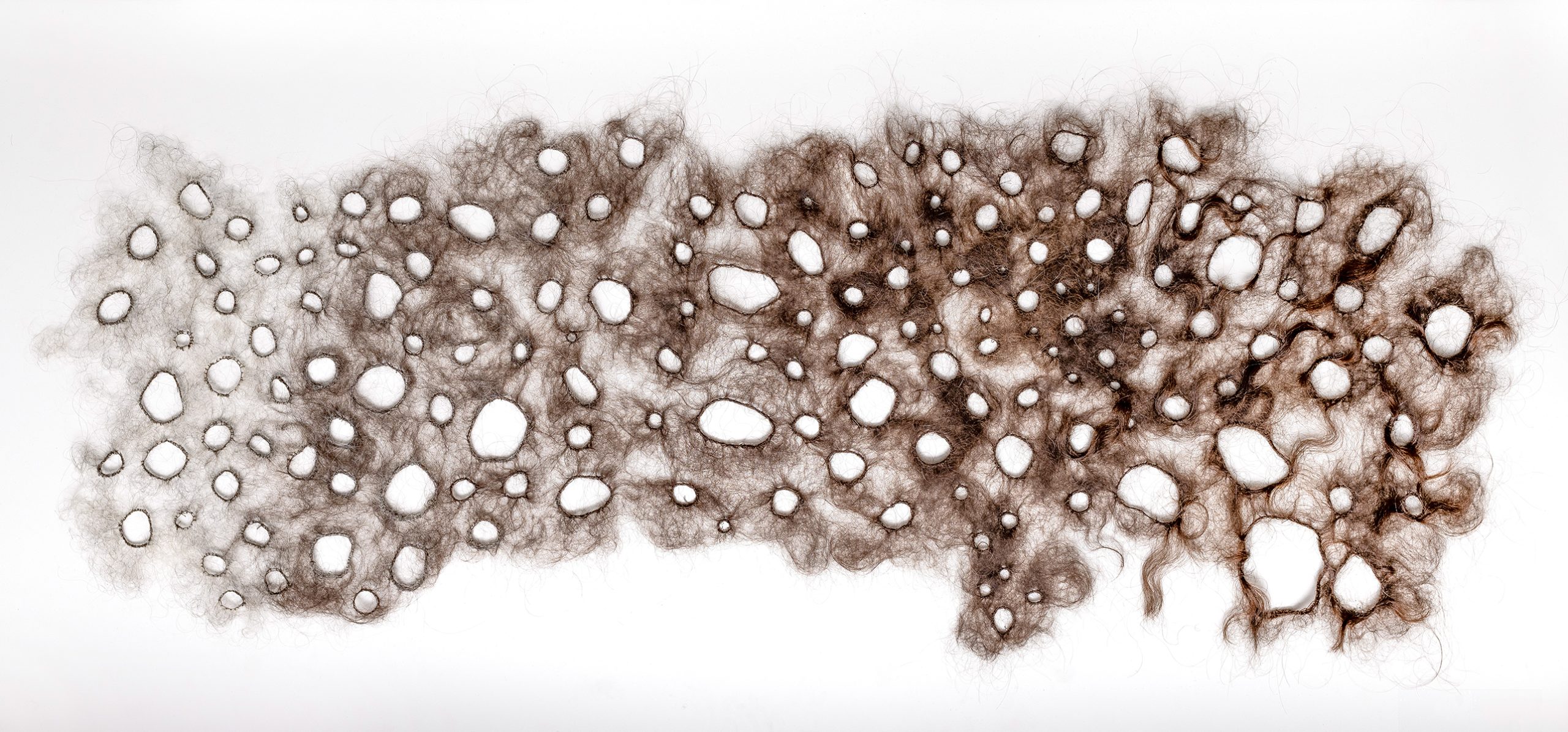
Why Are You Sitting Idle?, 2026
Human hair collected from three generations of women & cotton thread, 120 × 55 × 3 cm
The title comes from a phrase my mother often repeated when she found me sitting and daydreaming instead of being productive. Created from the intertwined hair of three generations of women—my late mother, my daughter, and myself—collected over six years, the work reflects an inherited drive toward labor and productivity passed from one generation to the next. Like hair itself, which grows continuously from birth to death, this impulse persists across time. The porous structure suggests both connection and erosion, questioning the rewards and costs of a lifetime devoted to doing. Currently exhibited at the Eretz Israel Museum Biennale of Craft & Design. Photograph by Eran Ackerman.
Leisa Rich, Canada
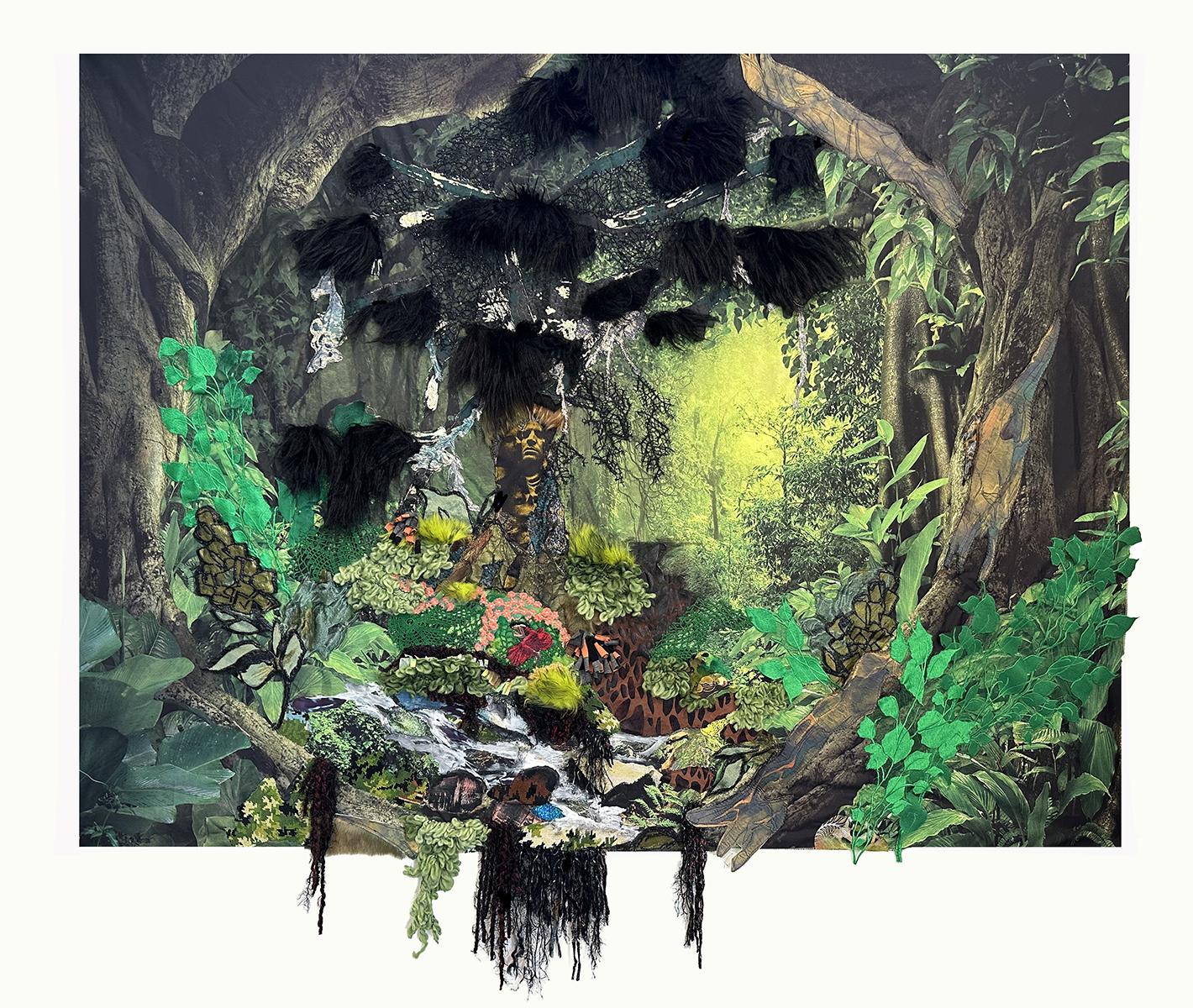
No Man's Land: Portal, 2026
Repurposed fabrics/clothing, faux fur, yarn, dyes, thread, 68" X 76" X 3"
No Man's Land: Portal explores protection and vulnerability, and acknowledges the pervasive threats posed by environmental degradation and human-animal climate conflict. A woman sleeps peacefully beneath a tree, symbolizing trust in nature, while the men trapped within the trees represent entrapment, exclusion and punishment. The piece encourages viewers to reflect on our connection to the environment and the urgent need for collective action against climate challenges.
Sheila Thompson, Canada
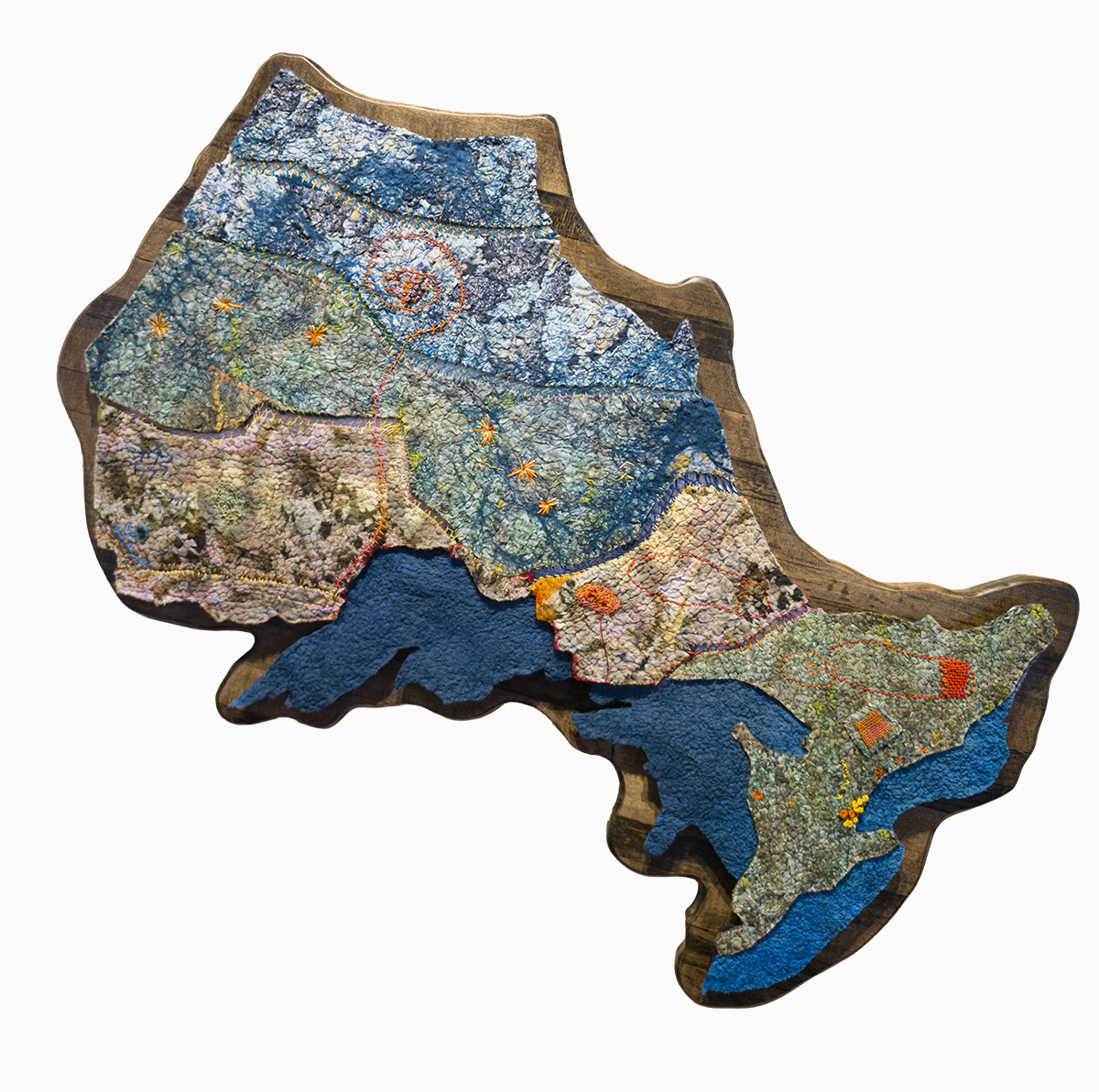
Taxpayers' Lament, 2026
Wet felted merino wool and silk nuno felts printed with my photos of lichens, embroidery threads, wooden base, foamcore, 33"W x 28"H x 3"D
My artwork is a segmented map of the province of Ontario stitched back together with bridging stitches. The embroidery symbolizes the impact of ill-conceived legislation on many aspects of the environment. The current provincial government loves a big disruptive project that will forever undermine the integrity of the environment and the gentle life of the non-human inhabitants. Trample tender habitats for the 413 highway, erode the Greenbelt, deregulate environmental protections, excavate the ring of fire, build nuclear power plants, strip down education and health to its bare bones. We don't have enough thread to mend all the holes.
Susan M Clark, Canada
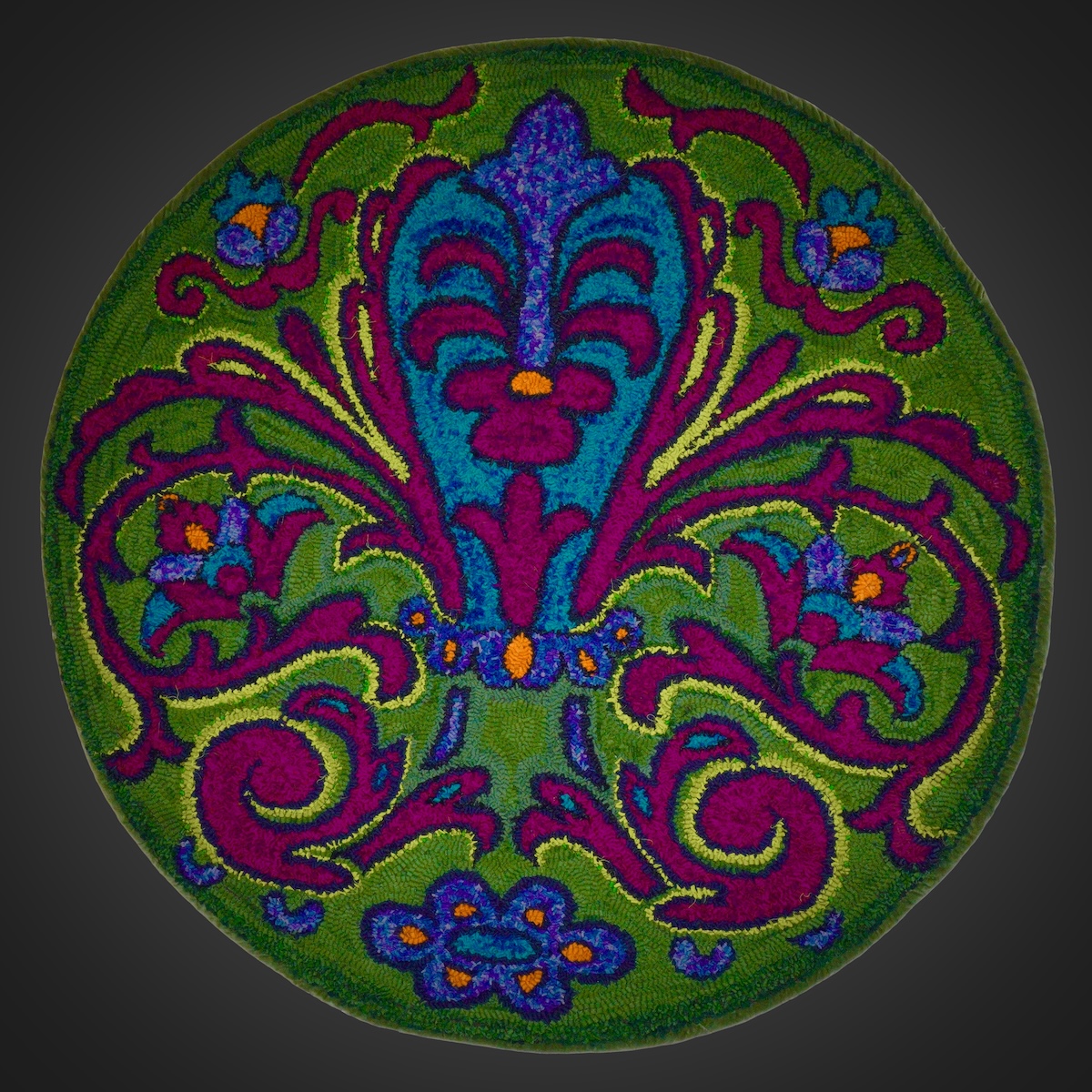
von Saskatoon rug, 2021
hand punched rug, 150 cm X 1.5 cm
Variegated hand-dyed wool yardage rug hand punched on burlap.
Wilma Butts, Canada
Anemone, 2007
Silk, 43" x 59"
Anemone' explores the transparent ethereal beauty of the underwater world. Anemone is alive with movement, texture and dimension. Sea anemone are amazing sculptural works of art. Their ocean environment is under increased threat in the modern world. By bringing their unique beauty to the surface we can create awareness of their existence and the need to respect and preserve their world.
Bénédicte Blanc-Fontenille, France
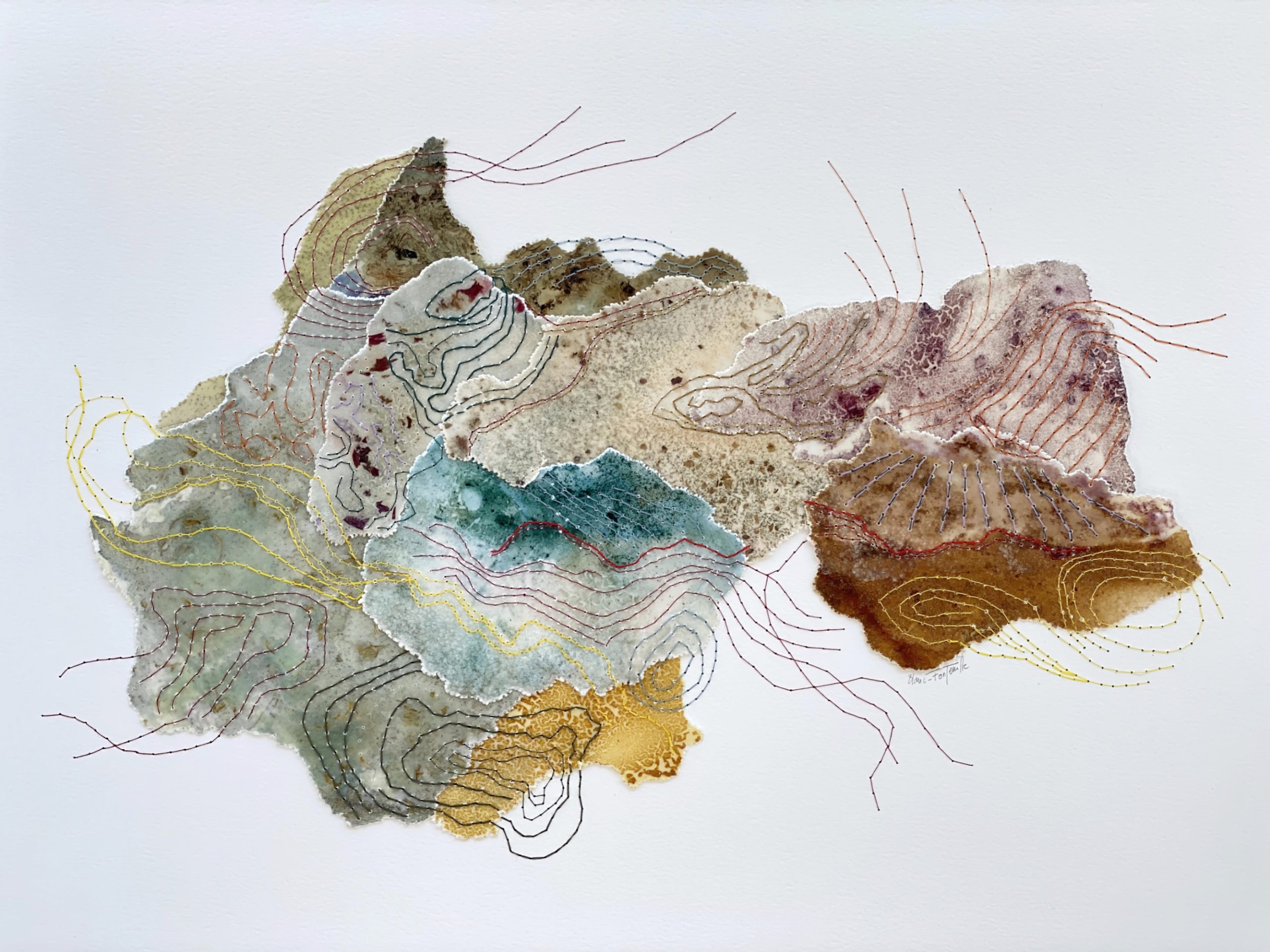
L'attache, 2026
threads, bio materials (made with vegetal) on paper, encaustic, 50x40 cm
All of nature sings, telling stories and legends passed down through the ages. It inspires humanity, thus creating a true dialogue. It is humanity’s memory; it preserves the paths we carve out. A. Krenak says: “Rock and water involve us in such a marvelous way that they allow us to express the ‘we’: we-rivers, we-mountains, we-earth.” As in Chinese painting, emptiness is perceived here as the space where breath is generated and circulates, where transformations take place.
Janet Jaffke, France/ US
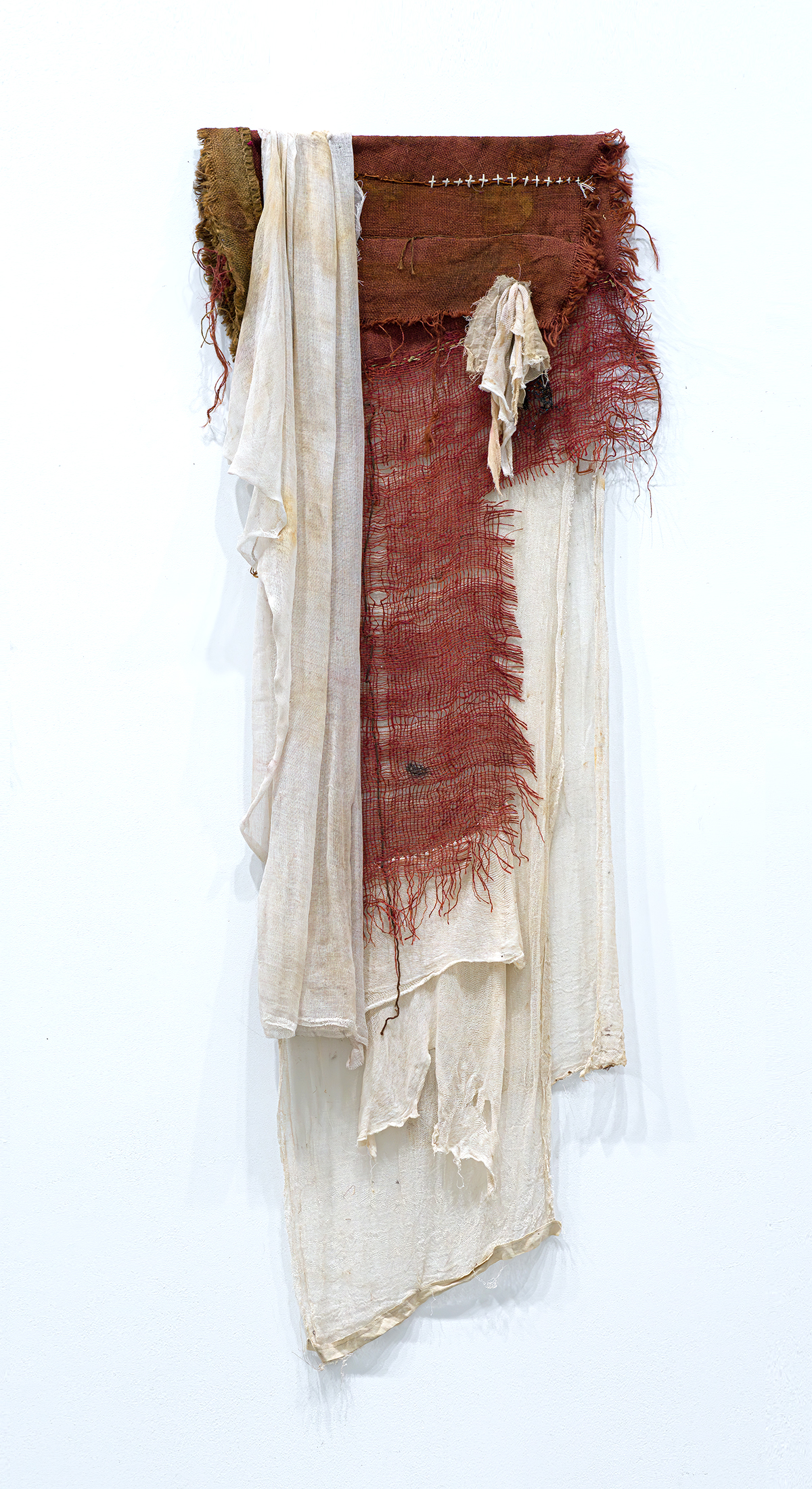
Bleeding Heart, 2025
burlp, gauze, stitch, 25" wide x 83" long
"This textile wall piece explores the fragile terrain between vulnerability and resilience. Layers of worn gauze, burlap, and hand-stitched fabric hang loosely, revealing frayed edges, tears, and traces of repair. The rust-colored central form suggests both wounding and healing, while the soft white cloth evokes memory, comfort, and protection. Delicate stitching serves as a quiet gesture of mending rather than concealment, honoring the marks left by time and experience. Through the contrast of strength and fragility, the work reflects on the ways we carry loss, tenderness, and endurance, finding beauty and richness in what remains imperfect and unfinished. "
Markia Liapi, Greece
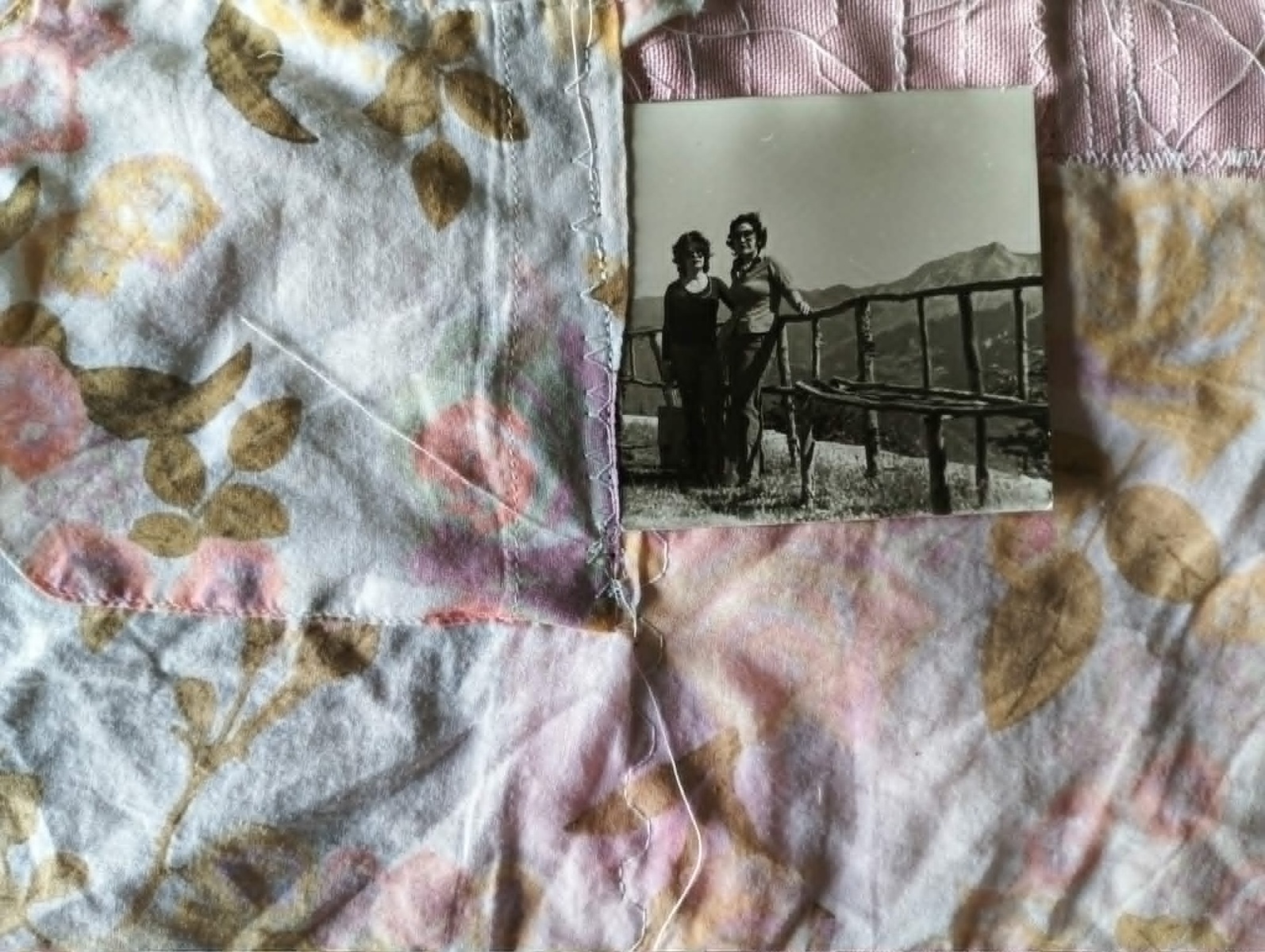
Out, 2026
Textile samples, archive photo, threads, sewing machine., 25 x 20 cm
This is a textile photo collage, made from found photos and textile samples I worked on during the past winter. Driven by my intention to work on both archive photos and textiles, "Out" is my out-of-the-closet first photo/textile collage, made while I was experimenting with my first sewing machine. "Out" is an open call not only for the excursion that the women in the photo may be aiming for, but also for experimentation, freedom, and experience.
Eszter Bornemisza, Hungary
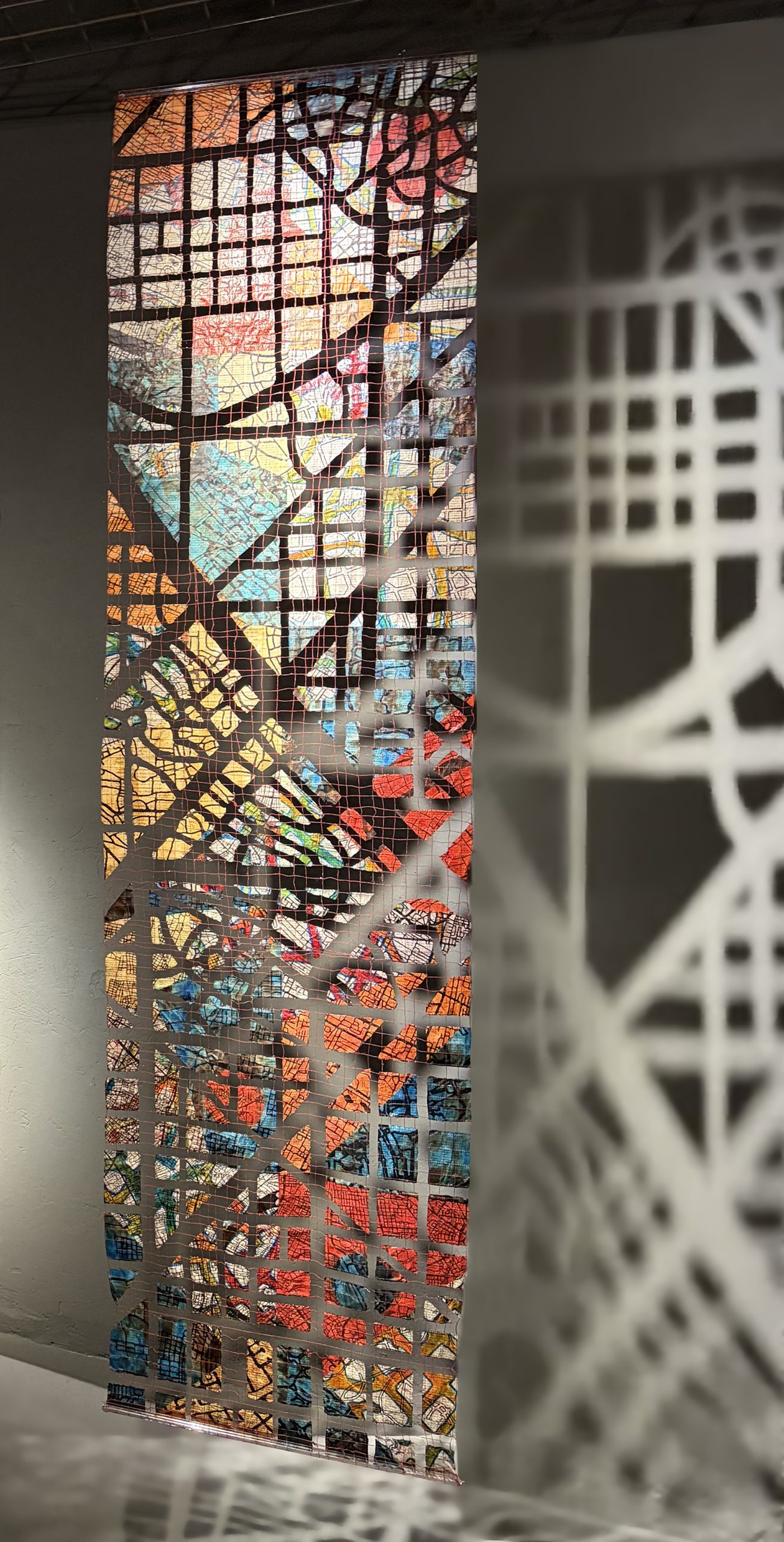
City Unfolding I., 2026
Overprinted, painted newsprint, cut, machine stitched, 200 x 60 cm
"My work engages systems of orientation at the point where they begin to break down. I am drawn to structures that claim authority—maps, grids, networks—but expose their instability under pressure. Working with overprinted and painted newsprint as a textile-like medium, I construct fragile, translucent surfaces that refuse to behave as stable supports. What should connect instead strains: elements pull apart, distort, and threaten to tear. The grid does not contain—it holds just enough to register its own failure. "
Judit Eszter Kárpáti, Hungary
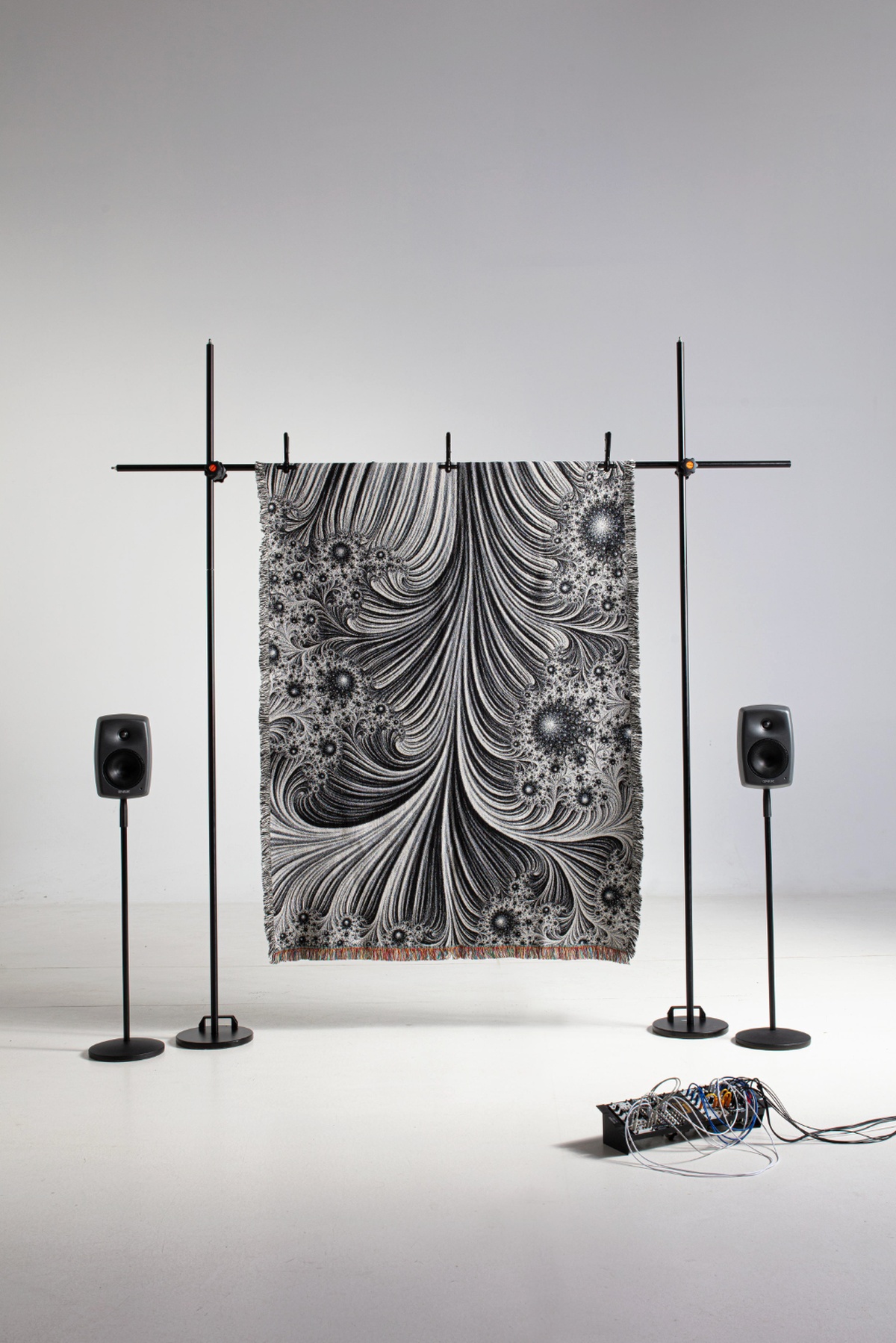
Dung Dkar Cloak I., 2023
jacquard weaving, silver spun thread, modular synthesizer, speakers, custom electronics and software, Variable dimensions
Dung Dkar Cloak is a soft interface specifically created for intuitive musical interaction. It is a jacquard woven fractal tapestry augmented with silver spun yarn in order to enable an intimate explorative material experience manifested into sound. The research focuses on human-material interaction and multisensorial experiences which extend the user's perception and go beyond flat, conventional interface design. This art-led multidisciplinary research is an interactive installation that explores the intersections of fractal geometry, interface design, sound synthesis, digital jacquard textiles via crossmodal perception.
C. C. Diamant, Ireland
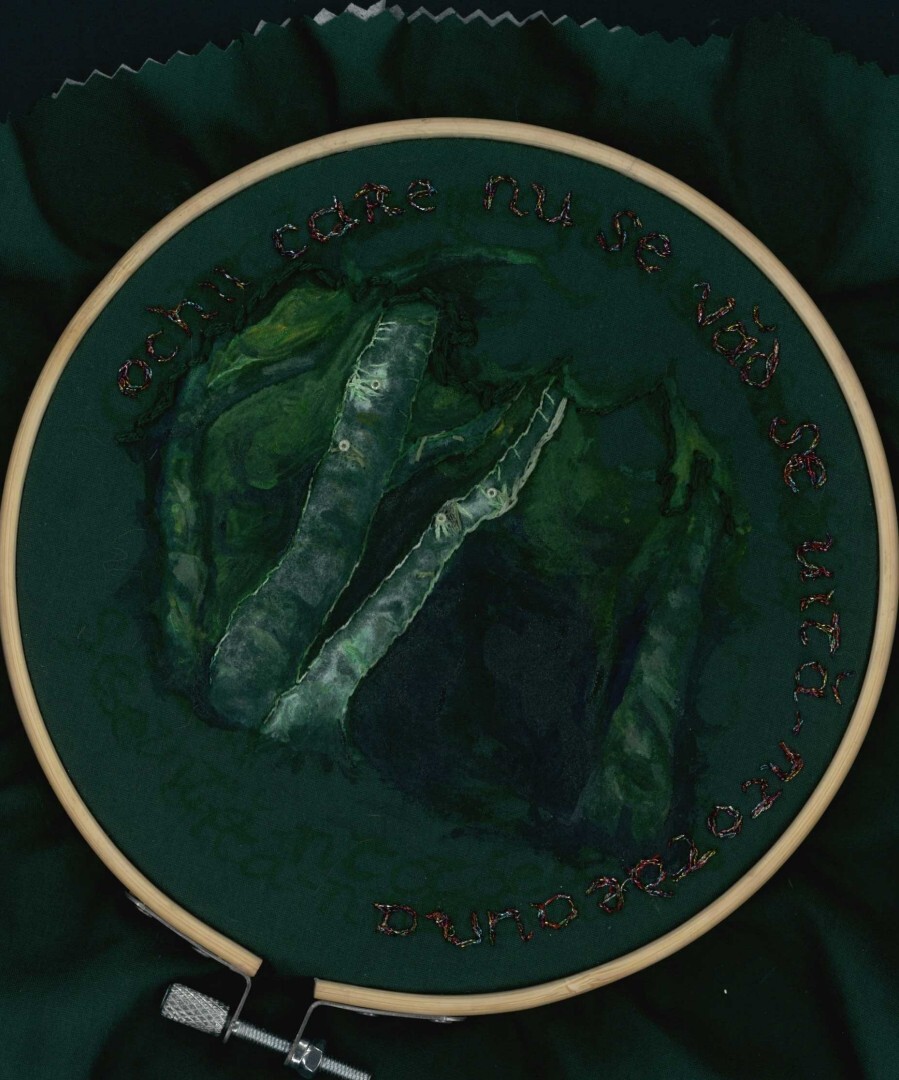
unseen eyes, 2026
Fabric paint, embroidery floss, and beads on cotton, 14 cm x 14 cm
I combined fabric paint and embroidery to create a handkerchief meant to dry the “eyes” of silver birch trees when a branch falls off because of insufficient light. While in Transylvania the tree is associated with numbing pain through its sap (here represented with beads), in county Cork it's meant to ward off the faerie folk. The glitchy text reads an ambiguous Romanian saying, "ochii care nu se văd se uită-ntotdeauna", which can be translated either as "the eyes that do not see each other always forget each other" or "the eyes you cannot see are always watching”.
Jorie Johnson, Japan
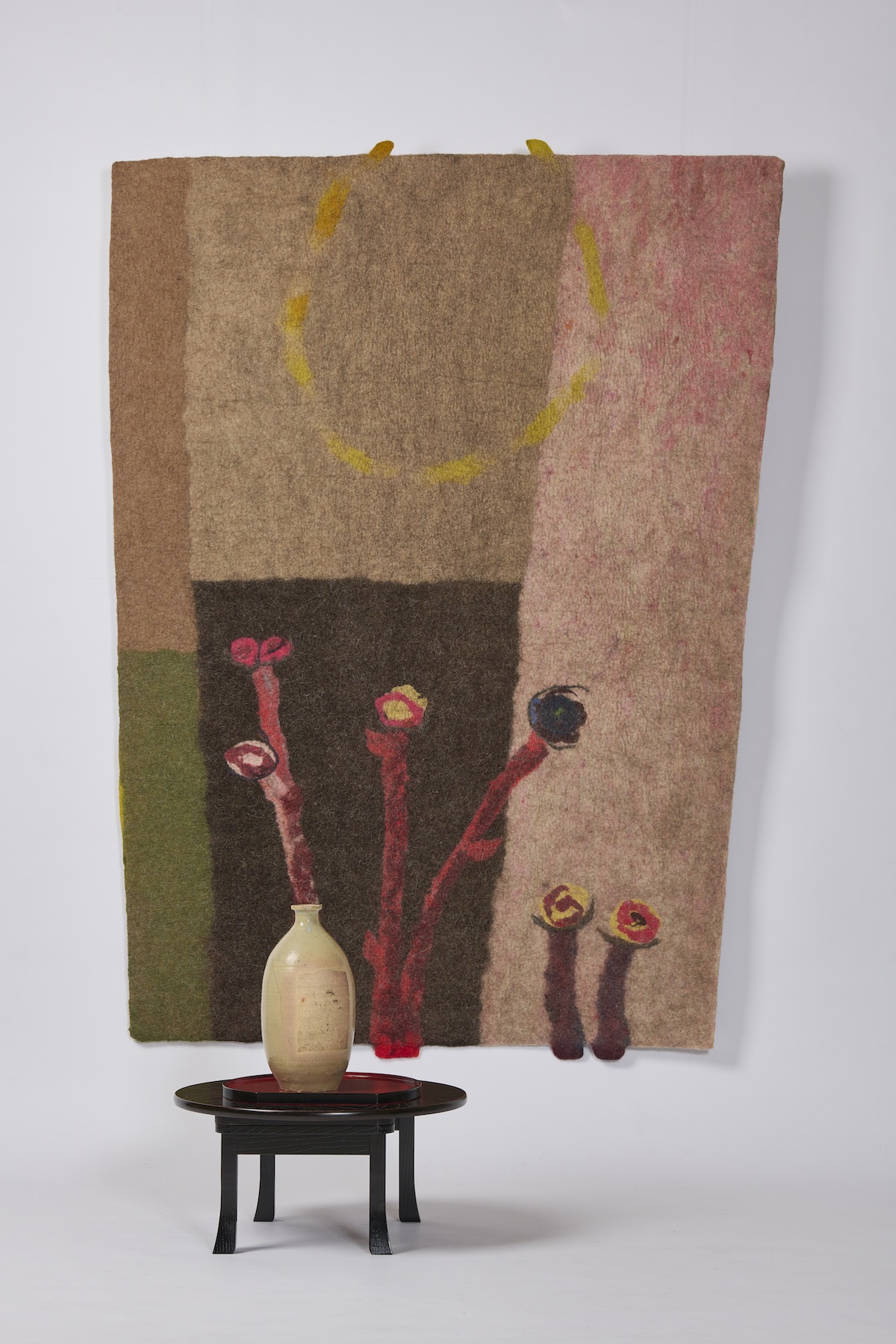
My Rising Sun Within 25-Y, 2025
wool, natural and acid-dyed colors, 106-122.5 cm x 162 cm
I always hope to express the capability of the wool friber through my feltworks. Shape can be adjusted as there is not dependence on the loom. Colors mix naturally as they intermingle and strengthen during the process. Not only is there poissibility for two-dimensional work but the seamless practice of using wool for projects from boots to art objects has such a long history. I like walking back into the past by protecting this medium and promotinmg its use for future exploration.
Chiaki Dosho, Japan
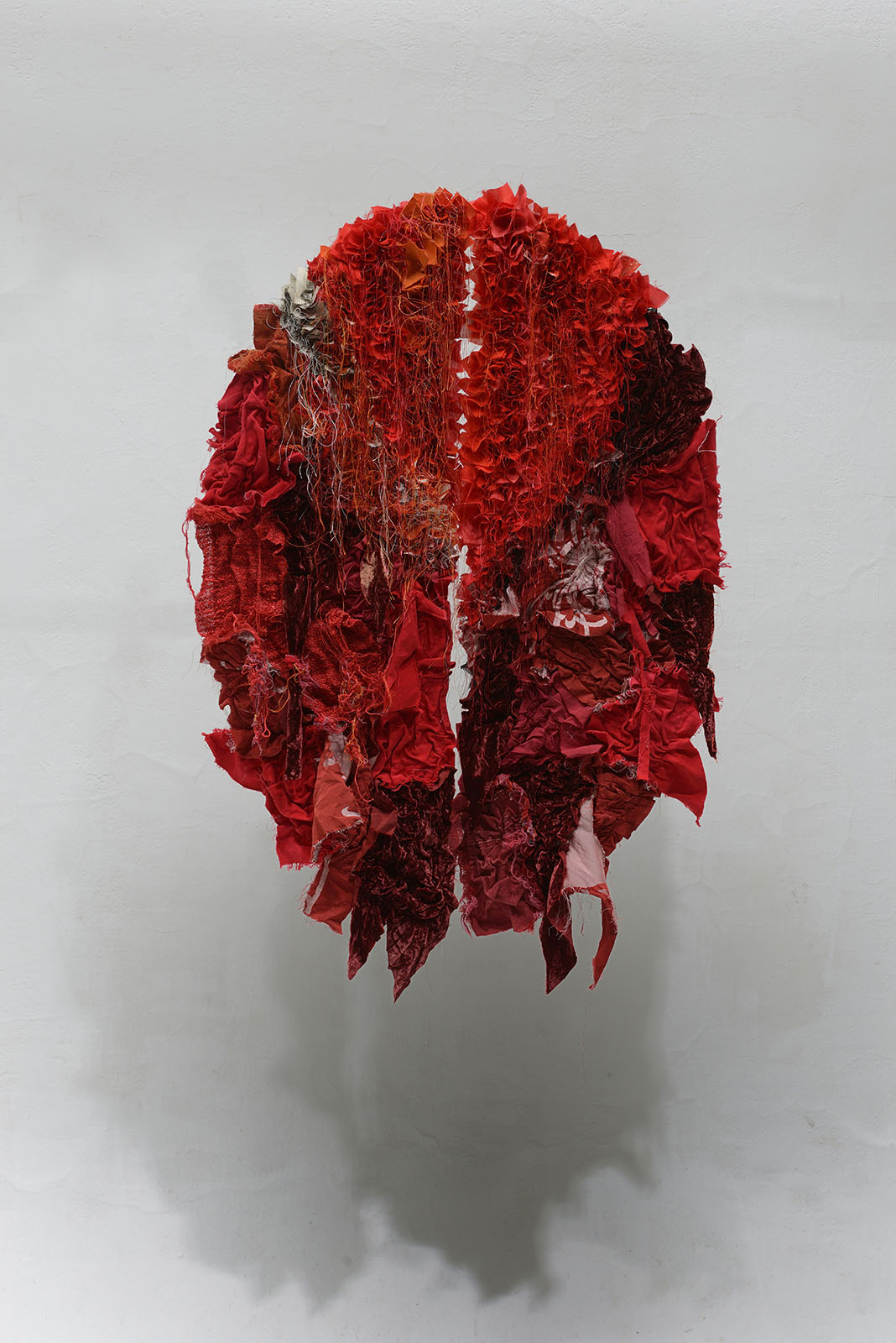
Cocoon/Red, 2022
"Old Japanese kimono (silk), my old clothes (wool, cotton, synthetic fibers, etc.) , H100 x W70 x D2.5 cm"
About my work: I create art based on the themes of life, death, and time. This is exemplified by my cocoon series.
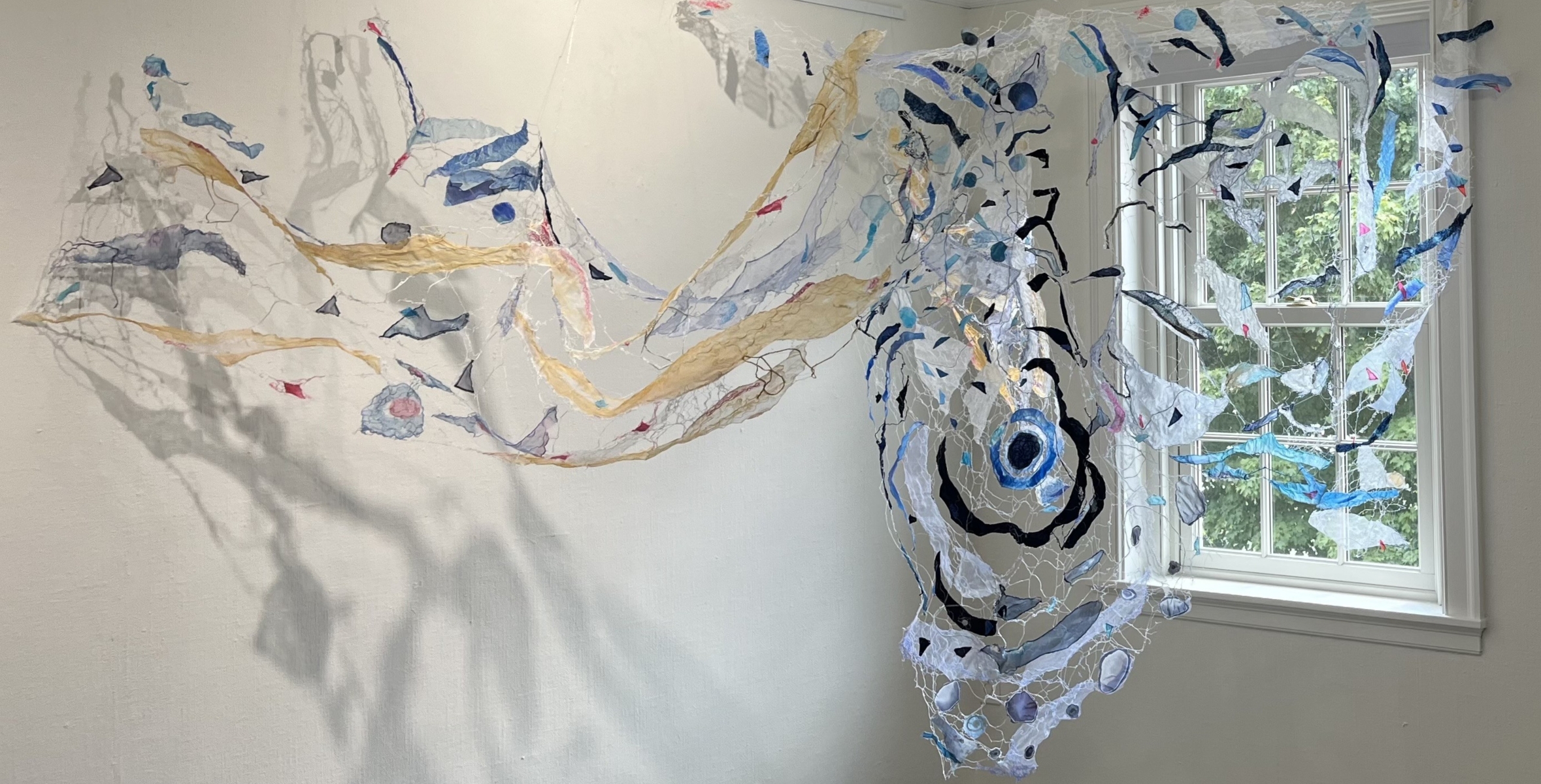
Kate Sellar, New Zealand
Rhizome, 2014
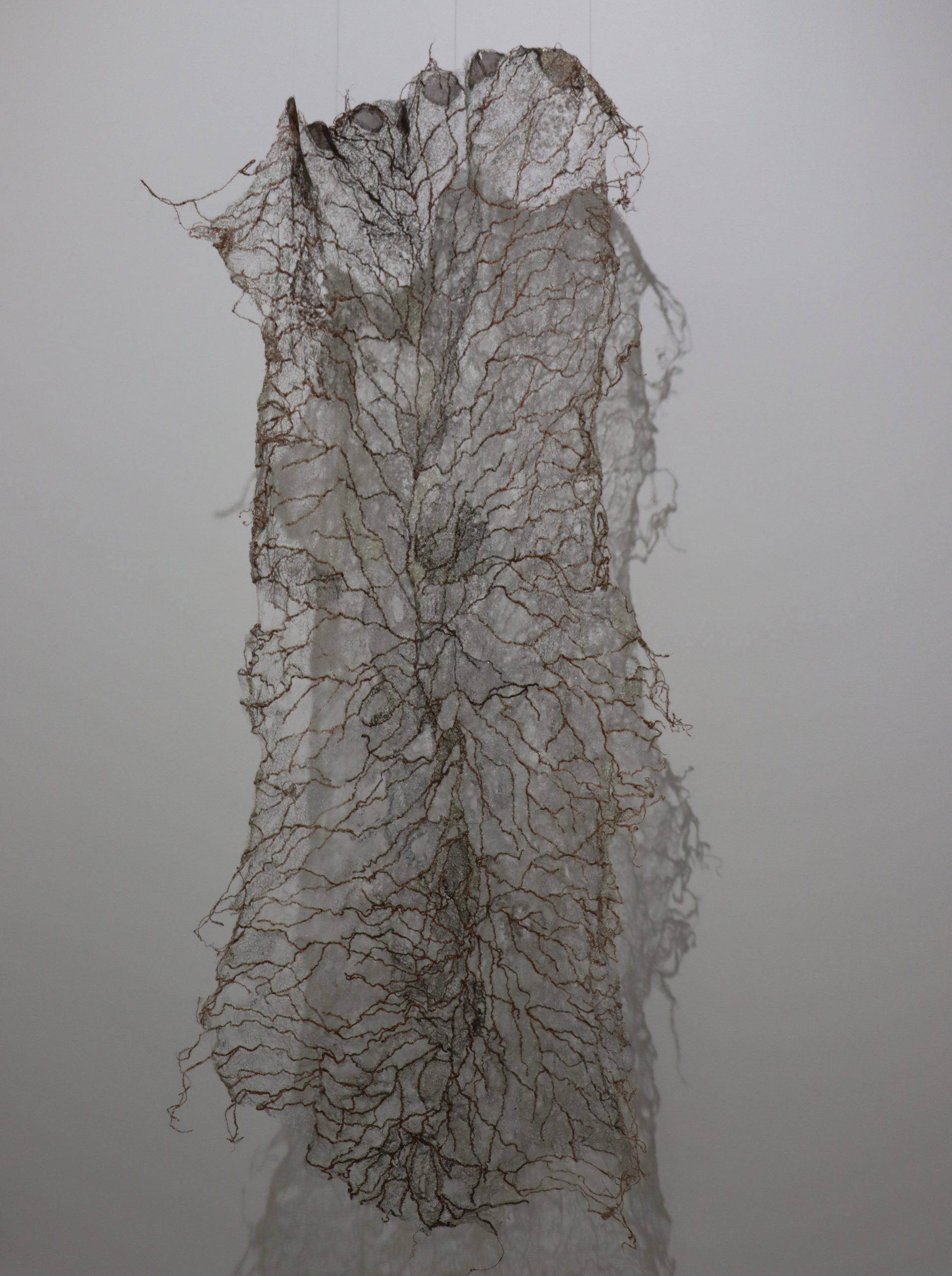
Nylon thread, copper wire and metallic threads on dissolvable fabric, 80cm width, 1.5M length
Rhizome is constructed through layers of free machine stitching using nylon filament, metallic thread and wire on a dissolvable substrate. The work developed through the repeated stitching of interconnected loops that gradually form the surface. Once completed, the substrate is dissolved in hot water, leaving behind the delicate net-like structure. Inspired by interconnected natural systems, the piece explores growth, connection, and place. Light is an important component, casting shadows that extend the work beyond its physical form.
Marita Setas Ferro, Portugal
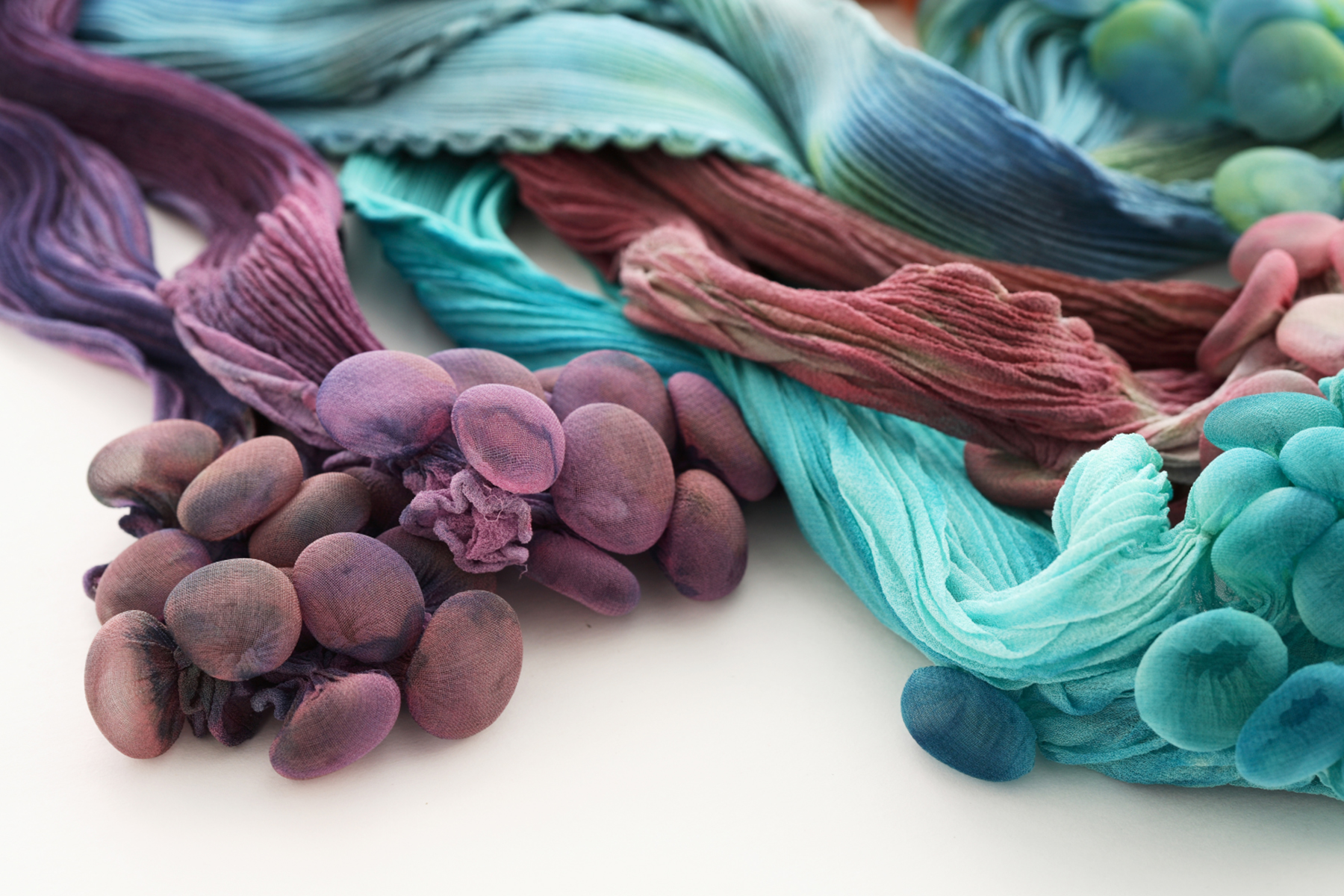
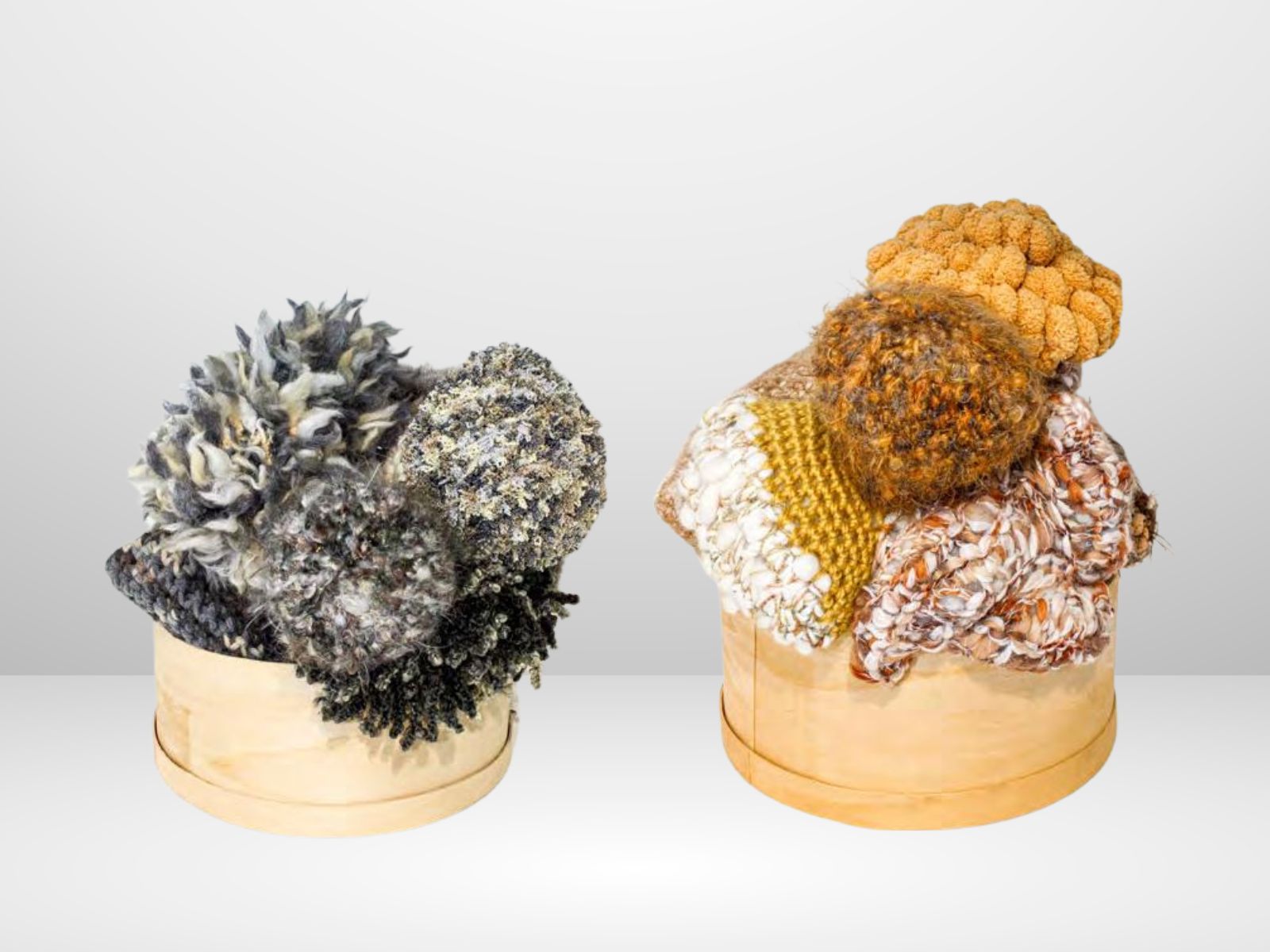
Moss and Mushroom, 2018
100% recycled polyester padding, wool, acrylic, polyester and polyamide yarns, 28 x 23 cm and 28 x 28 cm
Moss and Mushroom belong to the Things from Nature series, an ongoing sculptural investigation into the intelligence, resilience, and interconnectedness of natural systems. Inspired by the growth patterns of mosses and fungi, the work translates organic structures into tactile textile forms through crochet and knitting. The thread serves as a medium for examining the processes of accumulation, adaptation, and transformation that occur within living ecosystems. Through hand-based construction and the use of carefully considered materials, the sculpture reflects an interest in the relationship between contemporary craft, ecological awareness, and the often-overlooked complexity of the natural world.
Selma Eduarda Pereira, Portugal
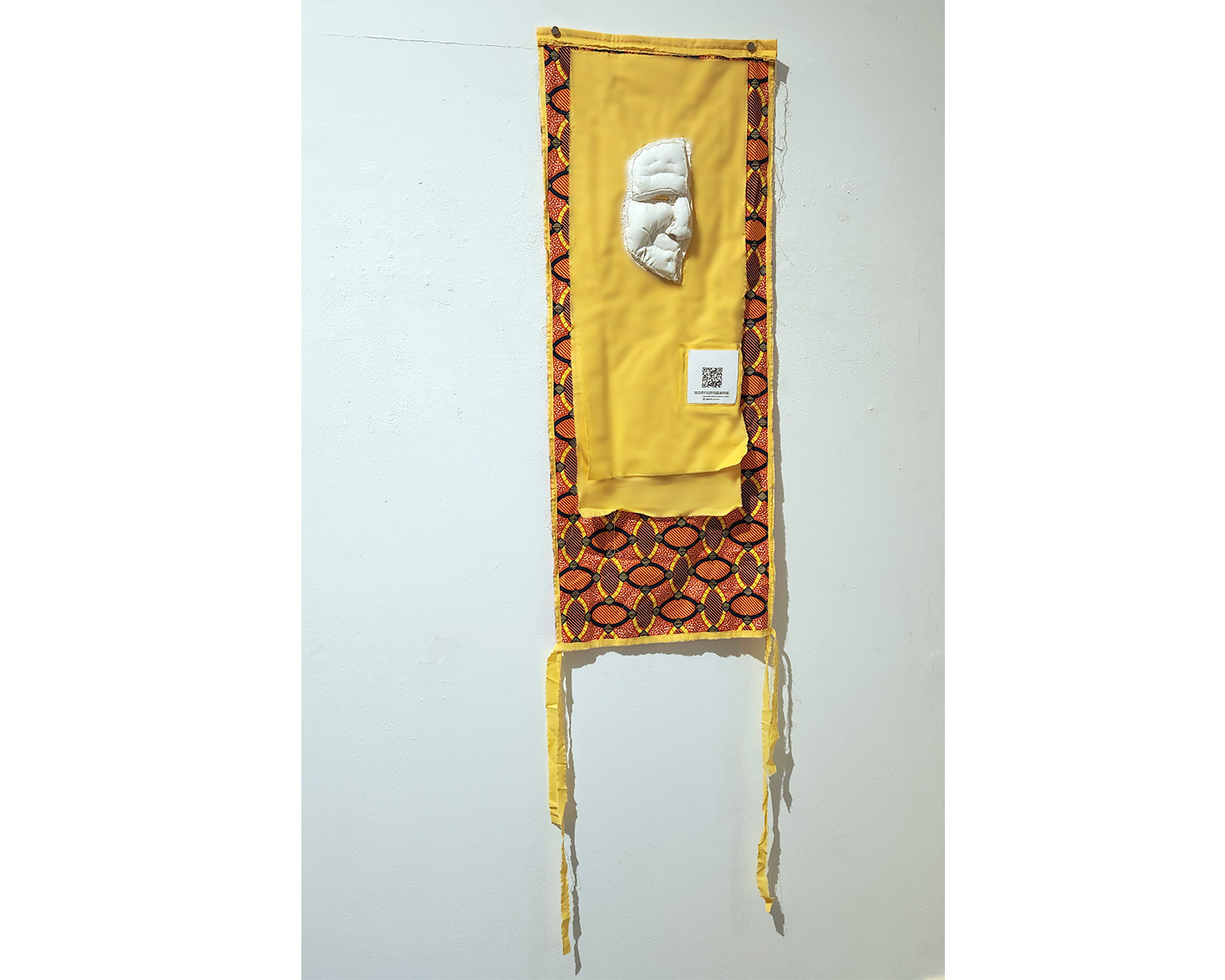
Síntese, 2024
fabric, 70x 100cm
Sintese/Synthesis explores the human face as a repository of identity, culture, heritage, and memory. The artwork combines a textile bas-relief depicting part of a male face with an augmented reality experience that reveals a synthesis of multiple faces through a short animation. Emphasising the tactile qualities of fabric, the work invites physical engagement while AR functions as a complementary layer rather than the focal point. By merging textile art and digital technology, Sintese/Synthesis reflects on identity as a fluid and multifaceted construct shaped by personal experience and collective memory. AR experience access: https://selmaeduarda.pt/sintese-revisited/
Sunaina Bhalla, Singapore
Second Skin, 2025
polyester threads using free motion embroidery on sewing machine, 36 inches x 36 inches
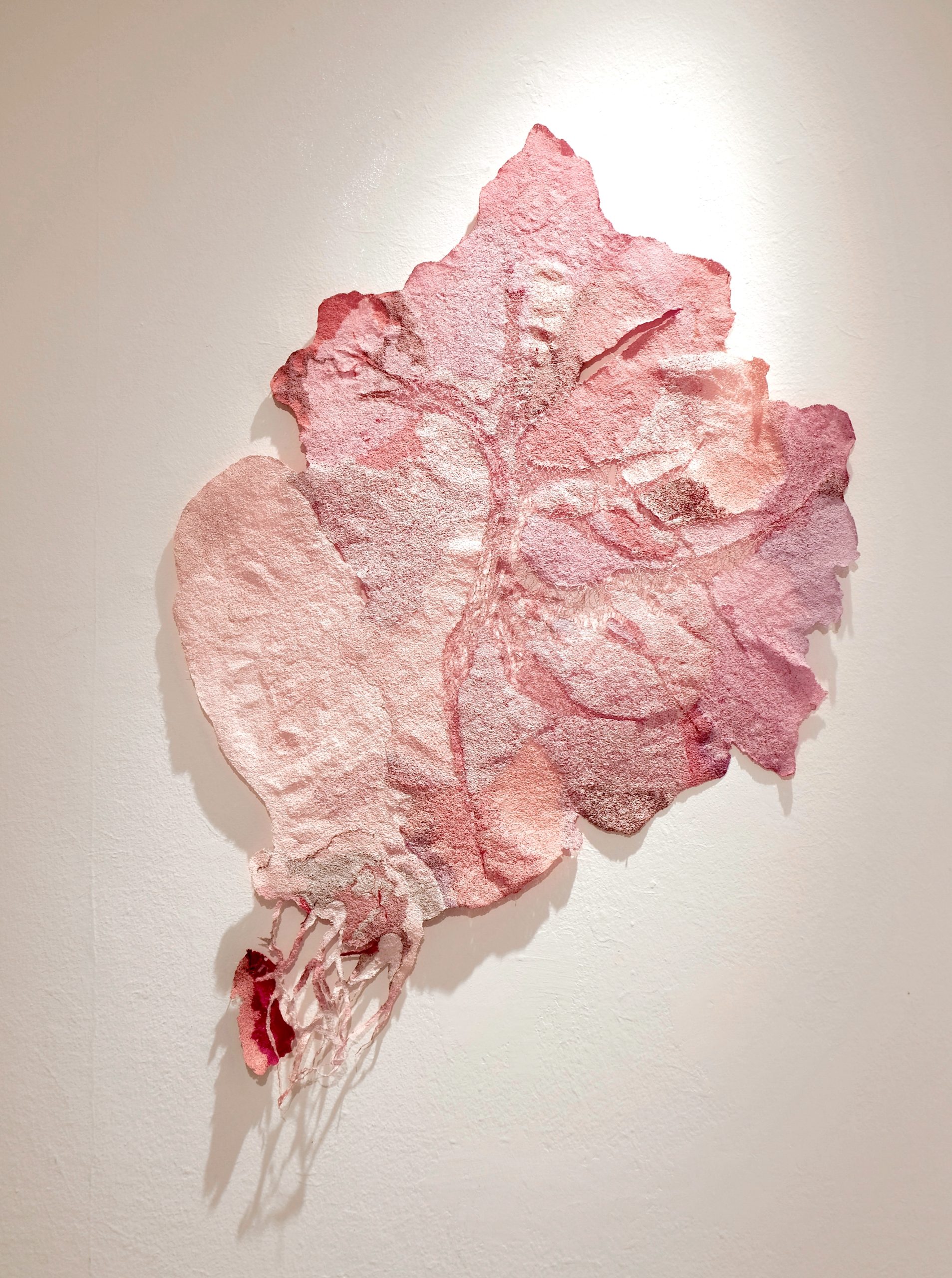
The process of embroidery is cathartic, while this work explores the balance between the ongoing trauma of pain and the relief found in stability. Created through free-motion embroidery on water-soluble fabric, the piece undergoes a transformation when immersed in water, dissolving the base material and leaving behind a delicate new surface—a second skin. Regenerative, resilient, and strong, this process symbolizes the capacity to heal and create new layers over old scars. The work inhabits the space between flow and stillness, proposing movement as an enduring aspect of the human condition and a source of hope, acceptance, and renewal.
Gizem Yücelen, Türkiye
The Cycle of Residual Grief, 2025
Silk poplin, Embroidery Thread, Metal, 45x45x15cm
The Cycle of Residual Grief explores how grief, memory, and making are transmitted across generations. The work is built from fragments of embroidery originally made by my grandmother as a young woman and later recovered from the remains of a house fire. Preserved for decades, these remnants passed from my grandmother to my mother and eventually to me, carrying not only memories of loss but also the inherited knowledge of handcraft and embroidery. Through repetition, alteration, and collaborative stitching with my mother, the work transforms a family heirloom into a reflection on mourning as a learned and embodied practice. It asks how grief, like craft knowledge, is held, transmitted, and reshaped over time.
Megan Segre, United Kingdom
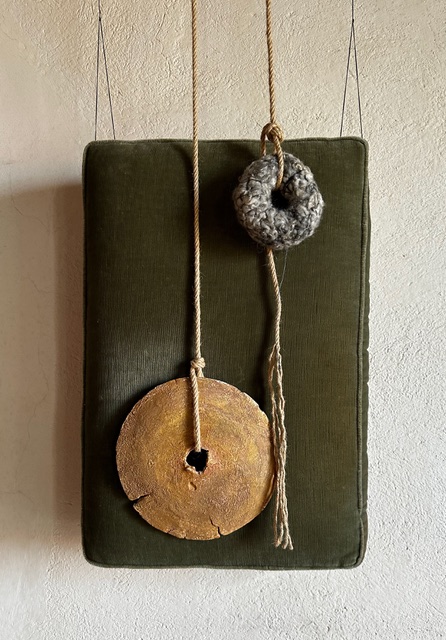
In Tension, 2026
Wool, thread, clay, rope, pulley, plaster, pigments, sofa cushion, 50h × 21w × 10d in
In Tension (50h × 21w × 10d in.) is inspired by historical loom weights—objects central to the making of textiles and, in turn, the spaces we inhabit. Reinterpreted in contrasting soft and coarse materials including wool, rope, clay, natural pigments, ink, plaster, and pulleys, these enlarged forms transform utilitarian weaving tools into contemporary sculptures. Suspended from rope and installed on a soft velvet sofa cushion, the work evokes the domestic interior, elevating ordinary textile objects into vessels of memory. In Tension explores the tension between utility and preciousness, revealing how textiles shape the home, carry memory, and embody resilience across generations.
Jayne Falconer, United Kingdom
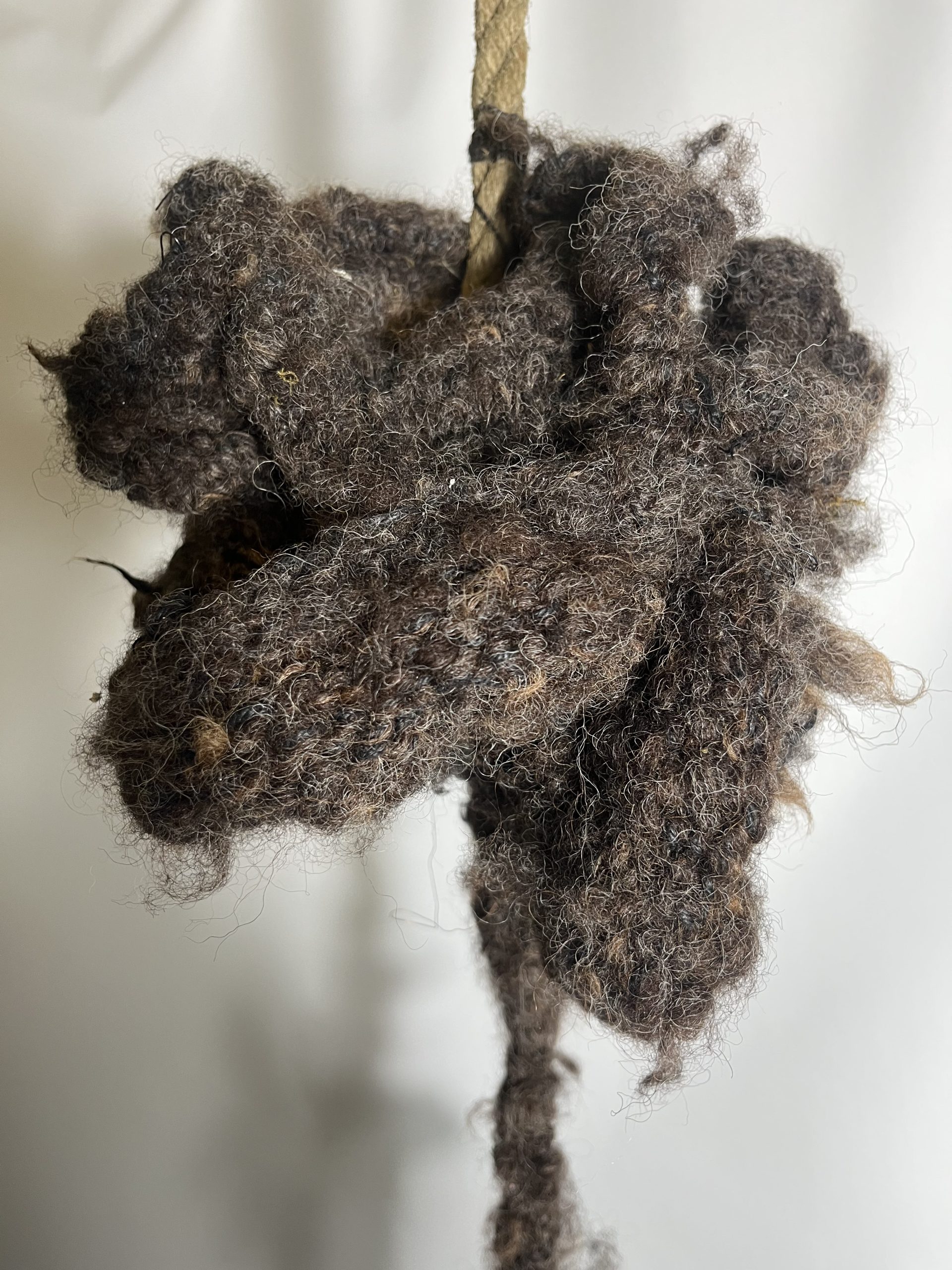
Visceral Thinking , 2023
Knitted in a mixture of raw Shetland fleece, jute and metal wire , H 70 inches W 10 inches D 12 inches
Form created from a repetition of needles and stitches to reflect a flowing cycle of physical and emotional pain. Sensations expressed in a physical embodiment of form visceral and instinctive challenging the traditional of knitted material. This process led sculpture is knitted in a mixture of raw Shetland fleece, flax and metal wire as a visual and emotional language of binding, hanging and elongated fibre. Material is manipulated as a prescriptive procedure of numbered stitches, needles and circular rows. The sculpture is observed as closed but not closed, convoluted, indented, gathered and tightened by a loop.
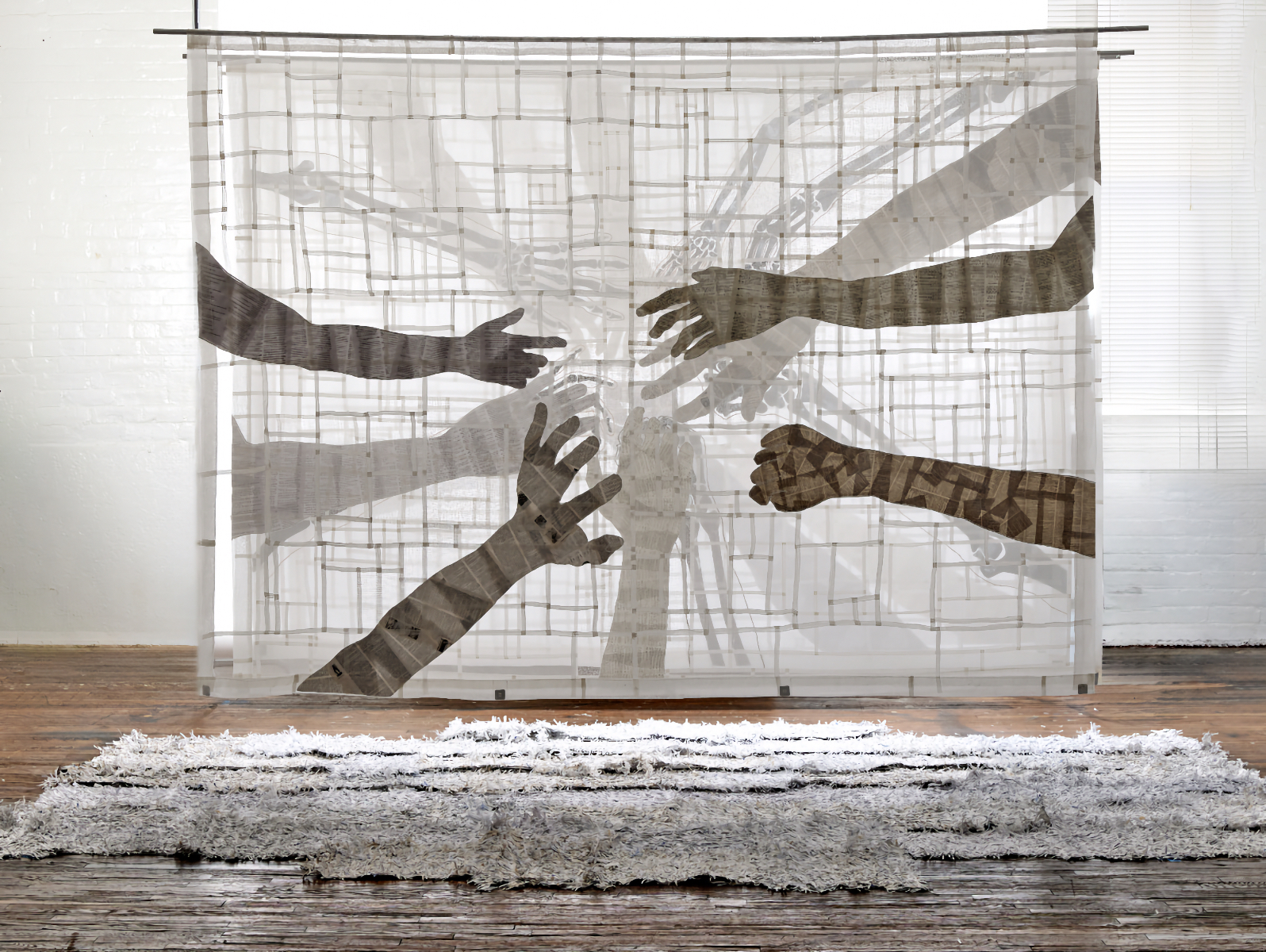
Joan Diamond, USA
Us, 2025
Silk organza, gauze, mono-linguistic dictionary pages, X-ray film, netting, 5 feet High x 7 feet Wide x 4 feet Depth
Here are five panels made in the Bojagi technique. Hands stretch towards the middle, as if to create a huddle. The five most spoken languages in the world (Mandarin, Spanish, Hindi, Arabic, and English, in no particular order) are represented using monolingual dictionary pages: one hand one language. These pages (vs. say, Arabic to English) are used to highlight the difficulties of understanding a culture different from one's own. The center panel contains bones made using X-ray film. Dictionary pages have been shredded, jumbled, and sewn to a net for the floor.