Ayelet Lindenstrauss Larsen
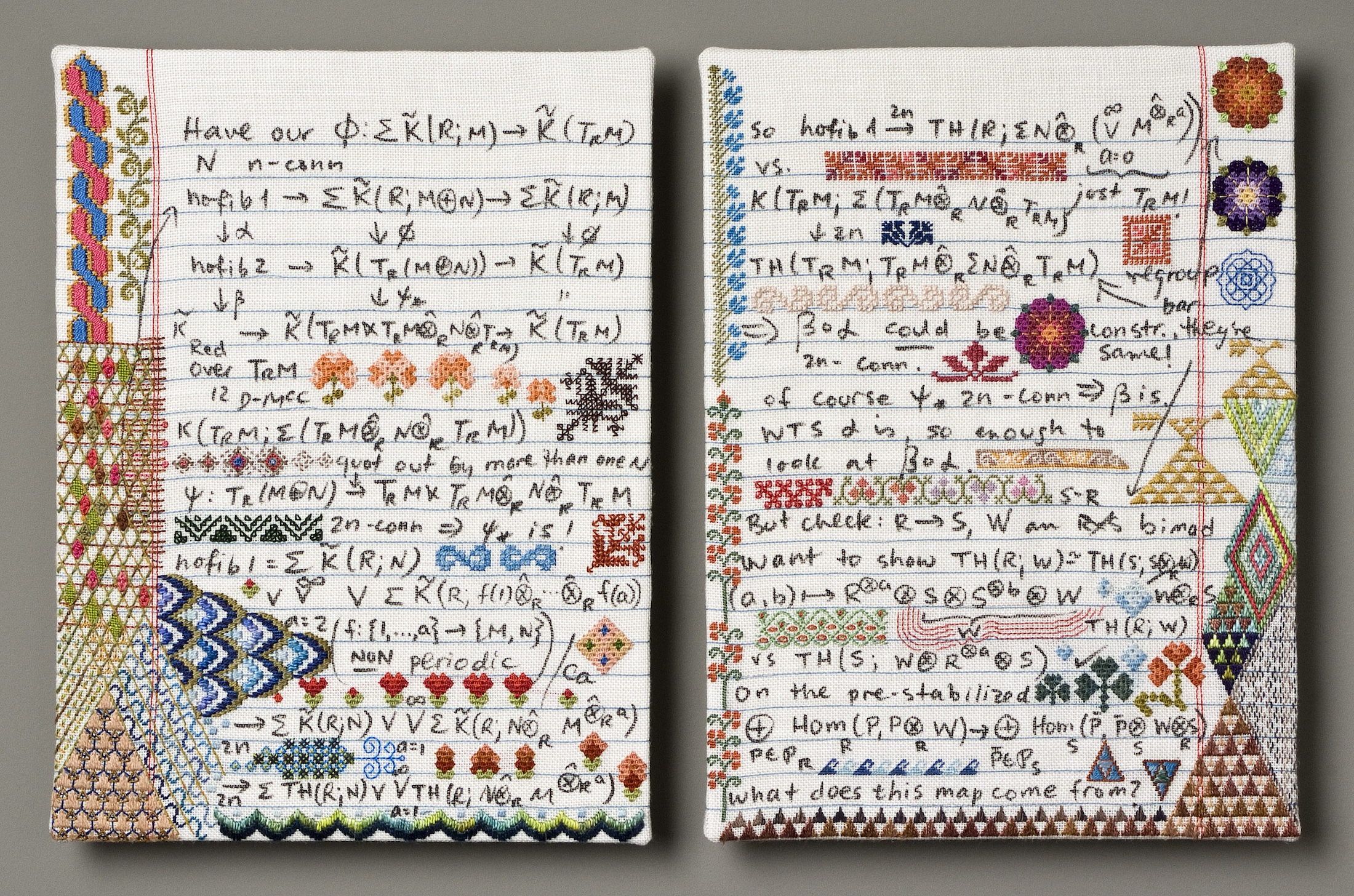
Embroidered Scribbles on a Page from My Notebook, 2009
Silk, cotton, and archival marker on linen Two panels 16" x 12"
In the early grades of elementary school, my friends and I considered decorating the margins of our notebooks a way of showing that we were dedicated students. I have kept at it, scribbling in the margins when I needed to focus, or when I needed to take a break. I got some good visual ideas while scribbling with pen. And I learned a lot about embroidery by making samplers. Samplers were originally just cloths for trying patterns on---spaces for scribbling with needle and thread.
Ayelet Lindenstrauss Larsen
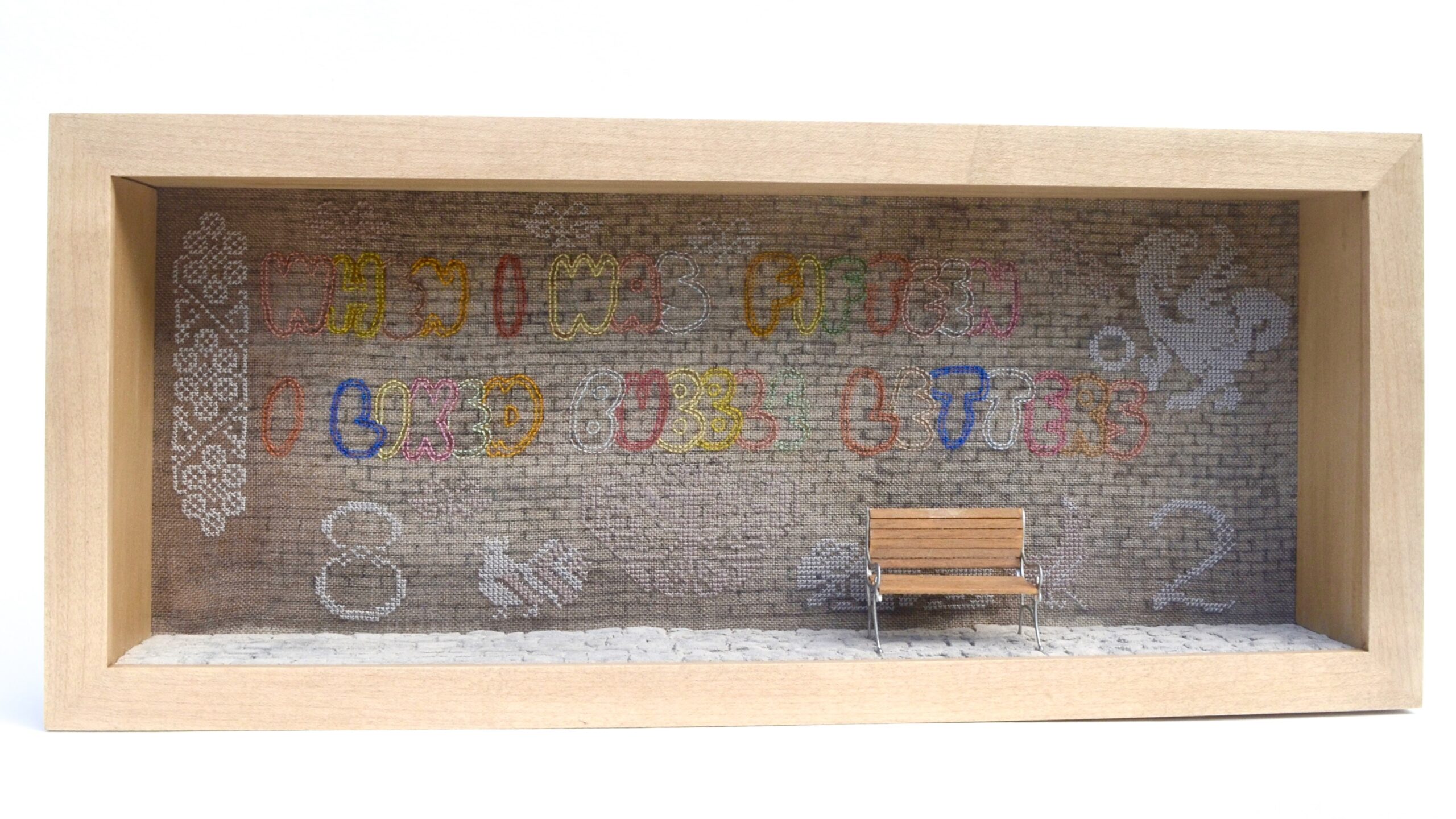
When I was Fifteen I Liked Bubble Letters, 2015
silk thread, linen fabric, purchased small bench, wood; fabric paint, resist, fabric marker, paint, stain and powdered “stone” compound 7.5” h 17” w 2.5” d
This is not a schoolgirl sampler. When I was fifteen, I had already been embroidering for some years, but I was less interested in historical textiles than in bubble letters. (They were very popular at the time.) I’ve continued embroidering, but at some point I was no longer a schoolgirl and anyhow I never made my version of a schoolgirl sampler: an official, embroidered statement to put on the wall. So I imagine, sometimes in odd circumstances like when I look at a blank wall, what my sampler would have been had I made one. I certainly have many motifs I would like to put into one if I made it, some which I would have chosen then, some which have acquired importance in the intervening years.
Ayelet Lindenstrauss Larsen
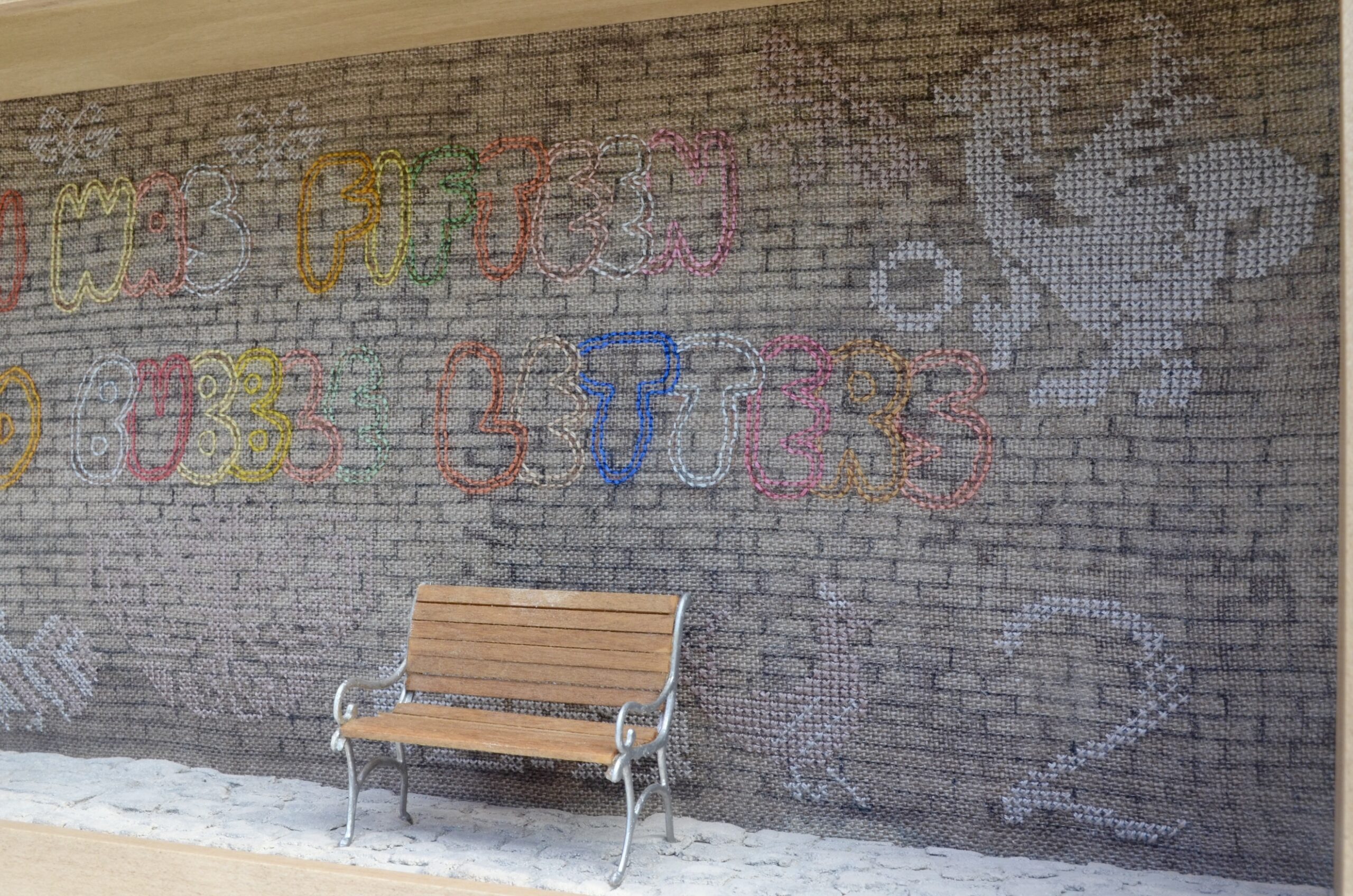
When I was Fifteen I Liked Bubble Letters (detail), 2015
silk thread, linen fabric, purchased small bench, wood; fabric paint, resist, fabric marker, paint, stain and powdered “stone” compound 7.5” h 17” w 2.5” d
This is not a schoolgirl sampler. When I was fifteen, I had already been embroidering for some years, but I was less interested in historical textiles than in bubble letters. (They were very popular at the time.) I’ve continued embroidering, but at some point I was no longer a schoolgirl and anyhow I never made my version of a schoolgirl sampler: an official, embroidered statement to put on the wall. So I imagine, sometimes in odd circumstances like when I look at a blank wall, what my sampler would have been had I made one. I certainly have many motifs I would like to put into one if I made it, some which I would have chosen then, some which have acquired importance in the intervening years.
Ayelet Lindenstrauss Larsen
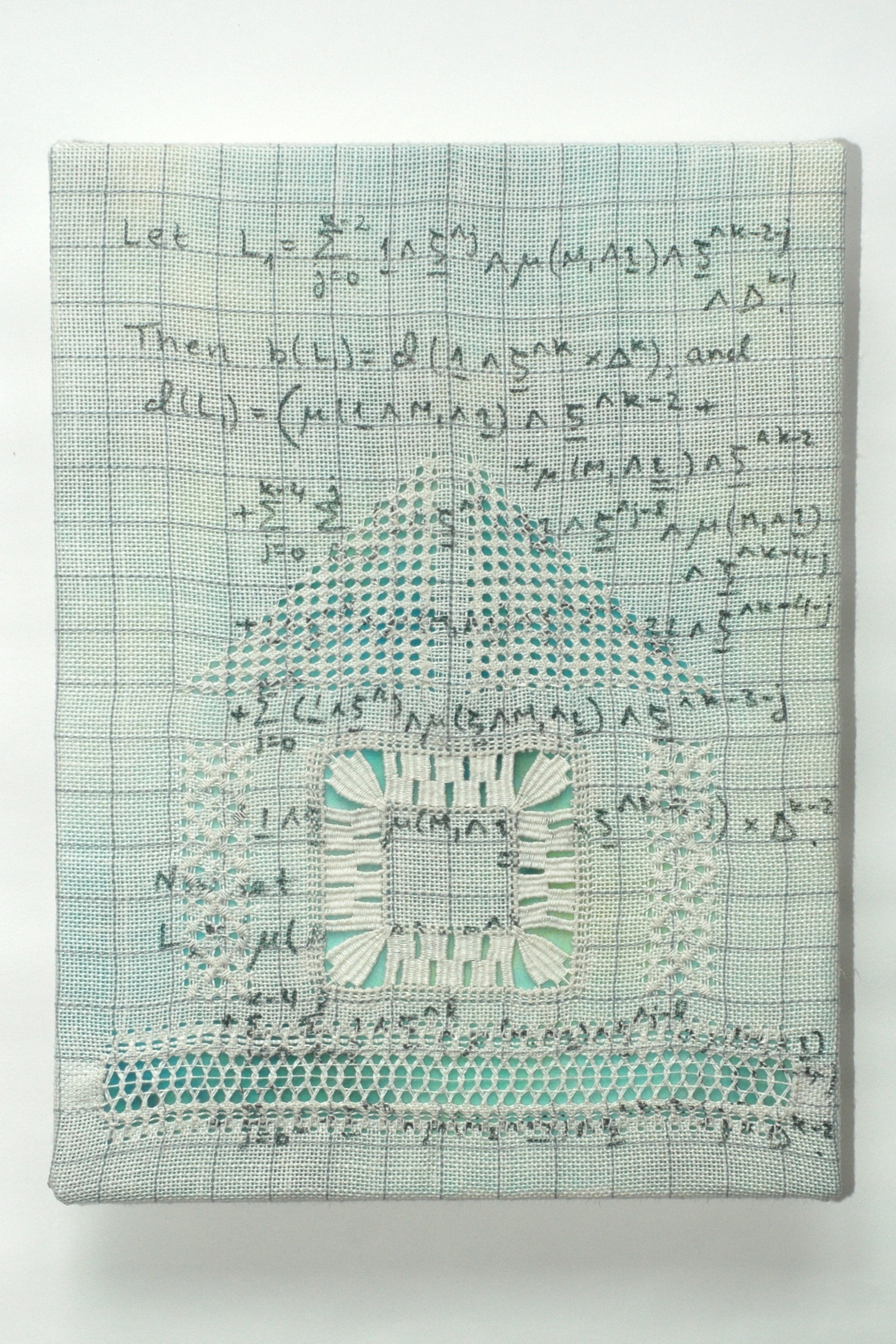
Re-Use, 2009
Linen and archival marker on linen, cotton fabric, dye 12" x 9"
When I was a child, we used the backs of my father's calculations as art paper. So paper with lots of calculations on it still seems a very inviting thing to draw on... These days, I do calculations of my own, and I like to scribble a lot on the paper I use. I tried to scribble in needle and thread on the calculations on this fabric.
Ayelet Lindenstrauss Larsen
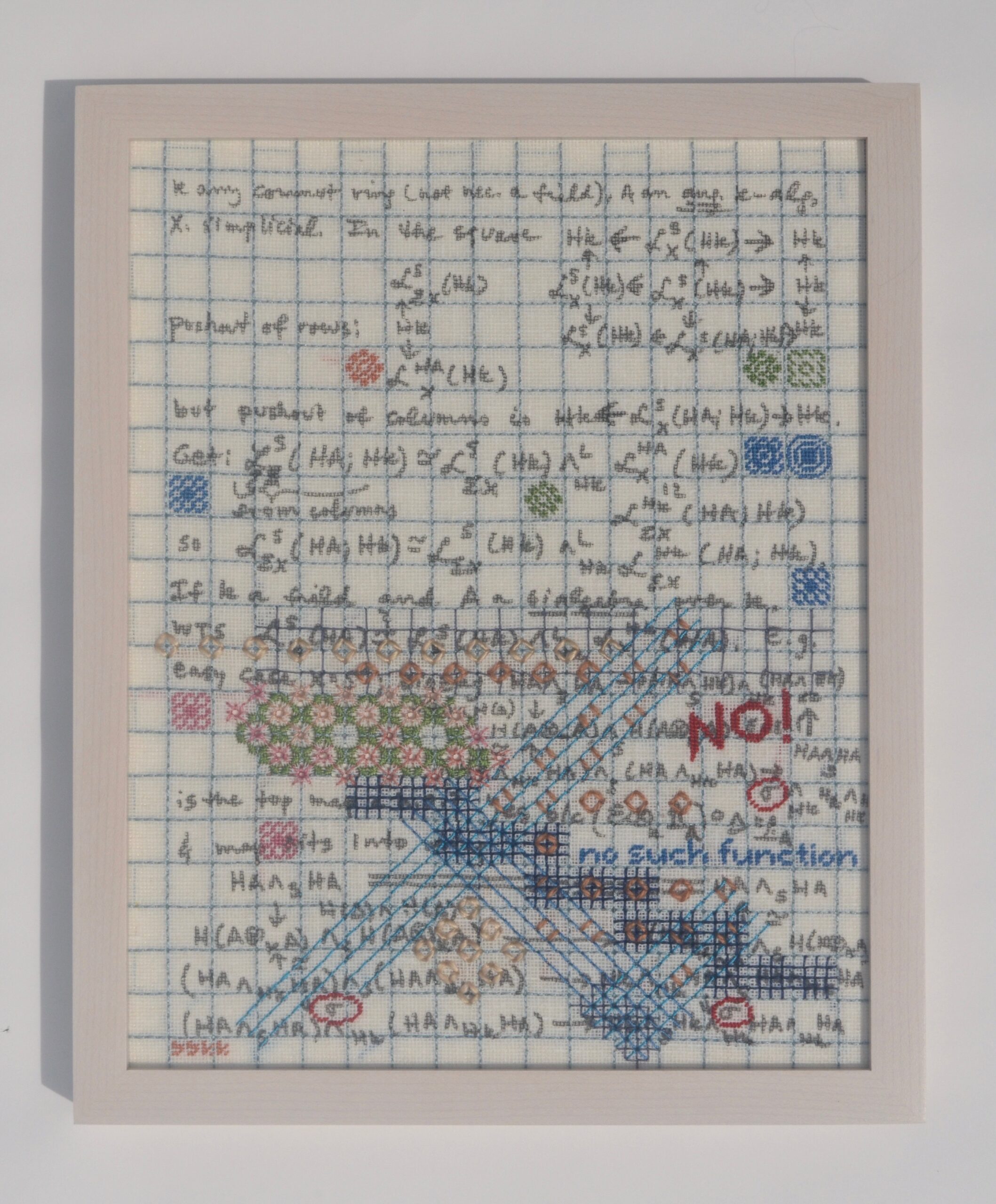
Mistake, 2020
Silk, cotton, and archival marker on linen 12" x 10"
I scribble in my mathematical notebooks for many reasons: to help me focus, to get out my frustration when things are not working out, or, as here: to cross out parts of what I wrote that are not correct. On this page, I have a mistake that I am very prone to make... Since there is no function like I claimed existed, everything done using it is not valid.
Ayelet Lindenstrauss Larsen
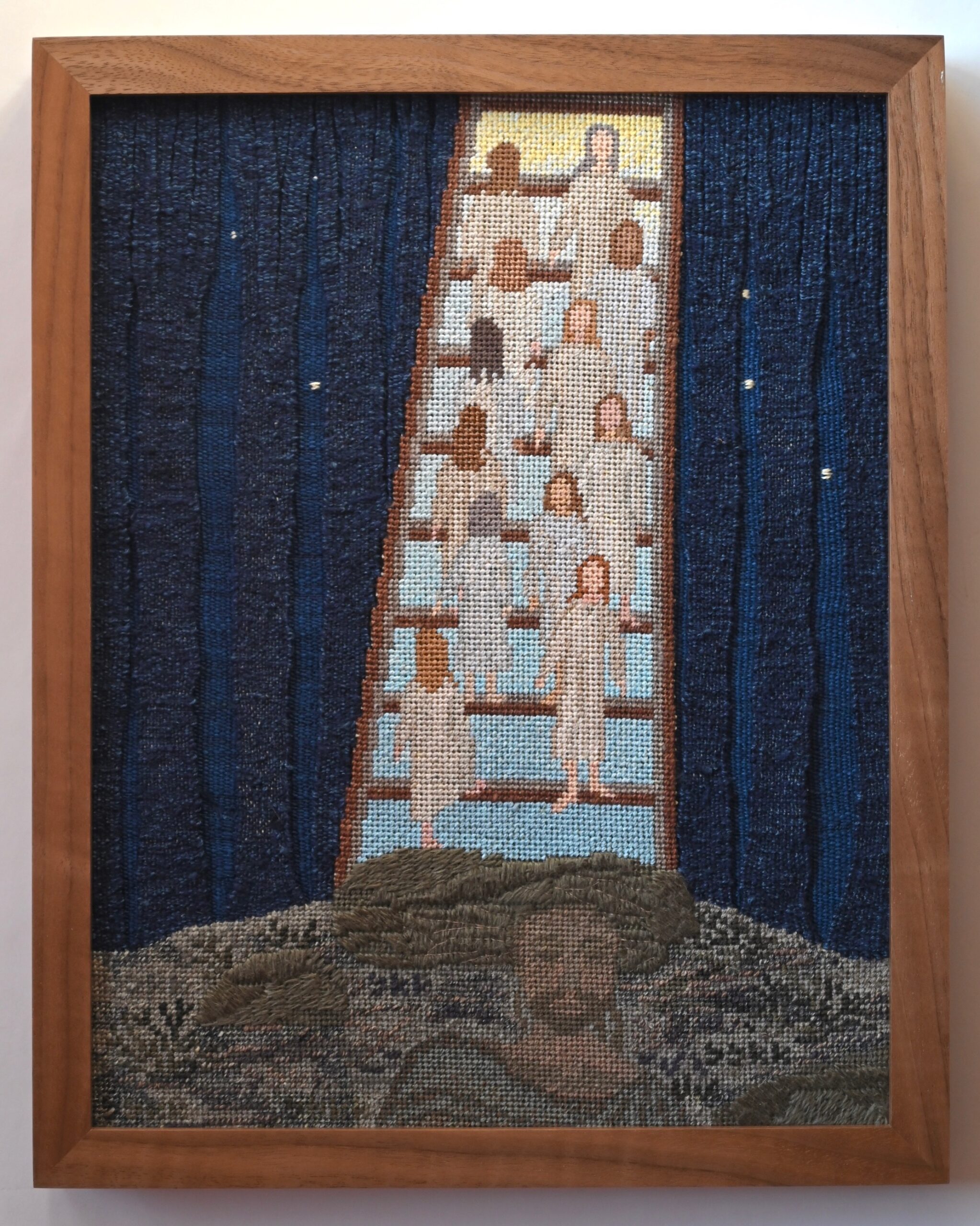
Jacob’s Dream, 2022
silk, wool, cotton, and linen on cotton canvas 10" w x 12.5" h
Ayelet Lindenstrauss Larsen
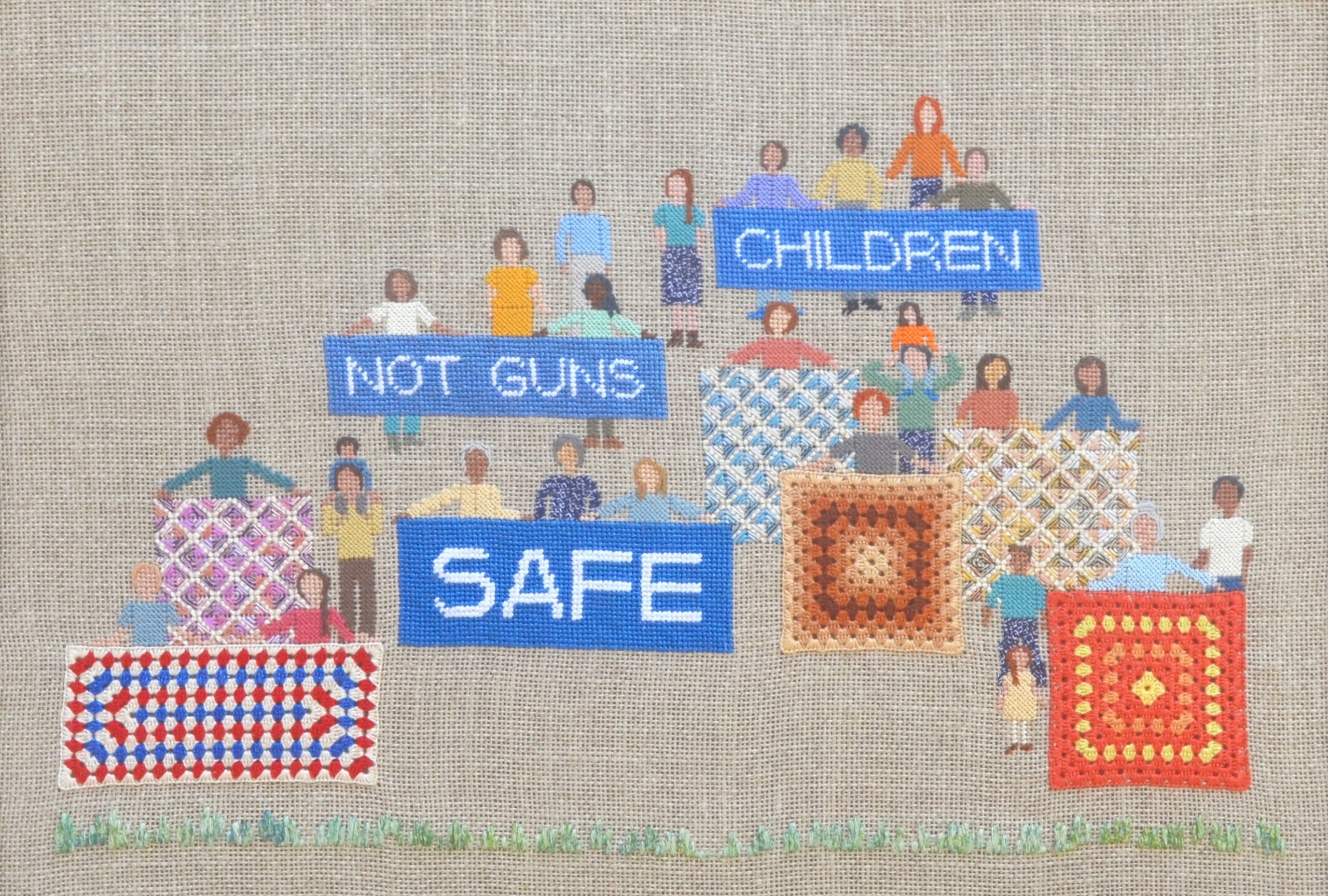
The March for Our Lives—Security Blankets, 2018
Silk and cotton on linen fabric 14" by 18"
This piece was my response in fiber to the demonstrations across the US on March 24, 2018: people of all ages standing together trying to use determination, signs, and in my version also quilts and afghans to form a barrier shielding children from guns. Hand-stitched quilts and afghans are not very effective as physical barriers, but not knowing how to provide physical protection, I kept embroidering them.
Ayelet Lindenstrauss Larsen
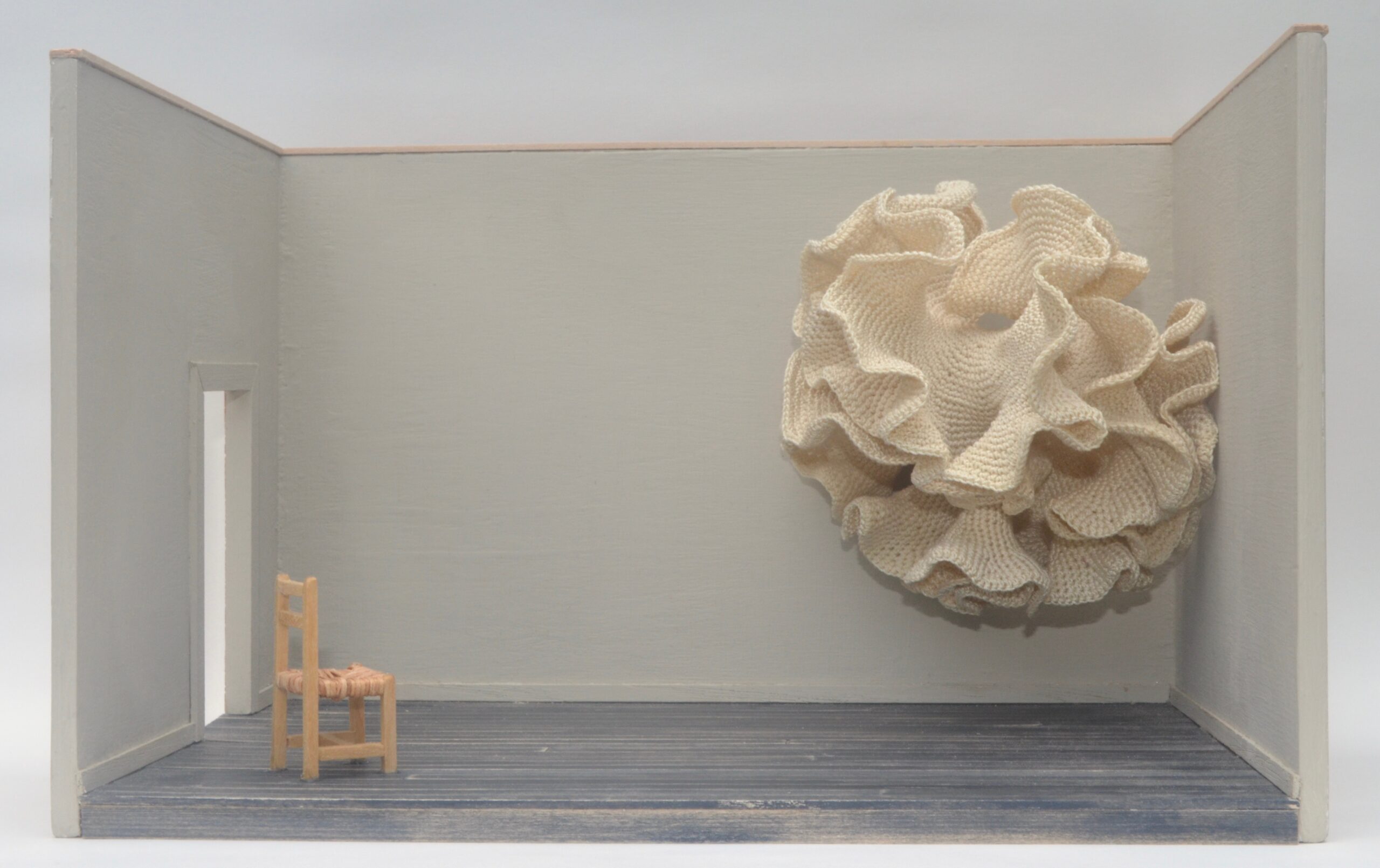
Growing… Gone, 2013
Cotton thread, wood, paint, stain. 6" h by 9.5" w by 6.25" d
This piece is part of my hyperbolic series which consists of crocheted hyperbolic surfaces, each housed in a miniature room with a chair for the viewer. Hyperbolic surfaces can be made using crochet by keeping increasing stitches at a fixed rate. This leads to a lot of ruffles. Every consecutive row increases the ruffling and can qualitatively change the feel of the whole piece---almost as if the surface were alive. This appealed to me because I always look for ways to mix predictability with unpredictability---and what could be more predictable than crocheting long rows in a single stitch with a single thread? It also makes the process addictive: soothing and exciting simultaneously. The basic parameters---what thread you use, what rate of increase of stitches, whether you work in rows or in the round---affect the look of the surfaces dramatically, and so different hyperbolic pieces have had very different meanings for me. This one is about loss. The evolving nature of the white surface as it was being worked is analogous to the development of a relationship between two living people. Both go on for a period of time, undergoing many changes, but then at some point the work is done and the thread is cut, or the people are separated and all you have left is the chance to contemplate the relationship as it was.
Ayelet Lindenstrauss Larsen
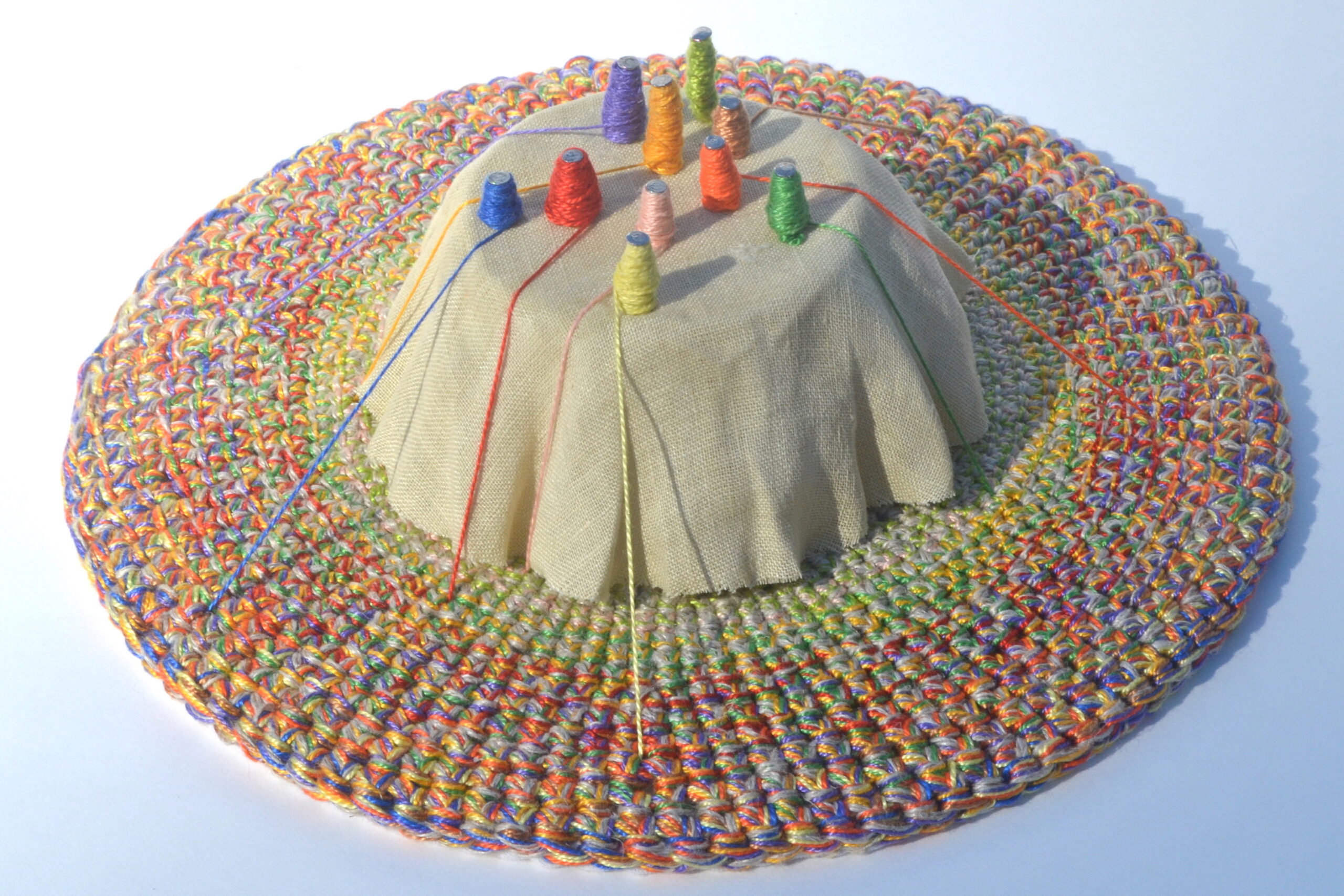
Synthesis, 2015
cotton, linen, wood, nails, board 8" by 8" by 2" high
This piece is about the process of crochet. The different colors of thread sit in spools on the table, ready to be used, and more and more of them are incorporated into the work as it progresses. The richness of the final cloth comes from the variety of different threads which have become part of it.
Ayelet Lindenstrauss Larsen
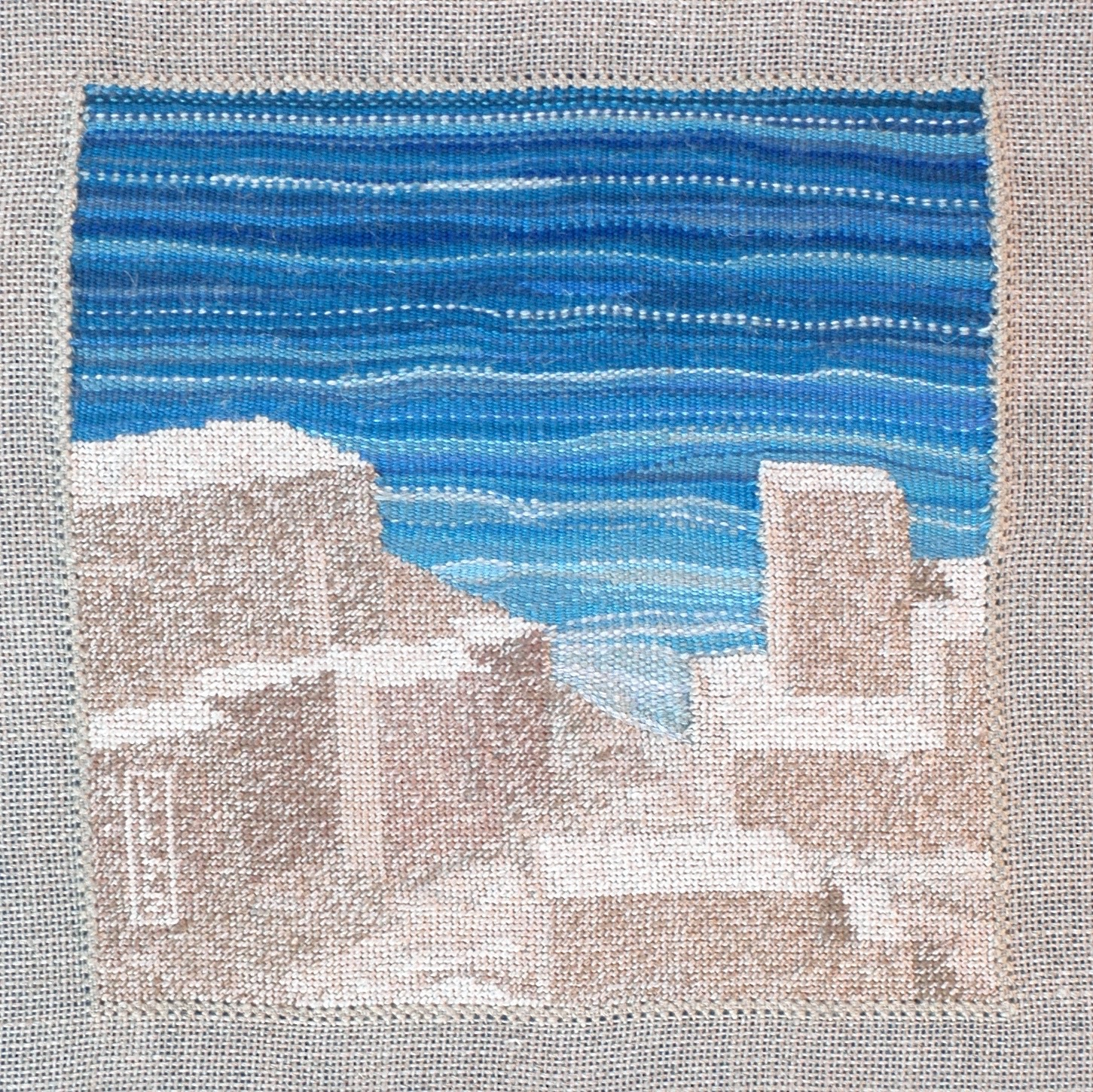
The White City by the Sea, 2008
cotton and linen on linen 10" by 10"
This shoreline connects the sea and dry land. It also connects the more fluid medium of tapestry with the more rigidly structured tent-stitch embroidery, which has often been called tapestry embroidery. From the land side, one can see the sea through large buildings---or are they sand castles? This weaving and embroidery was inspired by Tel Aviv, the White City, a showcase of Bauhaus architecture built on coastal dunes.