Saberah Malik
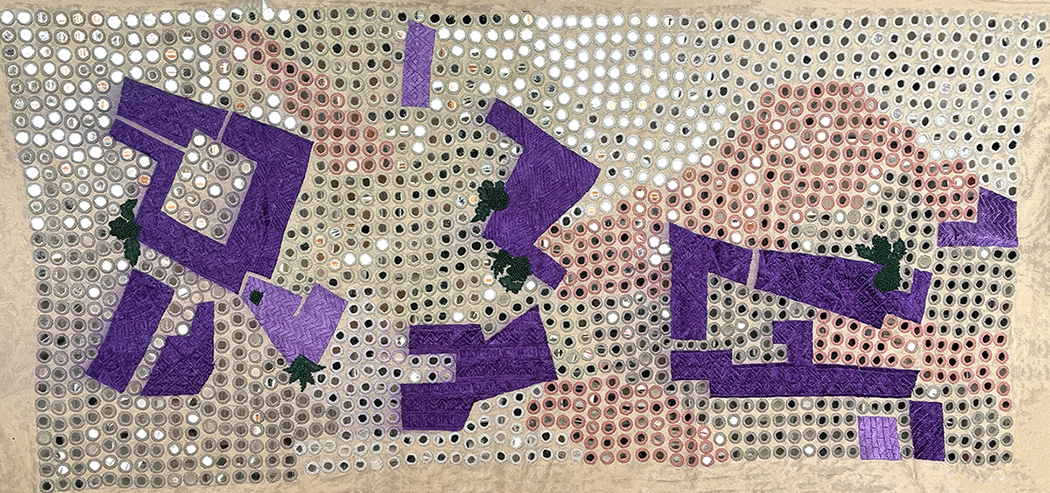
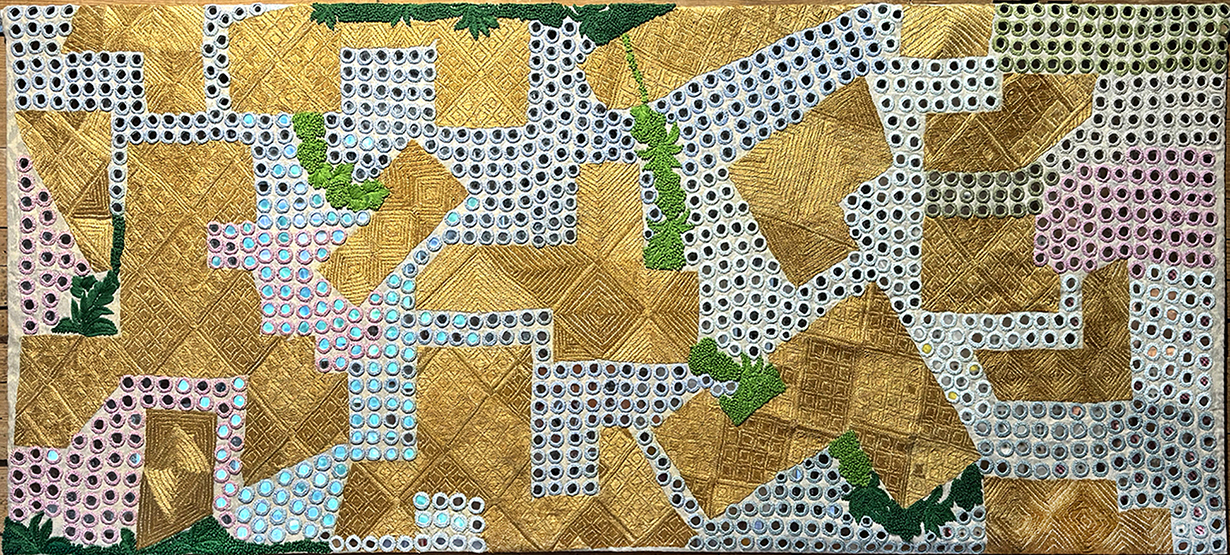
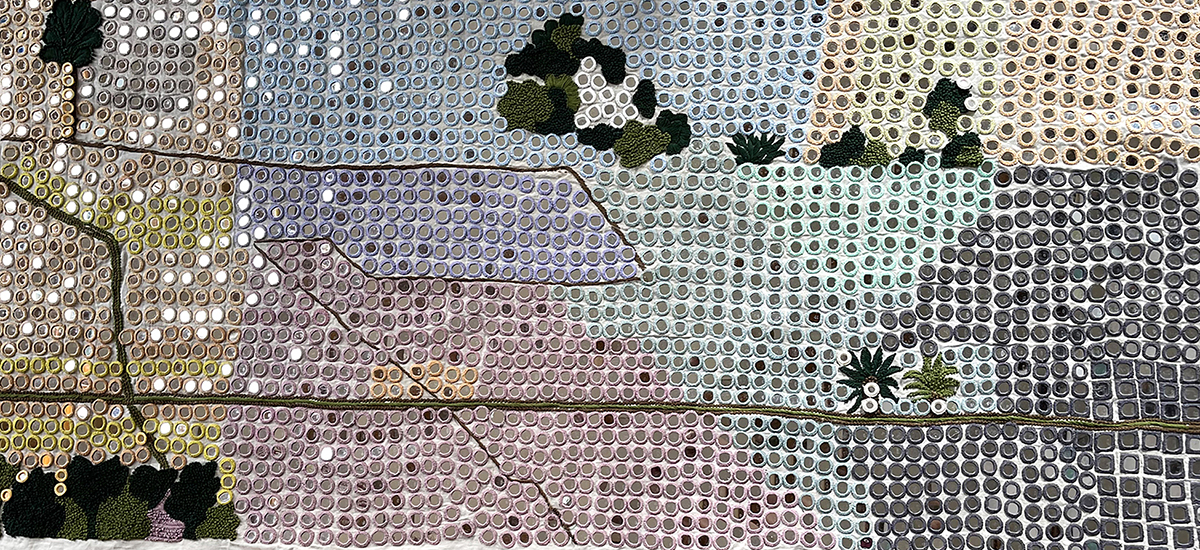
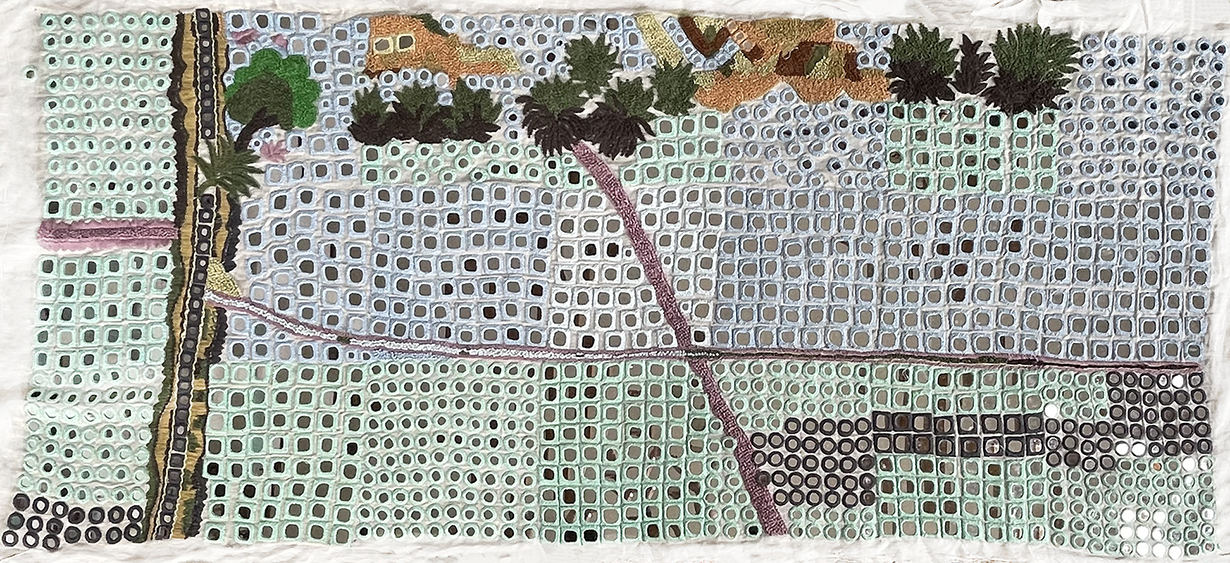
In the Realm of Lost Civilizations, 2025
Mirrors, embroidery floss 26" H x 57" W
My visual vocabulary shies away from images of war and destruction. Photo images broadcast in real time make us collectively immune to horrors of individual human stories. I choose to dwell on images that dignify the impacted, show glimpses of hope, of possibilities, of potential through industry within community presences.
Saberah Malik
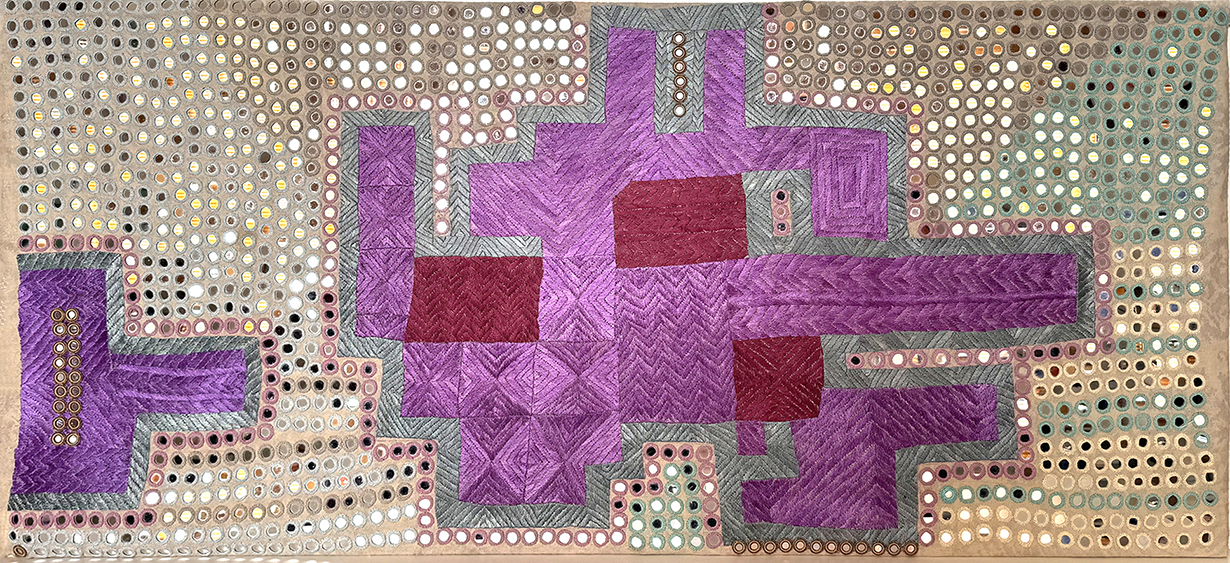
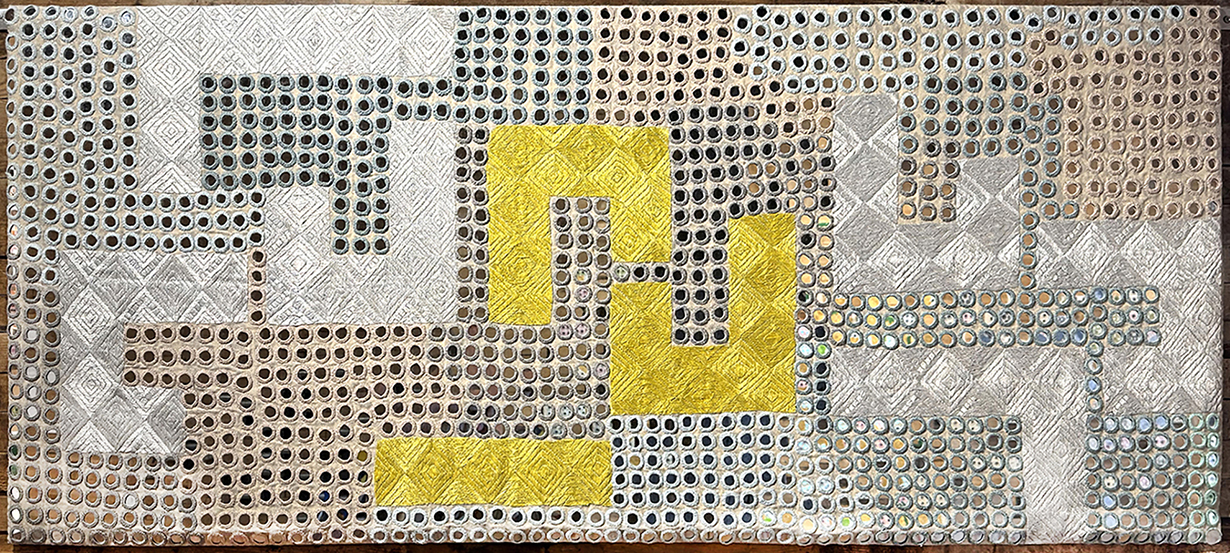
Complexity of Rememberances, 2025
Mirrors, embroidery floss 26" H x 57" W
Using mirror work on an extensive scale in a labor of love, pairing it especially with fast disappearing phulkari work, created pride of heritage for a craft fast falling victim to machine facsimiles. Showing calm and serenity created a space for sharing and shedding. My practice aims to create moments of quietude, and an escape from surrounding chaos to reflect on our existential future as a global community.
Saberah Malik
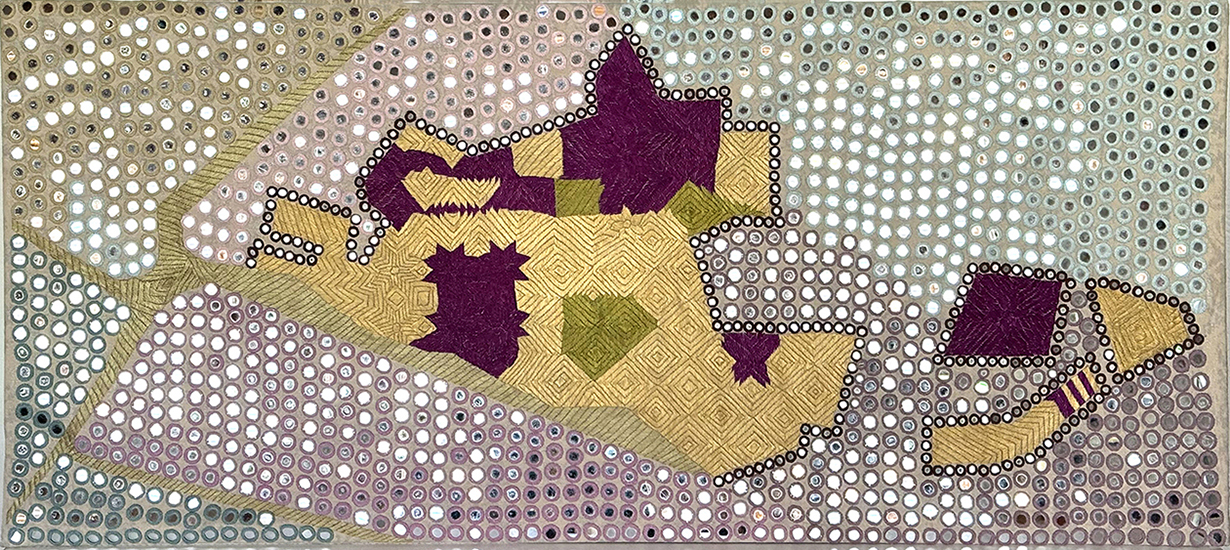
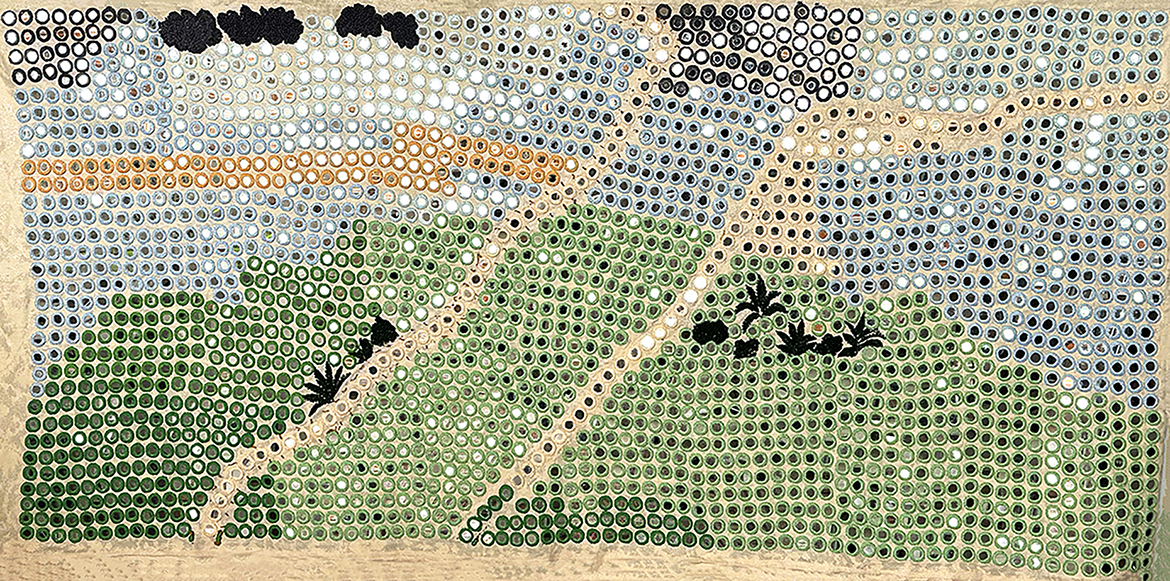
Waterlogged, 2025
Mirrors, embroidery floss 26" H x 57" W
"Water, water everywhere, nor a drop to drink", the portfolio title for works on this page is a quote from Samuel Coleridge’s 1834 poem, Rime of the Ancient Mariner, which came to mind as I witnessed aerial views of Pakistan’s 2022 floods catastrophic floods illuminating inundated farmland and habitations.
Saberah Malik
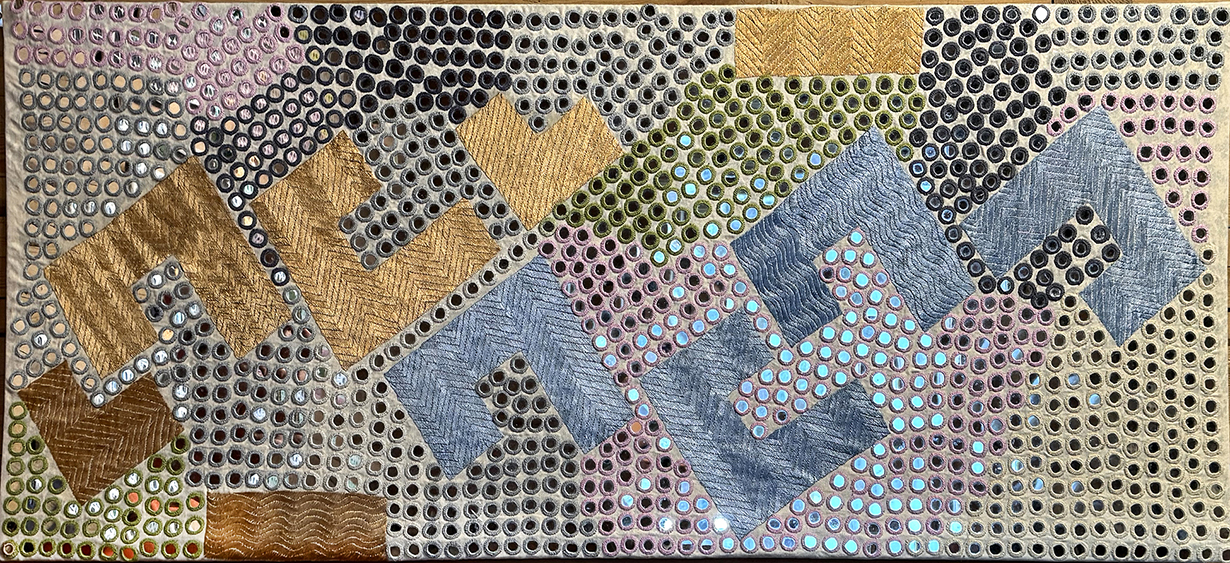
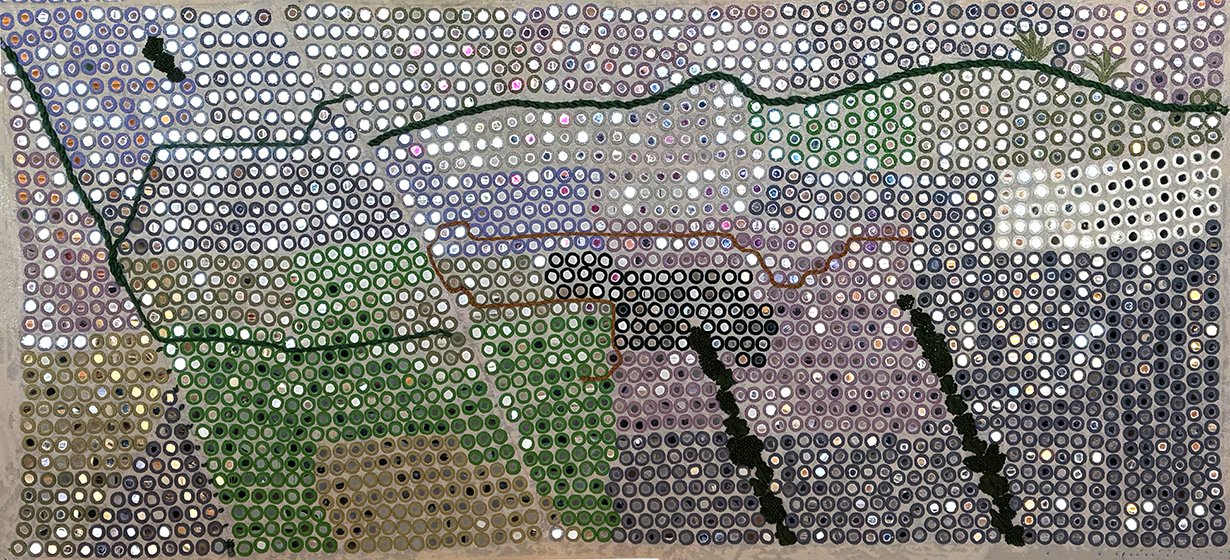
Dusk, 2025
Mirrors, embroidery floss 26" H x 57" W
Through narratives of displacement and destitution I sought craft as a response to trauma.
Saberah Malik
Dawn-When the Waters Rose, 2025
Mirrors, embroidery floss 25" H x 57" W
Enlisting women embroiderers, twelve tapestries were created, using regional shisha (mirror) work, phulkari and embroidery.
Saberah Malik
Communal Absences, 2025
Mirrors, embroidery floss 26" H x 57" W
The images address isolation, displacement, loss.
Saberah Malik
Lost Roads, 2025
Mirrors, embroidery floss 27" H x 57" W
Confusion and anxieties for much needed help followed, especially for communities isolated by washed away roads, first and foremost for clean drinking water.
Saberah Malik
Submerged, 2025
Mirrors, embroidery floss 26" H x 57" W
Placing mirrors in pixelated proximity without embroidered fillers is typical of the Rabari and Banjara nomadic tribes that had once roamed the lower riparian Indus River Valley. Ancient civilizations in the region, like Mohenjo Daro, had traded with mirror producing Egyptians, making use of mirror, shell and stone embellishments likely. There is no record of Mohenjo Daro population’s fate, but could these tribes be their off shoots, carrying evolutionary, genetically embedded memories of water in their craft?
Saberah Malik
Inundated, 2025
Mirrors, embroidery floss 28" H x 61" W
When a light source moves along the tapestry face, different areas ripple like sunlight or moonshine on water, creating areas of brightness, of hope. Barely contributing to global warming, Pakistan nevertheless suffers its worst consequences. Seeing themselves reflected in images responding to flood waters, makes the viewer complicit in the crisis, and responsible for remedial mitigation. These works communicate cause and effect to inform industrialized perpetrators about undeserved loss and trauma at the other end of the world.
Saberah Malik
Water, water everywhere – beginning, 2025
Mirrors, embroidery floss 27" H x 61" W
When a light source moves along the tapestry face, different areas ripple like sunlight or moonshine on water, creating areas of brightness, of hope. Barely contributing to global warming, Pakistan nevertheless suffers its worst consequences. Seeing themselves reflected in images responding to flood waters, makes the viewer complicit in the crisis, and responsible for remedial mitigation. These works communicate cause and effect to inform industrialized perpetrators about undeserved loss and trauma at the other end of the world. This work was supported in part by a grant from Rhode Island State Council on the Arts, through an appropriation by the Rhode Island General Assembly and a Grant from the National Endowment for the Arts.