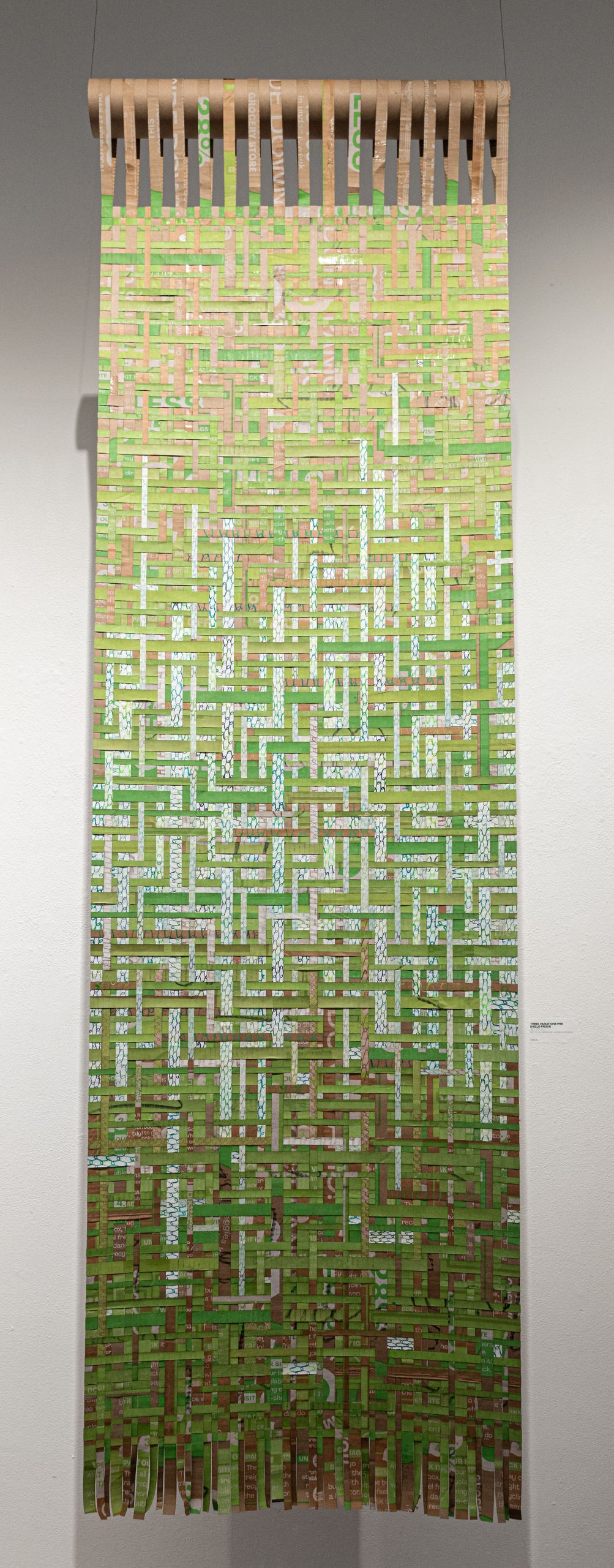
Jill Stoll
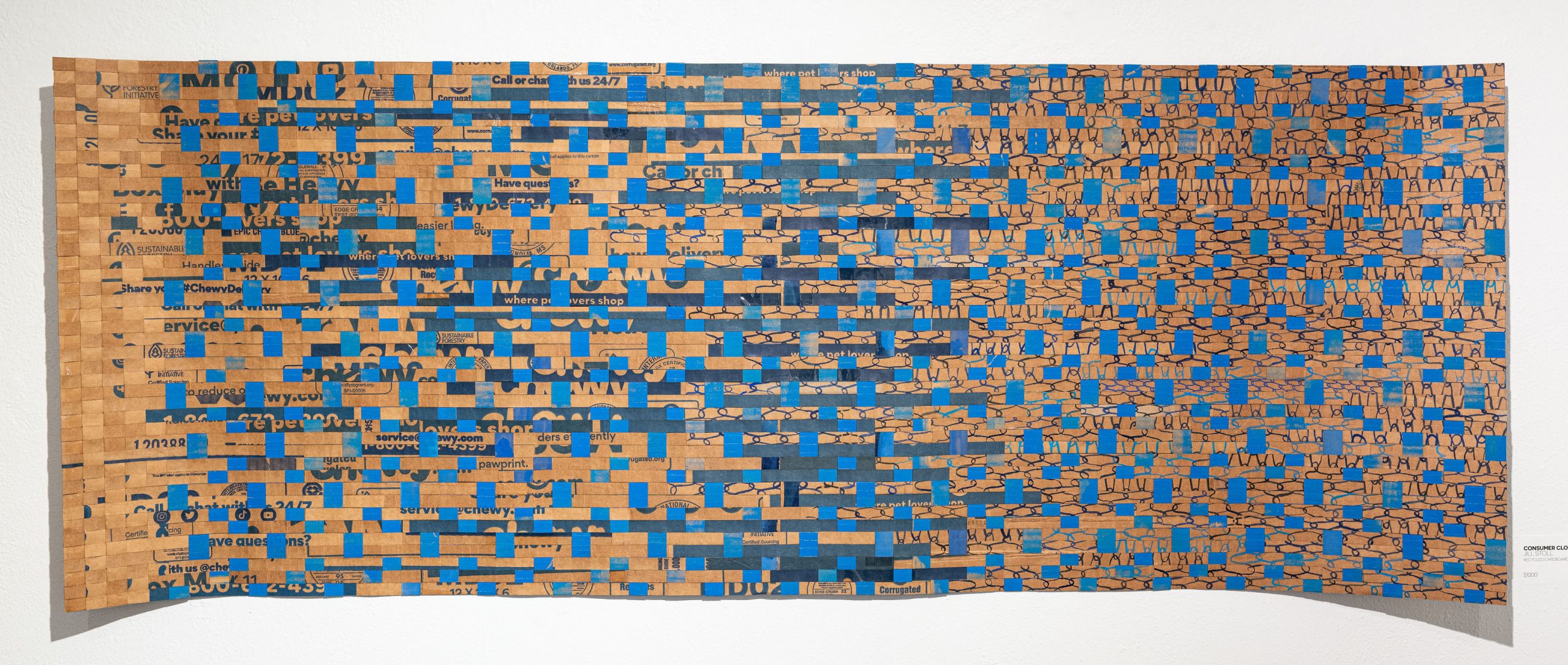
Consumer Cloth (1.3), 2024
Recycled cardboard, paint, ink, glue 56" x 21"
What was once a box. Or boxes.
Jill Stoll
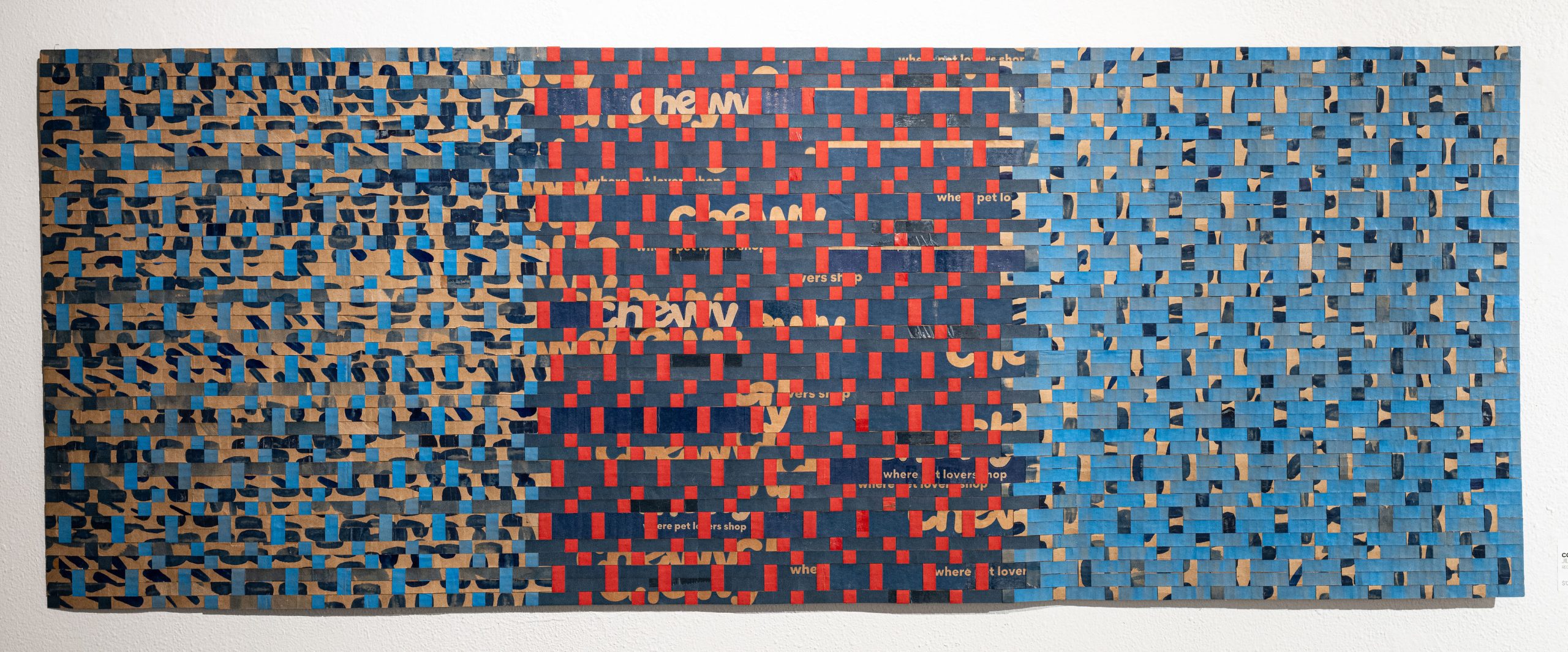
Consumer Cloth (1.5), 2024
Recycled cardboard, paint, ink, glue 56" x 21"
To construct an improvised loom, I first used the wall, push pins, binder clips, and glue. My process has evolved to sheet metal and magnets. These pieces not only reflect an environmentally conscious approach but also serve as a personal audit of my consumption patterns.
Jill Stoll
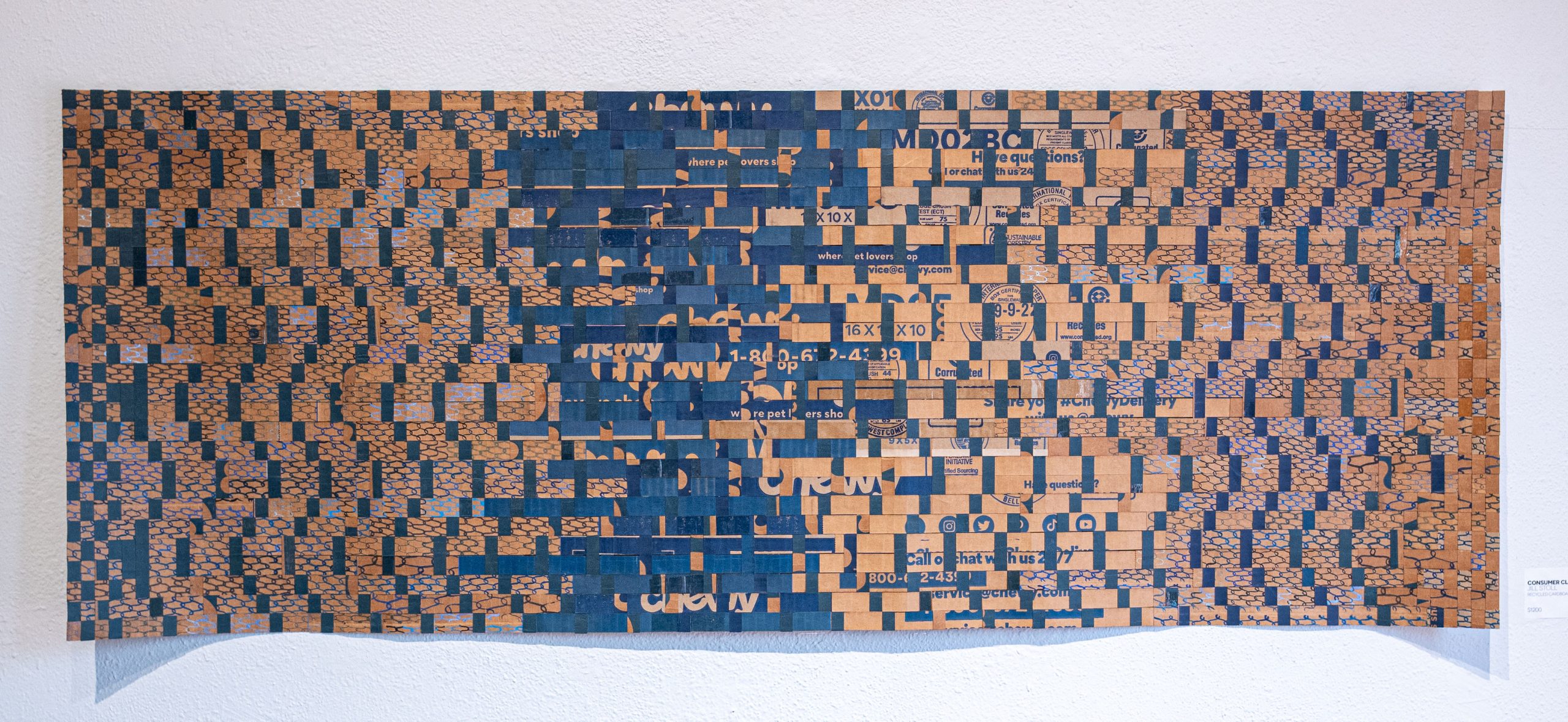
Consumer Cloth (1.2), 2023
Recycled cardboard, paint, ink, glue 56" x 21"
Our purchasing power often correlates with privilege, leading to a fixation on the convenience and seemingly limitless inventory of online platforms. Our pursuit of instant gratification and unchecked greed has resulted in overflowing landfills and the emergence of plastic islands in our oceans.
Jill Stoll
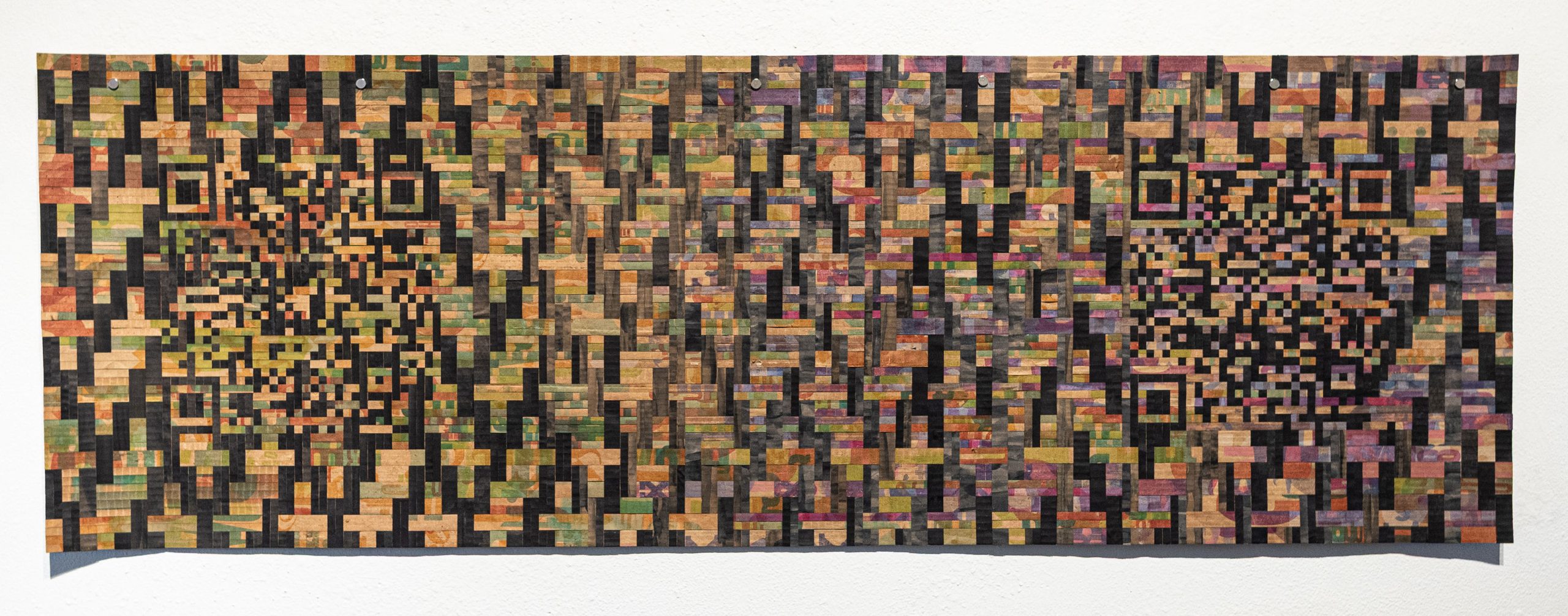
Shameless Self-Promotion (1), 2024-2025
cardboard paper, ink, watercolor, glue 67" x 22.5"
Shameless Self-Promotion (1) is a collaboration with letterpress artist and printmaker Amy Newell. Together, we merged analog craft with digital integration in a single cardboard weaving. We began by stripping recycled cardboard of its corrugated interiors to create smooth, pliable sheets. Amy printed her signature letterforms onto them, layering color to build depth and rhythm. Afterward, I cut the sheets into strips, painted the weft with Payne’s Gray watercolor for tonal variation, and wove the fragments into a structured grid—disrupting and reassembling Amy’s letterforms in the process. Scannable QR codes embedded within the pattern added an interactive element, extending the composition beyond its physical surface.
Jill Stoll
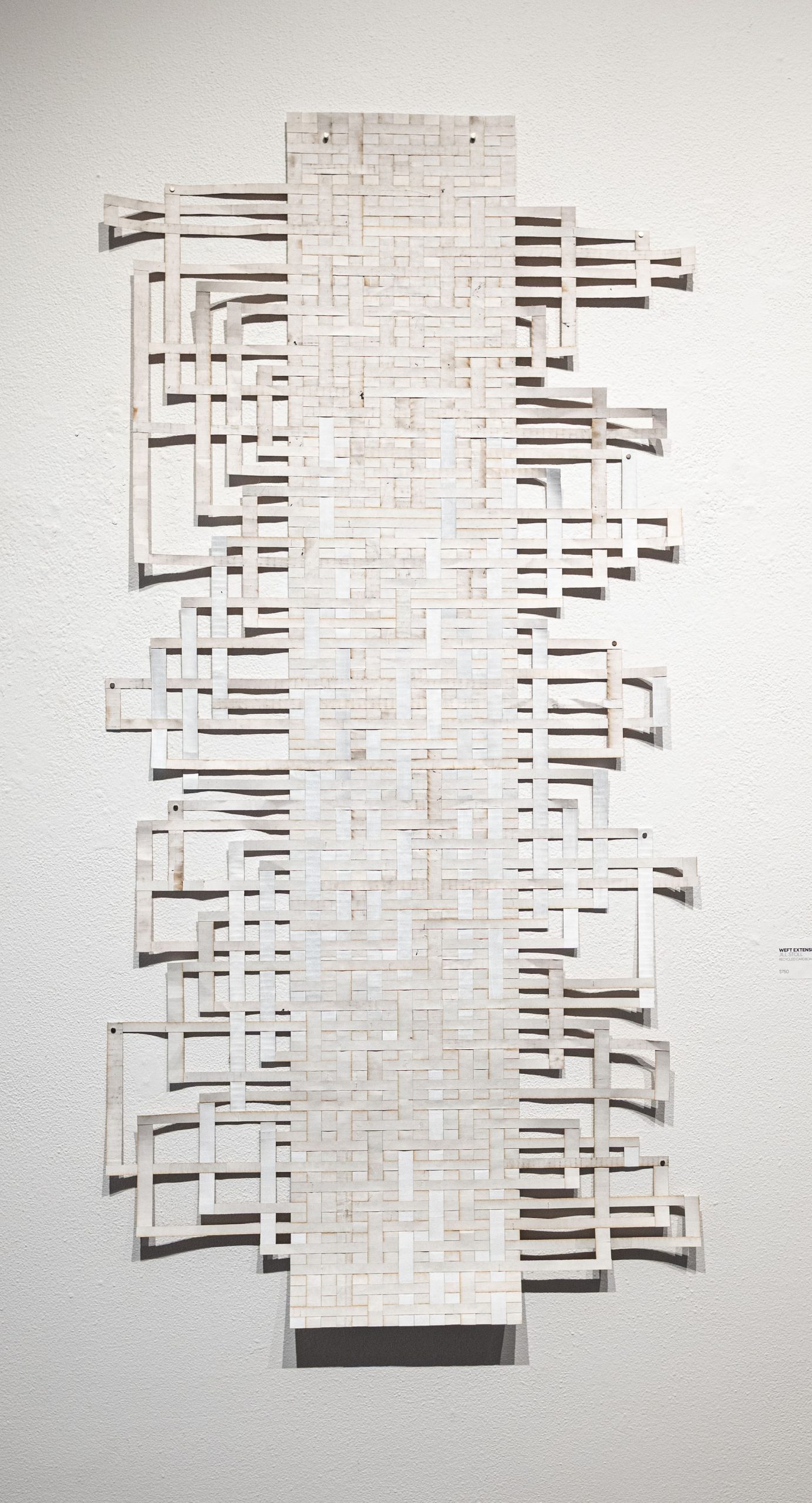
Weft Extension (Study 2), 2025
recycled cardboard, glue 28.5" x 60"
We are consumers. Everything we acquire, whether through home deliveries or by shopping at local stores, arrives in a cardboard box. These boxes accumulate in neighborhoods globally, representing an overwhelming volume of cardboard in our modern world. The complexity of this scenario has been heightened by the challenges of Covid, with lockdown prompting an increased dependence on home delivery services.
Jill Stoll
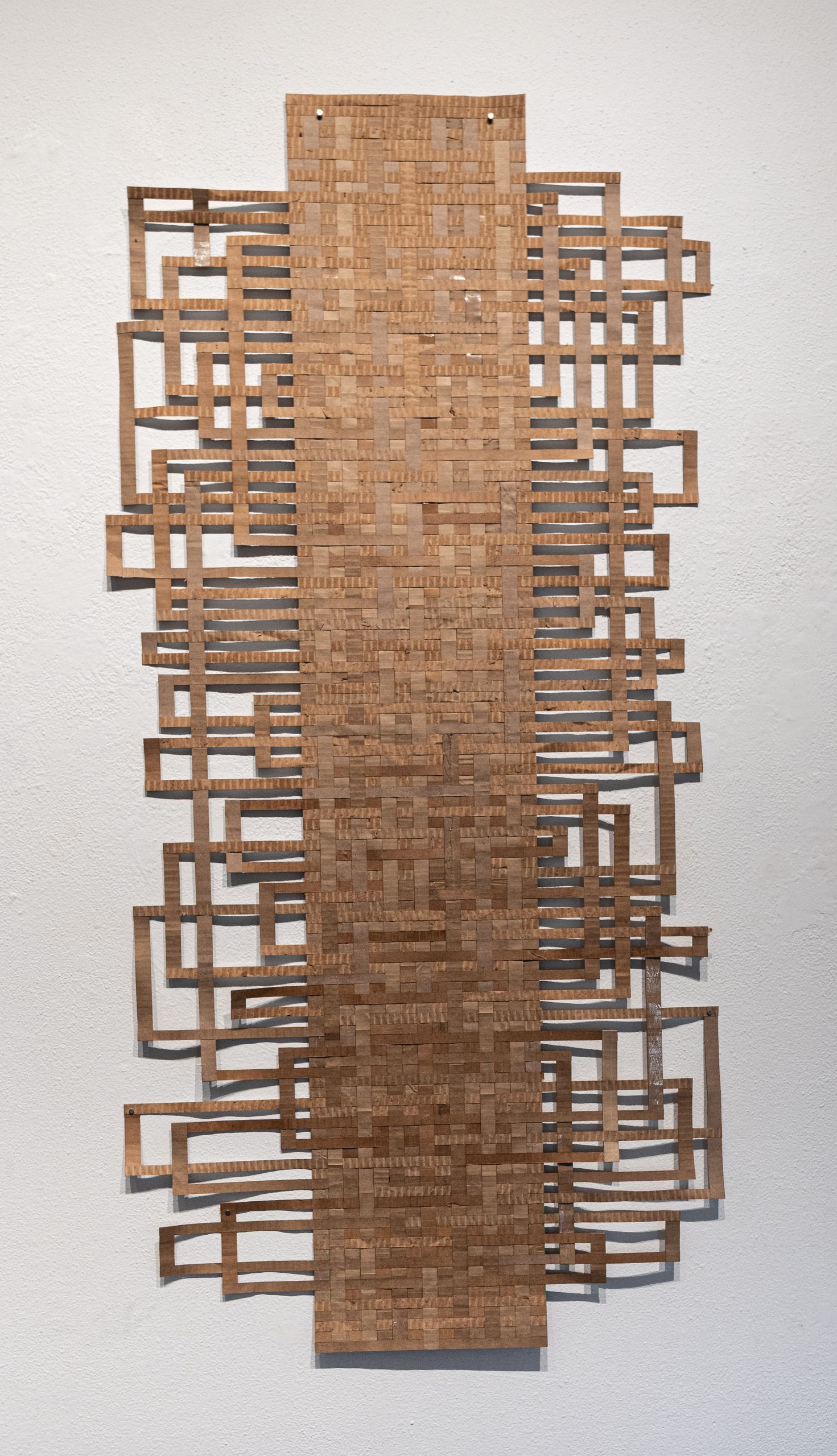
Weft Extension (Study 1), 2025
recycled cardboard, glue 28.5" x 60"
Engaging in scavenger hunts around local businesses and dumpsters, I collect discarded boxes for recycling, including the ones delivered to my own house. The collected boxes are flattened, cut into strips ranging from ⅜” to 1”, with corrugated insides removed. This meticulous process yields two weavable strips of kraft paper, serving as both warp and weft. The result is a type of textile I call Consumer Cloth.
Jill Stoll
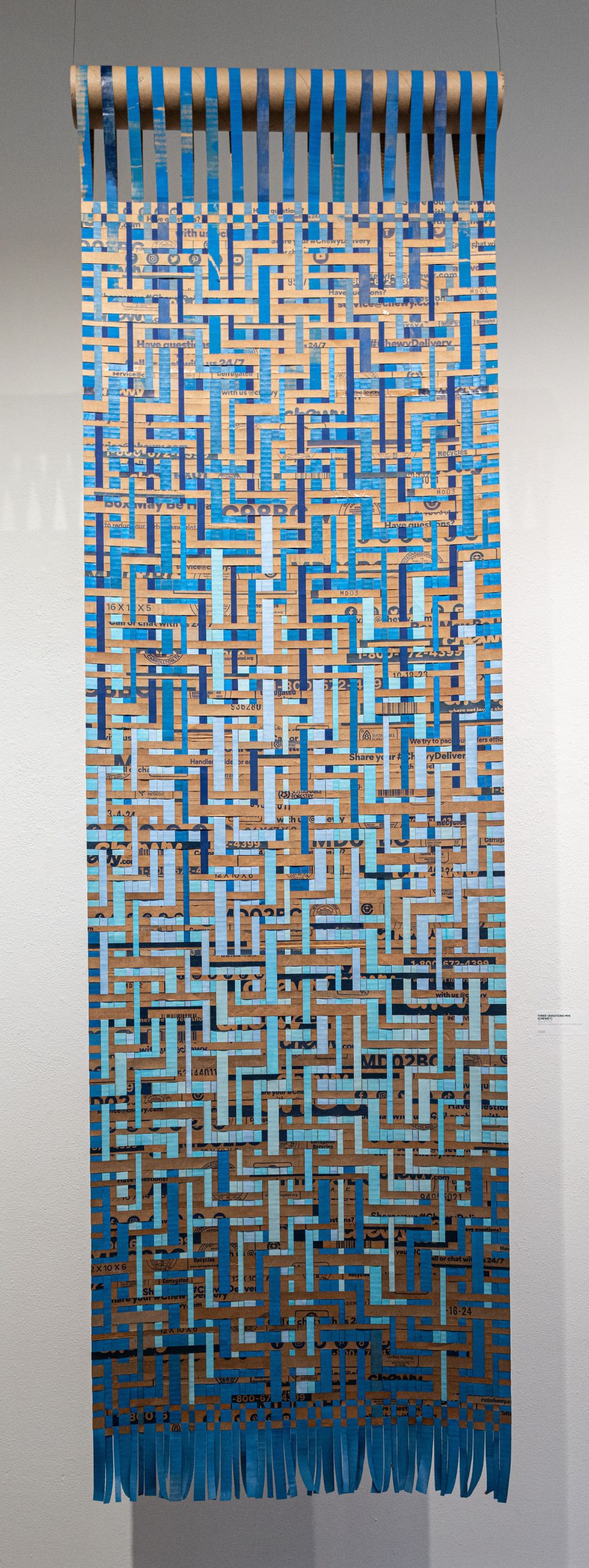
M98 Variation 3 (Blue), 2025
recycled cardboard, paint, paper, glue 26.5" x 94"
This project aims to explore the question of how we can reconcile our addiction to consumerism while becoming responsible stewards of our planet? Drawing inspiration from traditional weaving techniques, I harvest materials readily available, as cardboard boxes are ubiquitous.
Jill Stoll
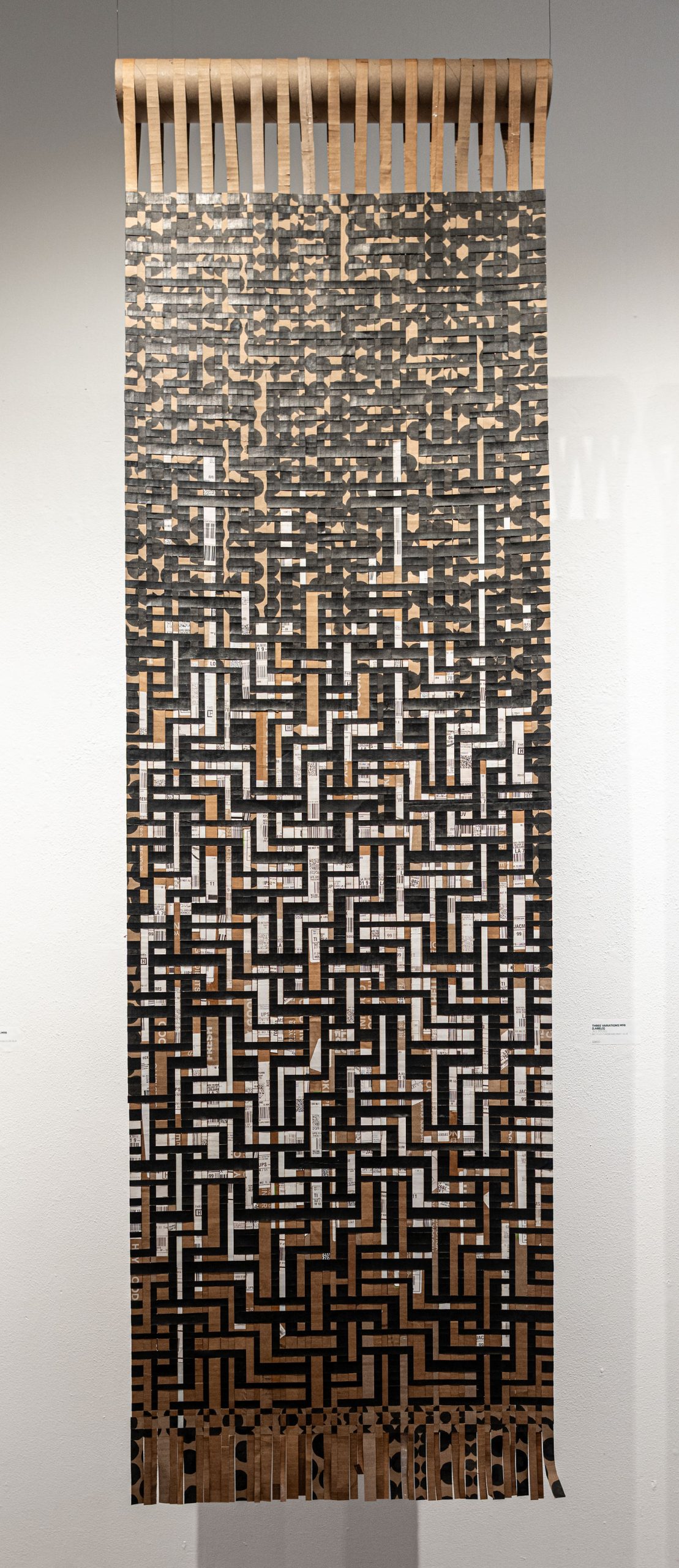
M98 Variation 2 (Black), 2024
recycled cardboard, ink, paper, glue 26.5" x 94"
Through the methodical deconstruction and reassembly of cardboard, I transform everyday materials into complex tapestries that reveal the often overlooked beauty and potential in discarded objects. This process underscores my commitment to both artistic innovation and sustainability, using the medium to explore and critique consumer culture.
Jill Stoll
M98 Variation 1 (Green), 2024
recycled cardboard, watercolor, paint, glue 26.5" x 94"
Consumer Cloth is a body of work that consists of intricately woven artworks made from recycled cardboard boxes. These pieces not only reflect an environmentally conscious approach but also serve as a personal audit of my consumption patterns.