Marilyn Geary
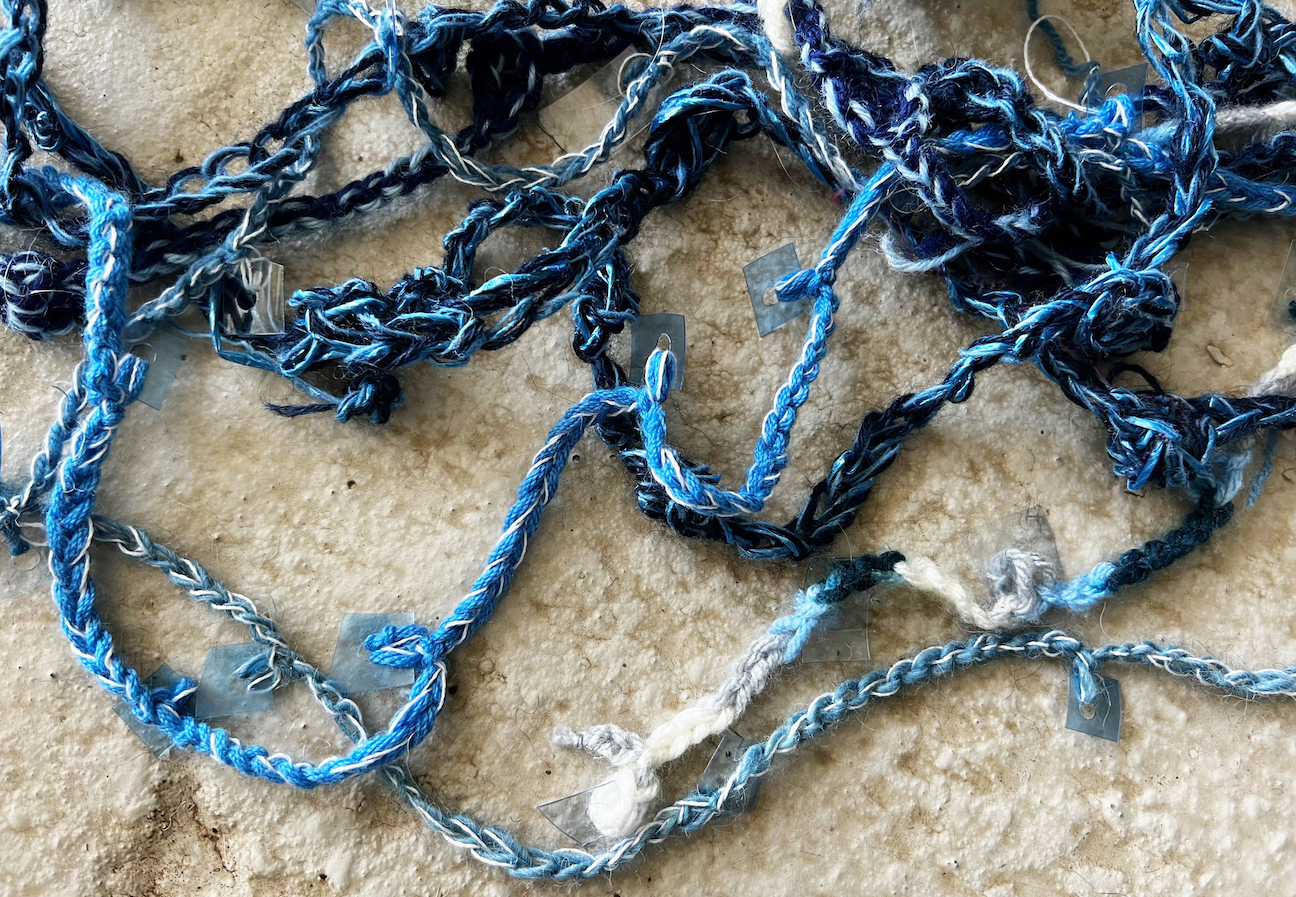
Water Flaw detail, 2024
Cotton cord, synthetic yarn, plastic water bottles, found pipe; braiding, crochet, stitching 60" x 48" x 6"
Bits of plastic embedded into strands of crocheted and braided fiber emerge from a culvert, depicting the surface runoff that is a source of the microplastics polluting our waters.
Marilyn Geary
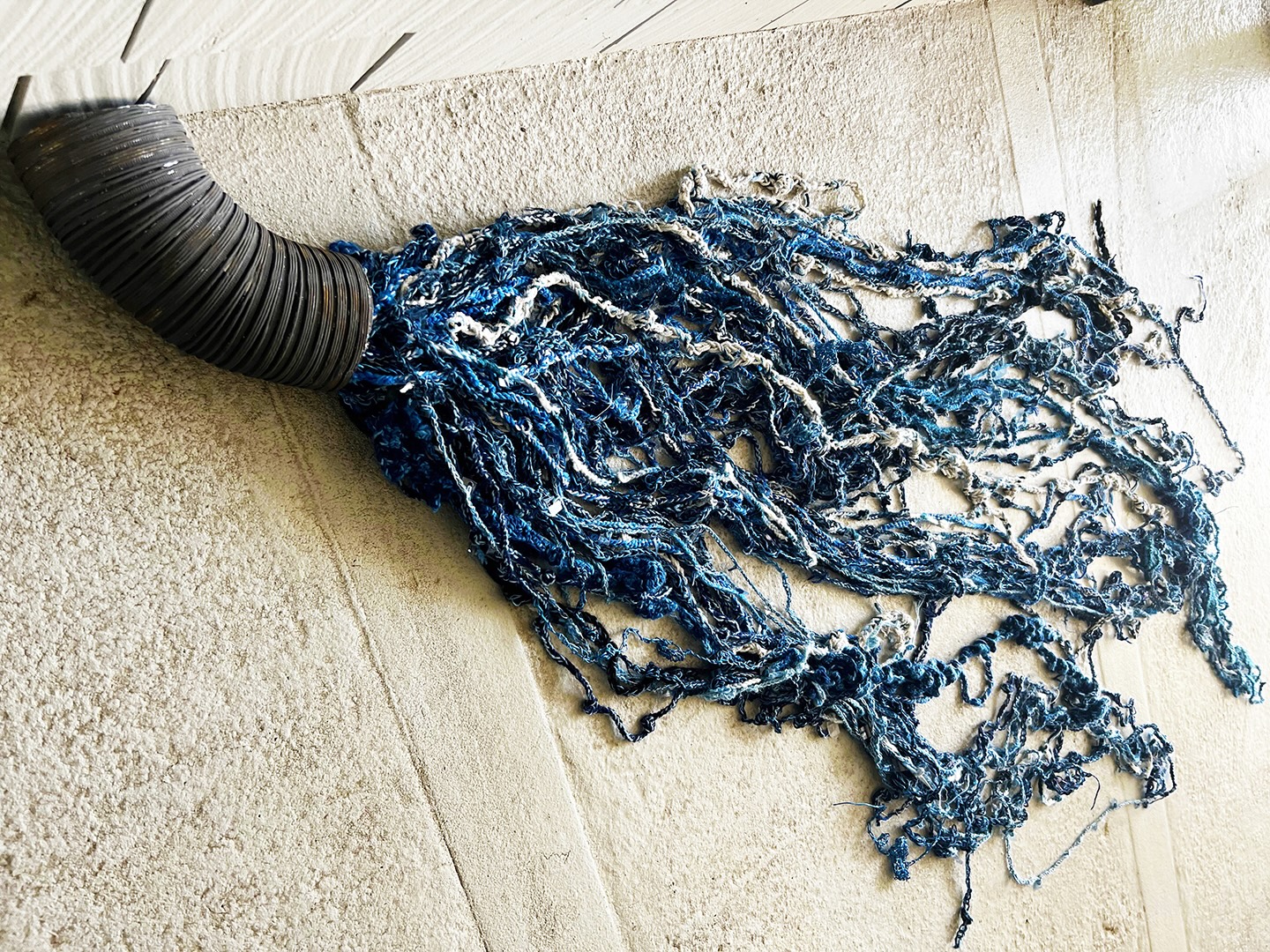
Water Flaw, 2024
Wool, cotton, acrylic yarns, recycled water bottles, distressed dryer vent; braiding, crochet, stitching. 60" x 48" x 6"
Bits of plastic embedded into strands of crocheted and braided fiber emerge from a culvert, depicting the surface runoff that is a source of the microplastics polluting our waters.
Marilyn Geary
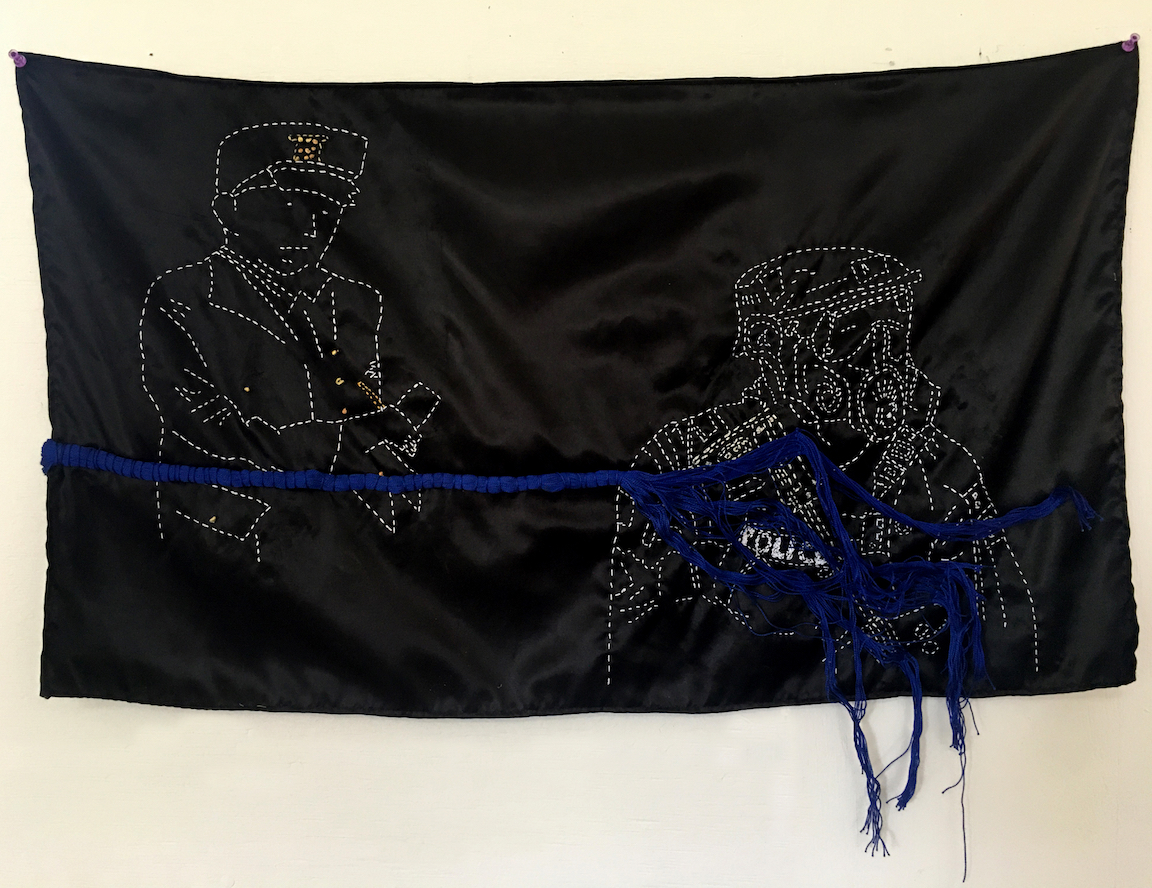
The Thin Blue Line Unravels, 2021
Commercial Fabric, embroidery thread; stitching 21" x 30" x .75"
The Thin Blue Line is a symbol that represents law enforcement officers as the "blue line" separating the public from chaos and disorder. Recently the line has unraveled as police grow increasingly militaristic. The figure on the left represents the friendly policemen of my childhood who gave jaywalking tickets and helped cats out of trees. The figure on the left represents the law enforcement officers of today who join the National Guard in policing our streets in communities where in most cases they are not wanted.
Marilyn Geary
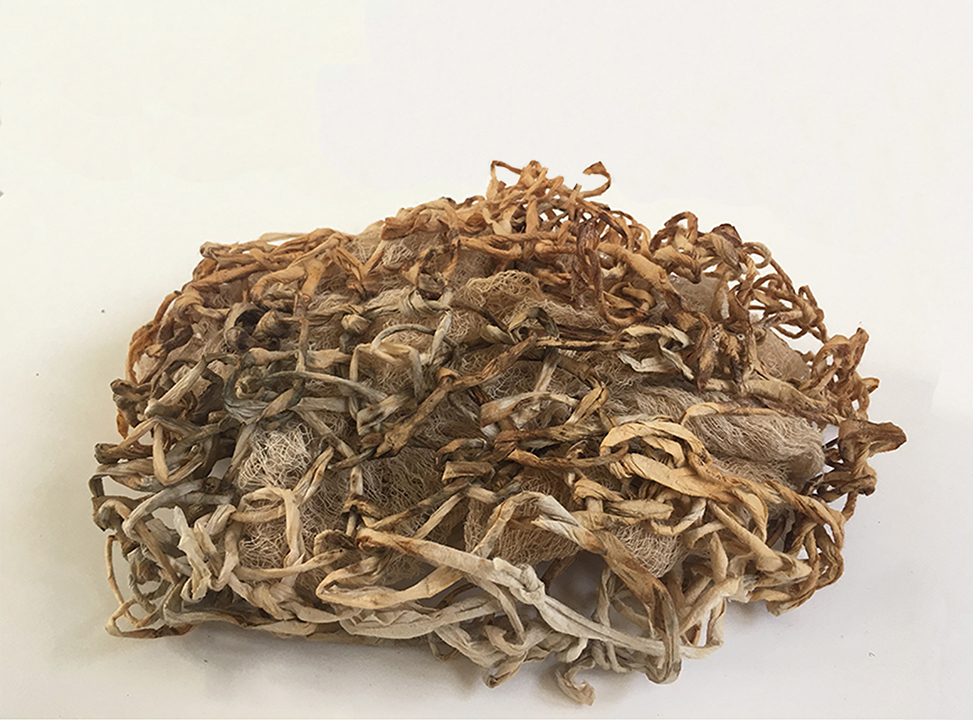
Sheathing, 2021
Handmade paper yarn, cotton gauze; natural dyed. 14"x 9" x 7"
Marilyn Geary
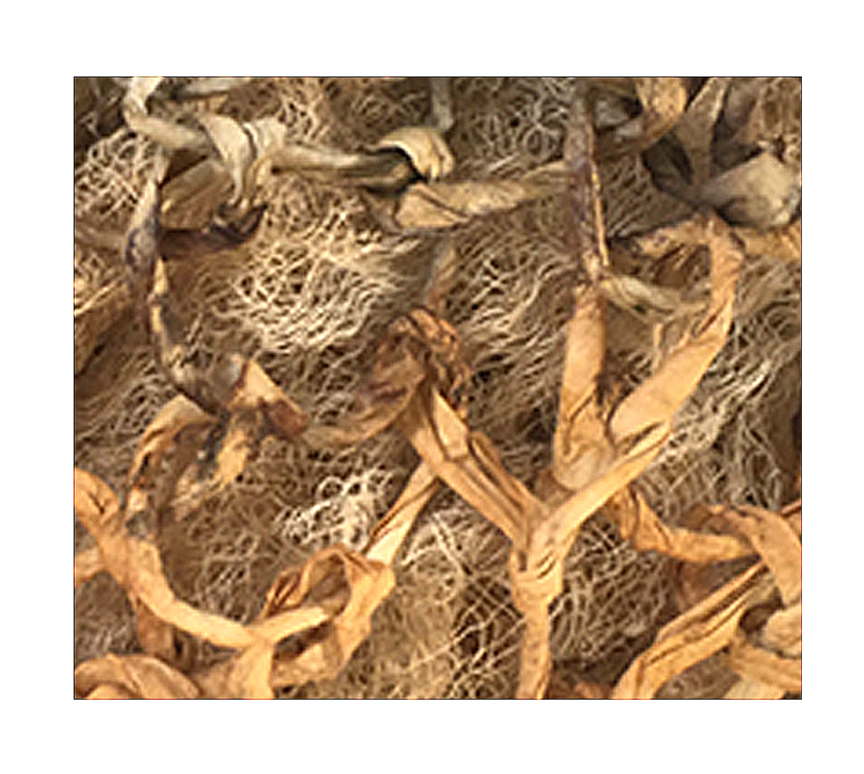
Sheathing, close up, 2021
Handmade paper yarn, cotton gauze; natural dyed. 14"x 9" x 7"
Marilyn Geary
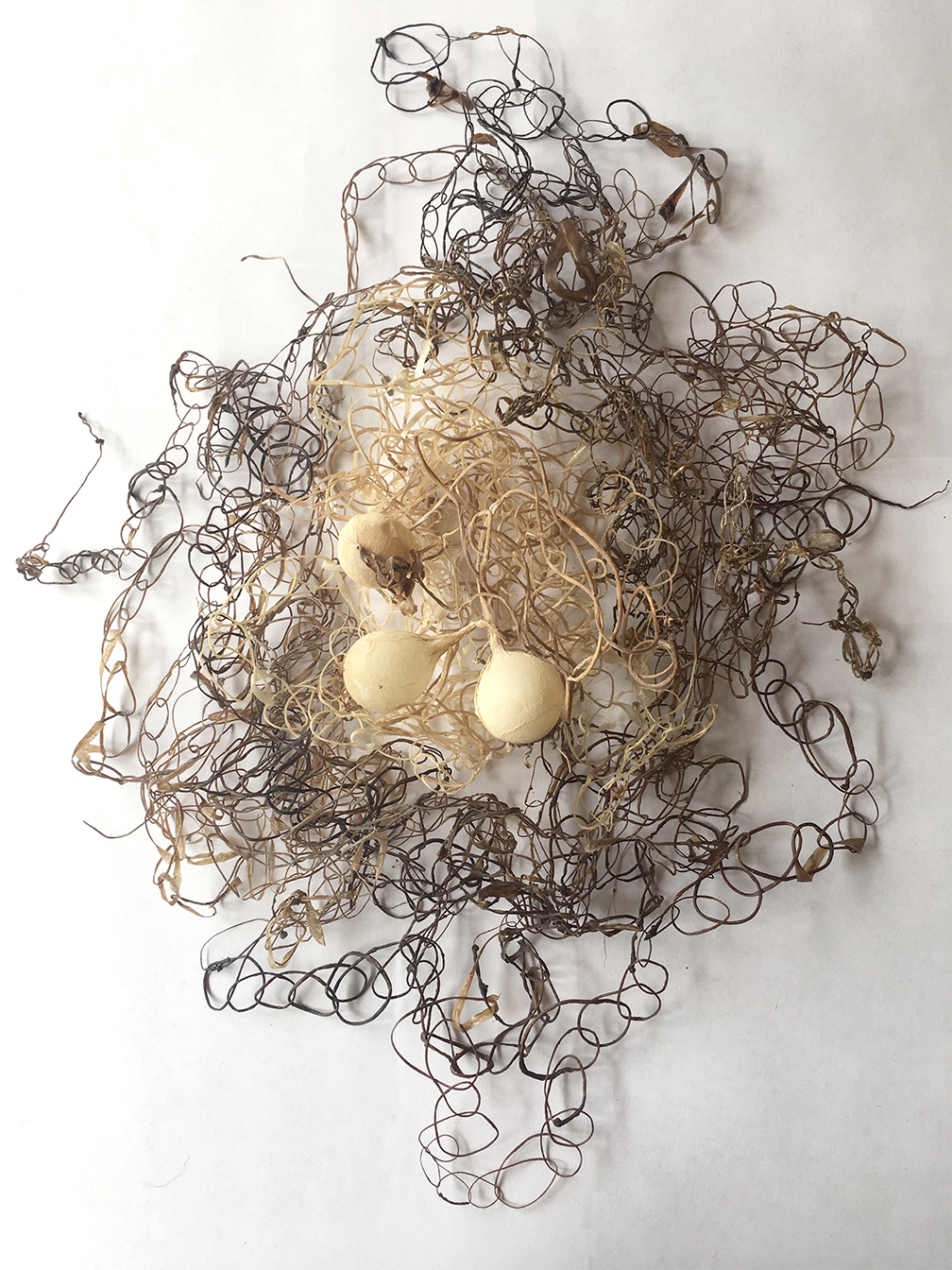
Nestling, 2021
Natural dyed gut with seaweed 16" x 12" x 4"
Marilyn Geary
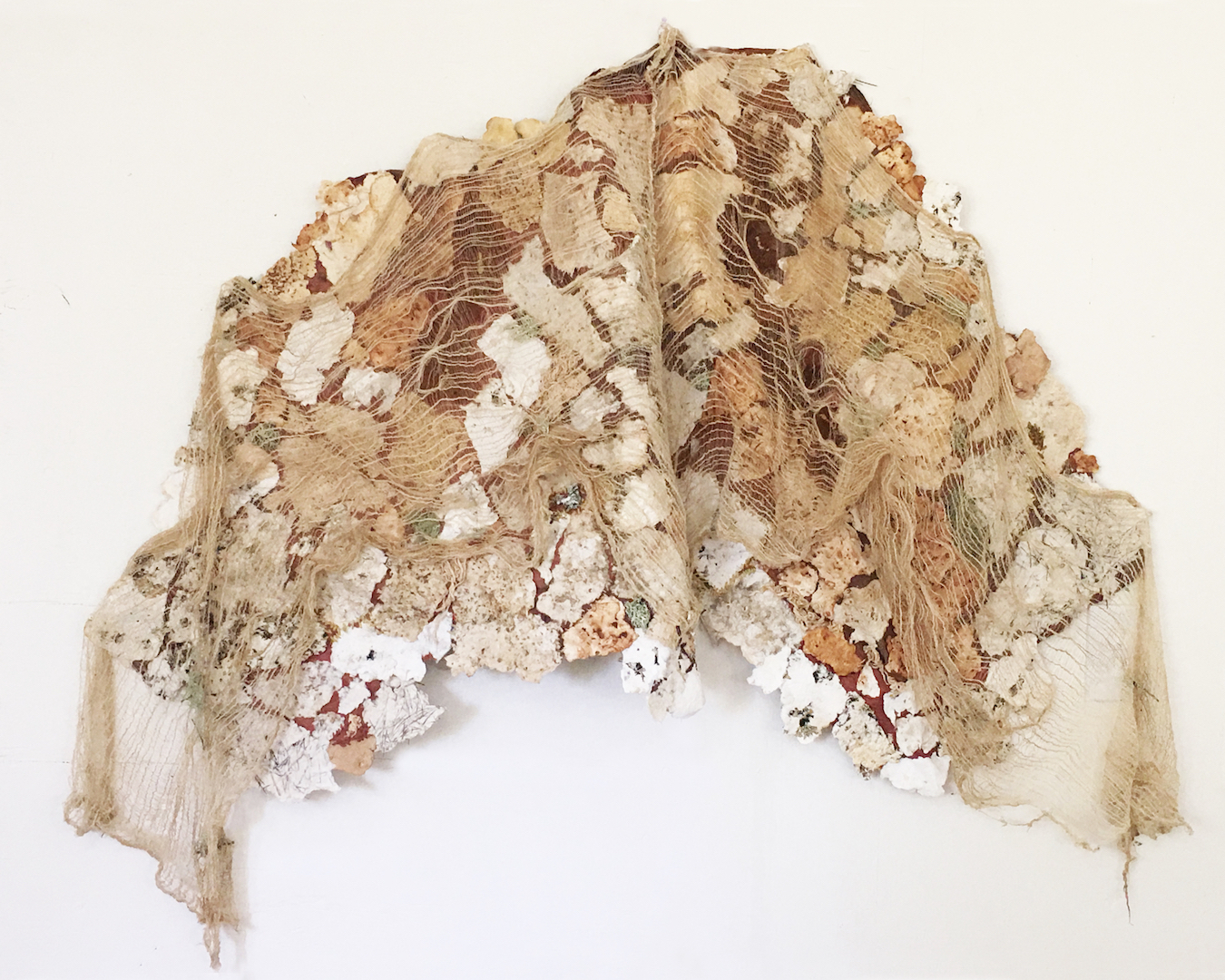
MendingTheMountain.jpg, 2020
Mulberry paper, handmade paper from foliage found on Mt. Tamalpais, natural dyed cotton gauze 48" x 36" x 5"
Marilyn Geary
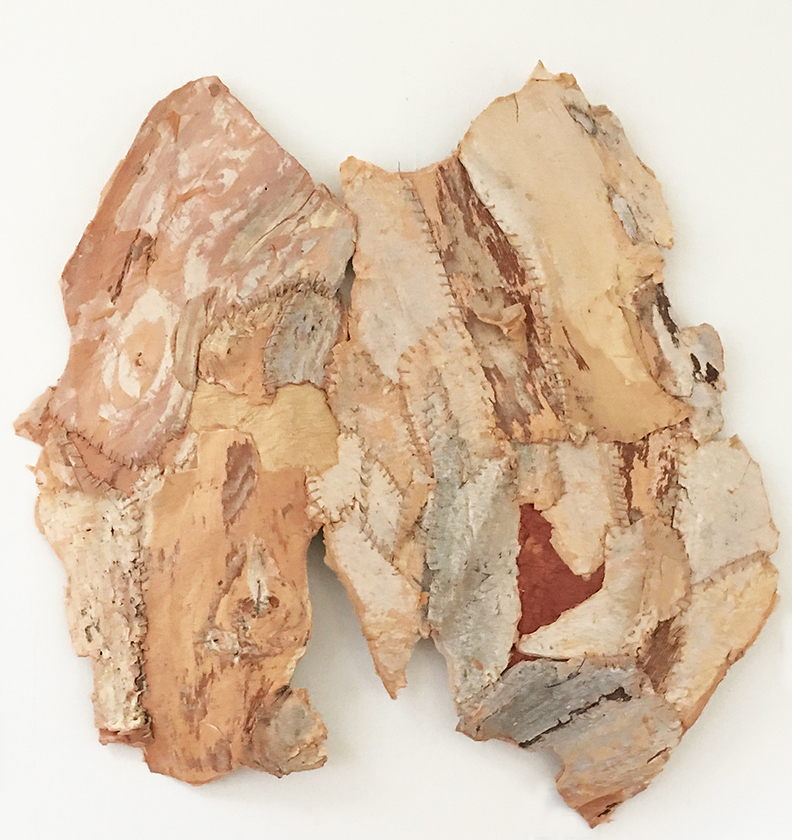
Amor One, 2020
Mulberry paper, paper tree bark, wool; joomchi 36" x 30"
Marilyn Geary
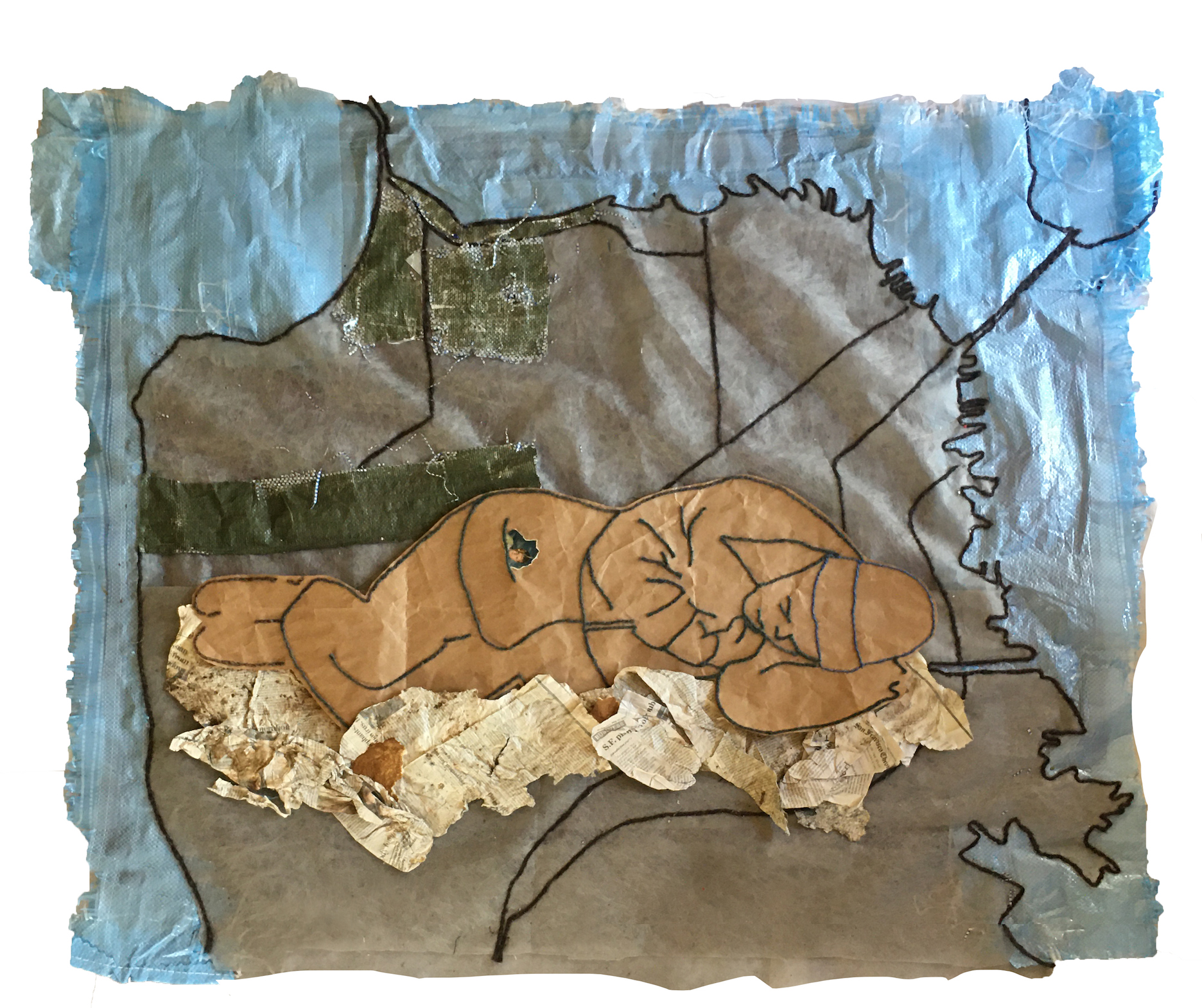
I Too Was Once a Child With Dreams, 2021
Plastic tarp, landscape fabric, kraft paper, wool 48" x 48"
I conceived this piece after reading an article describing a San Francisco neighborhood where residents placed large boulders in front of their homes to prevent people from sleeping there. Then I read that the City of San Francisco installed 400-pound boulders under the Cesar Chavez freeway underpass for the same reason, wishing these people would all go away. I thought first of creating a San Francisco map depicting the many homeless sites, but over time I simplified the image to a single young man who could be lying on the streets anywhere and everywhere in the city. None of us dream when we’re little children that we will end up sleeping on the streets without a home. This young person could be you or me, your son or daughter, or mine. I used materials commonly found on the streets, including scraps of a San Francisco newspaper which must have contained in it somewhere an article about the perpetual problem of those forced to sleep out in the cold.