Macarena Zilveti
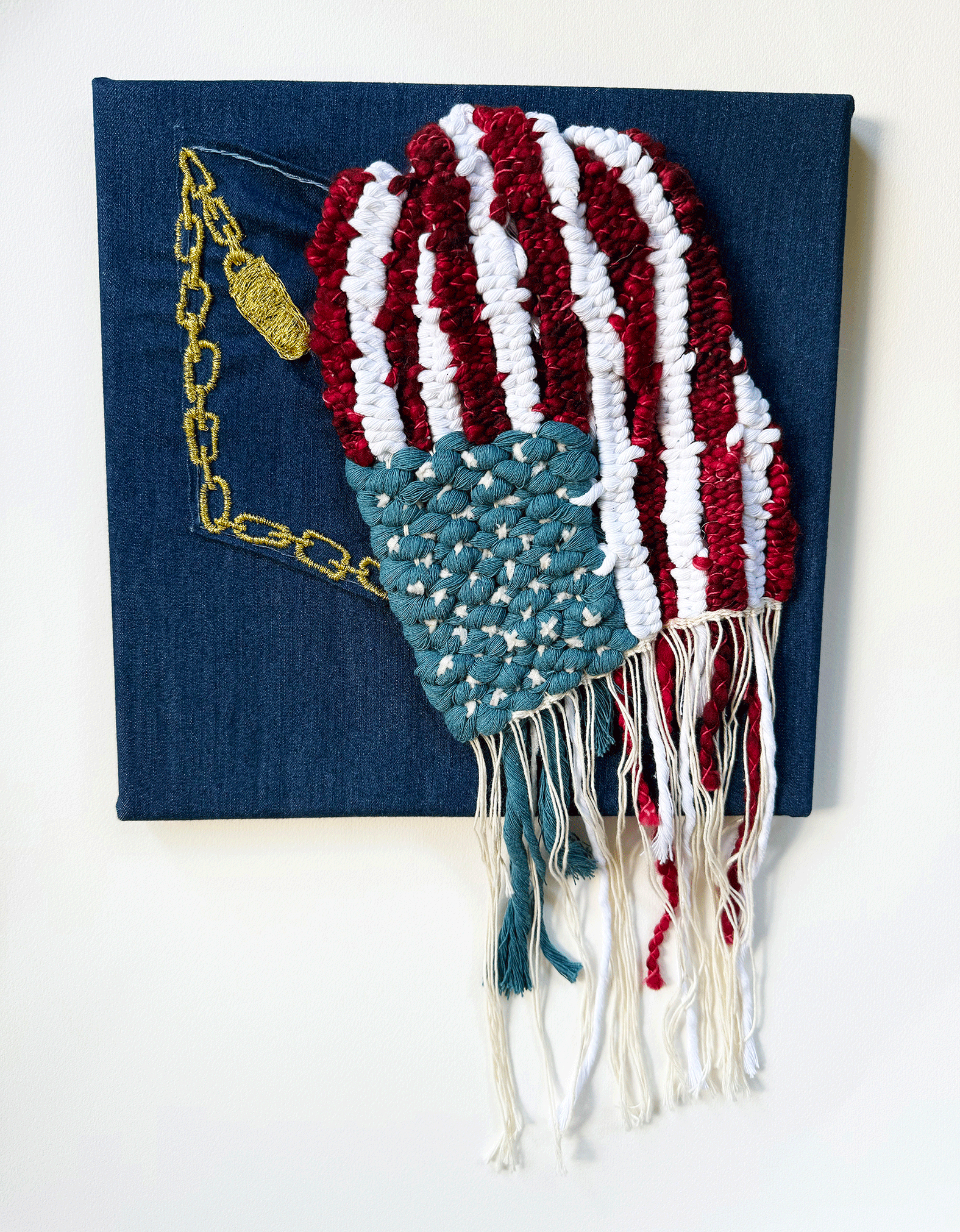
American Denim, 2023
Denim, stitched thread, hand-woven fiber 12" wide x 19" high
When we think of American denim, the first name that often comes to mind is Levi Strauss, who established the first company to manufacture blue jeans in the United States. Yet the story of denim—and its iconography—goes much deeper than fashion. American Denim highlights the materials that built this country: cotton, indigo, and the invisible labor of enslaved Africans whose knowledge and bodies made these industries possible. Denim is woven from cotton fibers dyed with indigo. Indigo has a direct historical link to the African slave trade. Eliza Lucas, who launched the indigo industry in South Carolina, owned enslaved West Africans whose expertise in cultivating, fermenting, and preparing indigo made the crop successful. As historians note, “slaves provided the labour for and sometimes supervised whole operations” of indigo production. Their skill was foundational—even though their names are erased from the narrative. Cotton, the base fiber of denim, was harvested by enslaved people under brutal, labor-intensive conditions. The cotton grown in the South was shipped north, transformed into denim, and eventually became the blue jeans that today symbolize American identity, resilience, and freedom—ironically built on unfreedom. In this piece, the American flag is hand-woven in cotton and mounted on denim, its strands unraveling as if exposing what lies beneath the myth. The golden chain and shackle outline remind us that the prosperity behind denim was tied to bondage. This is the complex, often overlooked history of American denim.
Macarena Zilveti
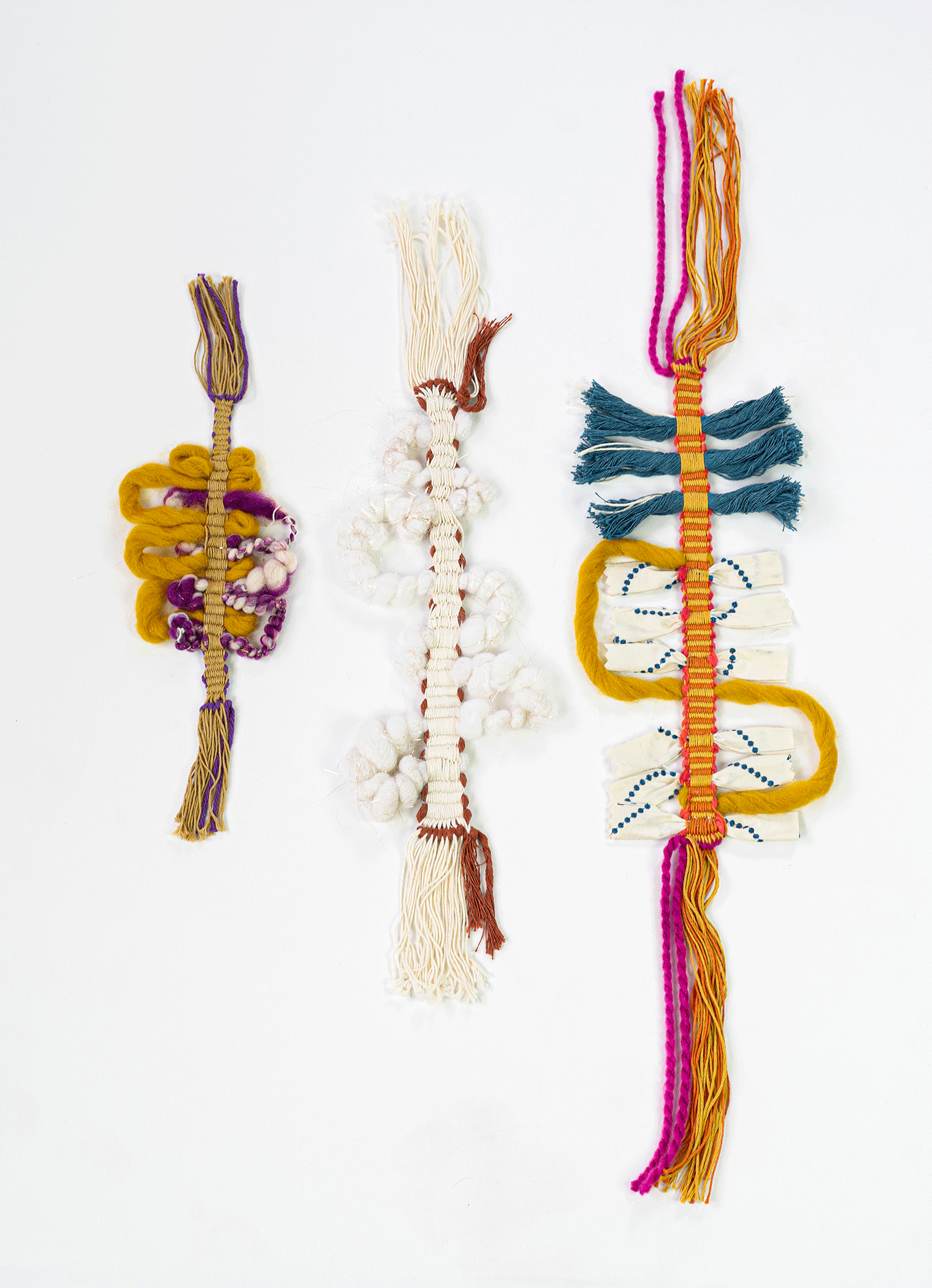
Faz de Urdimbre Trio, 2023
Yarn, cotton, woll Earth: 4" wide by 13.5" high, Air: 5" wide by 19" high, Sky: 6.5" wide by 27.5" high
My work honors the rich, multi-layered history of my ancestry through the tactile and expressive medium of fiber. Rooted in the traditions of the Andes, my pieces reflect the enduring presence of the mountains that shaped my upbringing in Santiago, Chile, and La Paz, Bolivia. The textured surfaces and varied fiber widths in my weavings echo the landscapes and the strength I draw from them. Faz de Urdimbre weavings pay homage to ancient Inka textile traditions, using soft fibers to create personal amulets of strength and resilience. This trio honors my ancestral complexity, blending my 13% Inka heritage with my Basque, French, and German roots. Through this work, I reflect on the interconnectedness of all the "pieces" that form my identity. As a female artist with Inka heritage, I embrace the power of these ancestral threads, weaving both tradition and personal history into my art. My creations are a celebration of resilience, honor, and a deep connection to the past, offering a space for healing, reflection, and pride in the diversity of my heritage.