Hannah Rothschild
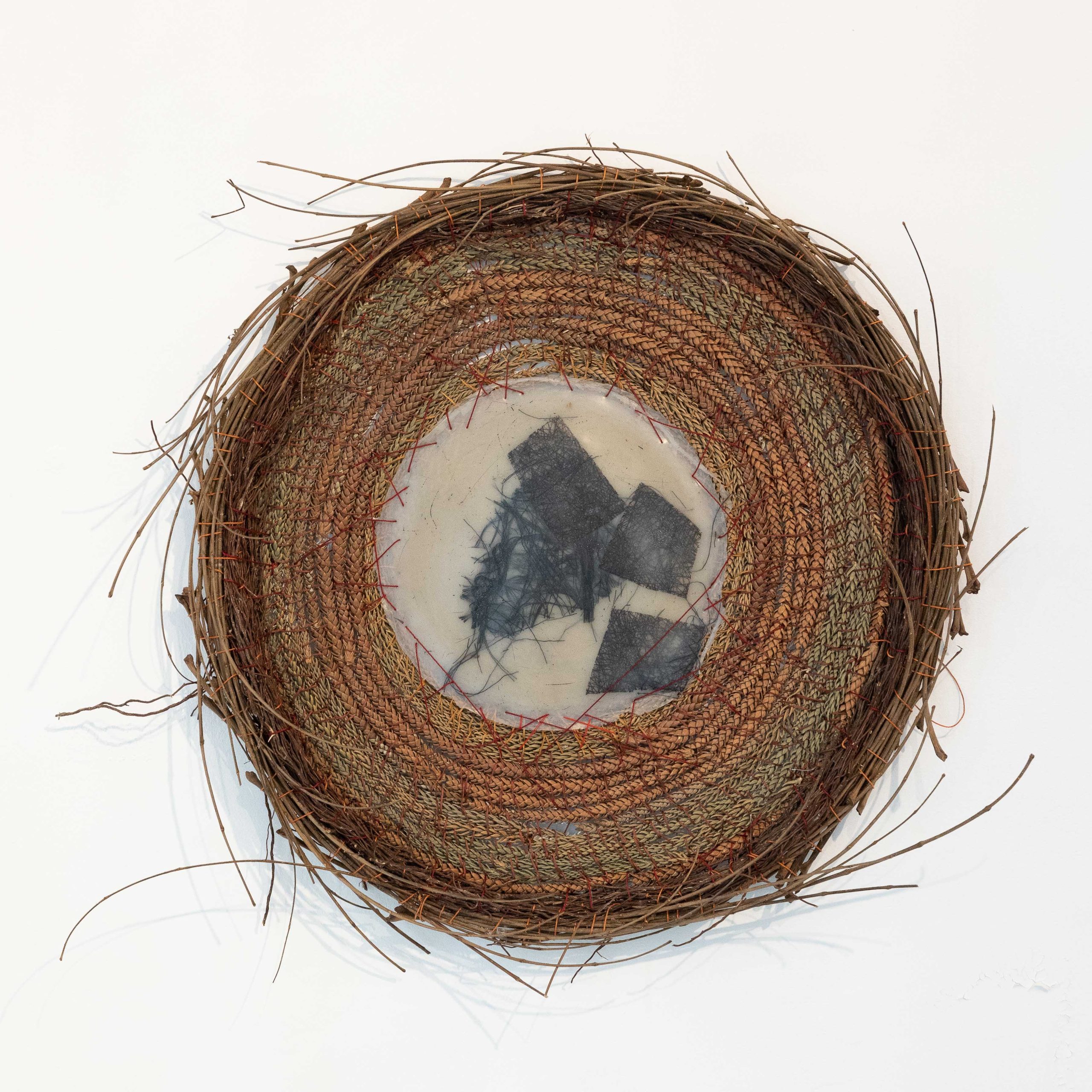
Allelopathy, [2023], Hannah Rothschild, 2023
Ficus aerial roots, thin pecan branches, Araucaria leaves, red and black cotton thread, plant fibres embedded in cast PVA adhesive 55 x 55 x 5
The term allelopathy derives from the Greek allēlōn, meaning “one another,” and pathos, meaning “suffering” or “harm.” It describes the ability of one plant to influence or inhibit another through chemicals released into its environment. Allelopathy emerged from my observation of the garden surrounding my home, where plants continuously compete for territory and for limited resources—soil, water, and sunlight. The ficus dominates this environment through its spreading aerial roots and by releasing substances that inhibit growth beneath it, suppressing even its own seedlings. Materials gathered from this contested garden—ficus aerial roots, pecan branches, and Araucaria leaves—are coiled, woven, bound, and stitched together with red and black cotton thread. At the centre, plant fibres are embedded in cast PVA adhesive, appearing simultaneously preserved and trapped. By bringing these competing species into a single circular structure, the work embodies a naïve wish that they might coexist peacefully. Yet they already live side by side—not in harmony, but through an unending struggle for space, light, water, and survival.
Hannah Rothschild
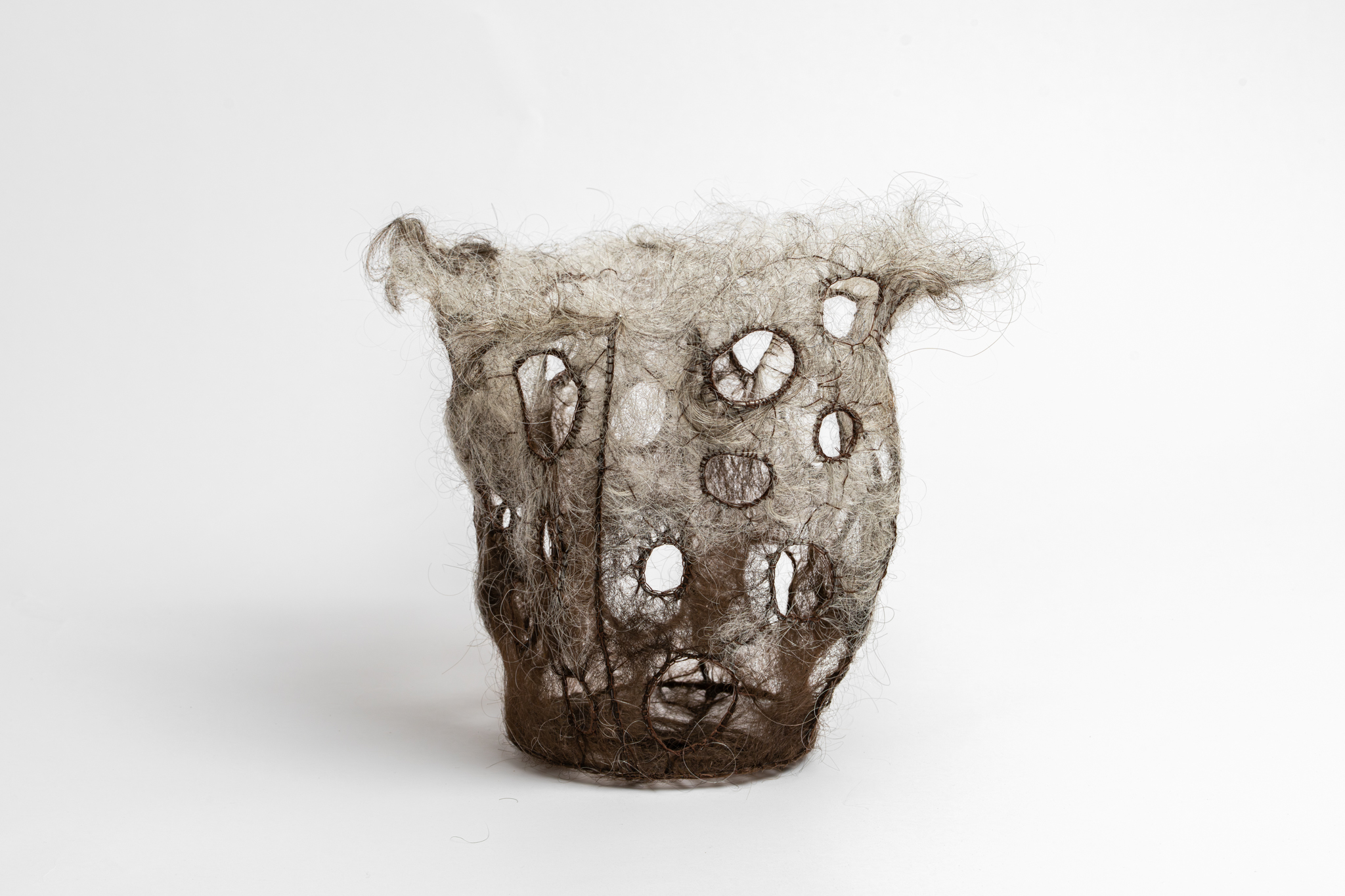
Where Do You End and I Begin?, [2026], Hannah Rothschild, 2026
My late mother’s hair, my own hair, cotton thread, and wire; three-dimensional hand embroidery 24 x 30 x 30 cm
Where Do You End and I Begin? examines the shifting boundary between my late mother’s body and my own. Her hair was collected from her hairbrush and, with her permission, after her haircuts; mine was gathered from my own brush. Through three-dimensional embroidery, our hair is intertwined with cotton thread and wire to form a fragile, porous structure. The work explores the boundaries of time and memory, and the material and spiritual traces that remain after the living body is gone. My mother’s hair meets mine: two bodily remnants, detached from the lives that produced them, encounter one another within the artwork. Their interweaving unsettles seemingly fixed territories—between self and other, mother and daughter, living and dead, presence and absence. The openings within the form hold absence as a tangible part of the work, asking where one body, identity, and memory end and another begins. Photo credit Photograph: Daniel Hanoch
Hannah Rothschild
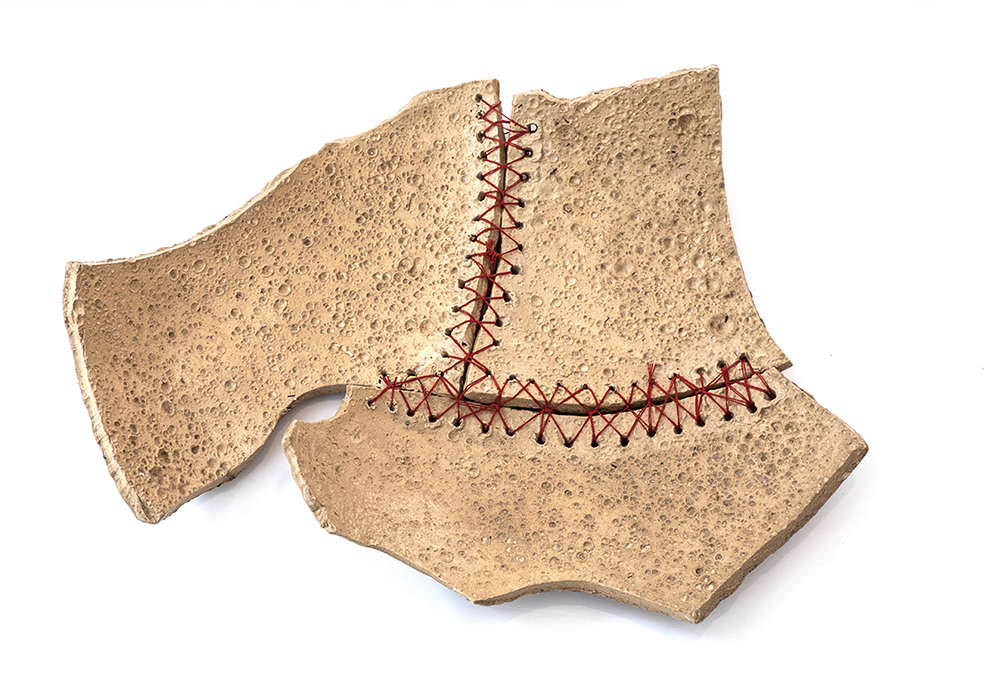
Stop the Erosion, 2023, Hannah Rothschild, 2023 -2026
Fragile soil clods collected from Nahal Ashosh in the Arava Desert, Israel, red cotton thread; piercing, binding, and hand-stitching 31 x 28 x 5 cm
The work is made from clods of earth collected from Nahal Ashosh in Israel’s Arava Desert, a landscape where an ancient seabed meets alluvial sands, forming cracked masses of soil. This earth is inherently unstable: it erodes, drifts, and accumulates anew with seasonal floods, carrying within it a material memory of movement and change. The clods are joined through piercing, binding, and hand-stitching with red thread. The act of stitching moves between healing and wounding, between the desire to preserve and the process of disintegration itself. Each stitch emphasizes the fracture while simultaneously attempting to hold onto the memory of a wholeness that preceded it. Yet the material revealed a paradox: the more tightly I tried to secure the earth, the more it crumbled. The work reflects on the attempt to stop a process that cannot be stopped—to hold onto land, borders, place, and a sense of belonging. Through the tension between fragile earth and taut thread, it considers political, psychological, and ecological conditions in which the effort to tighten, fix, and preserve exposes the fragility of a structure—and may even accelerate its collapse.