Dolores Slowinski
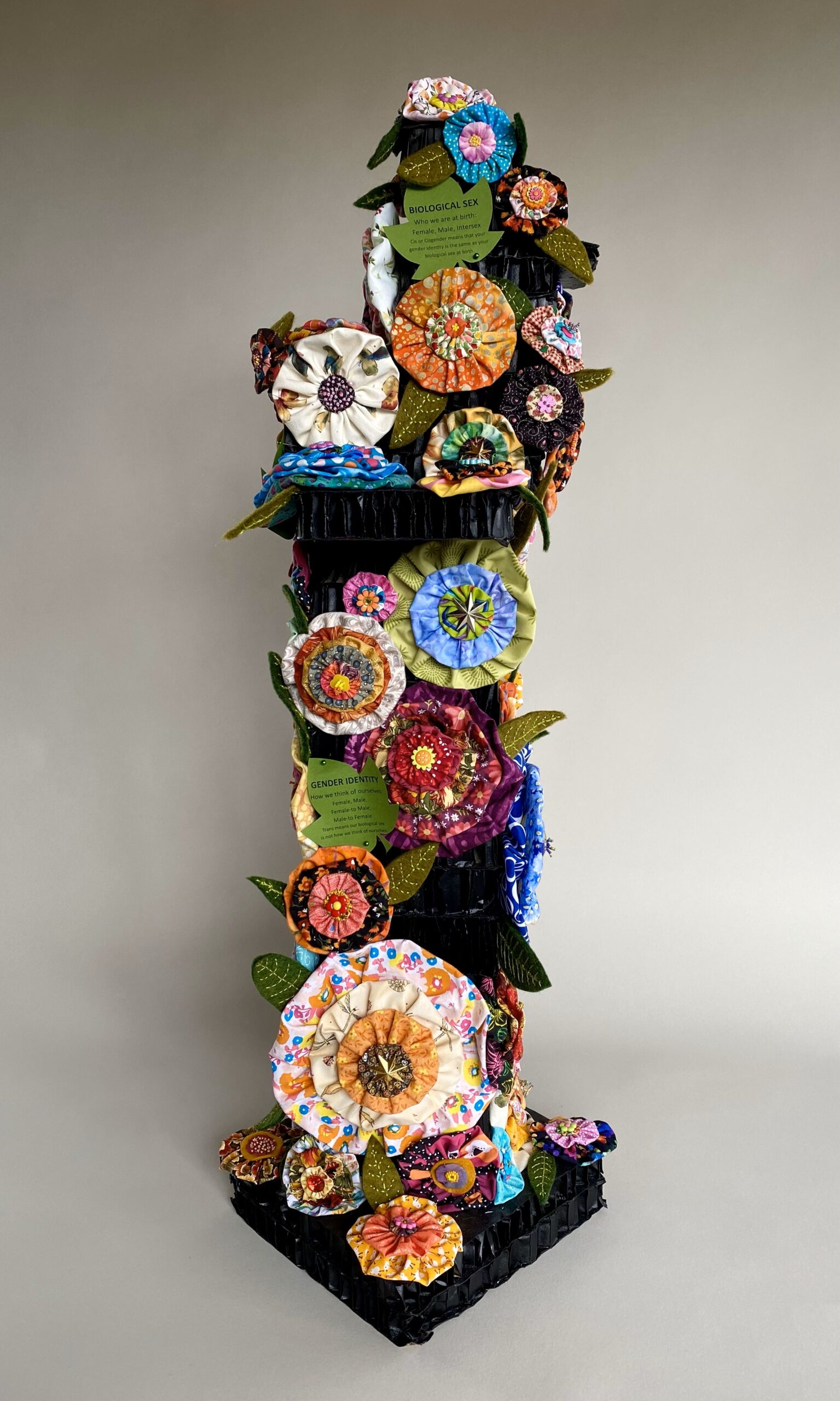
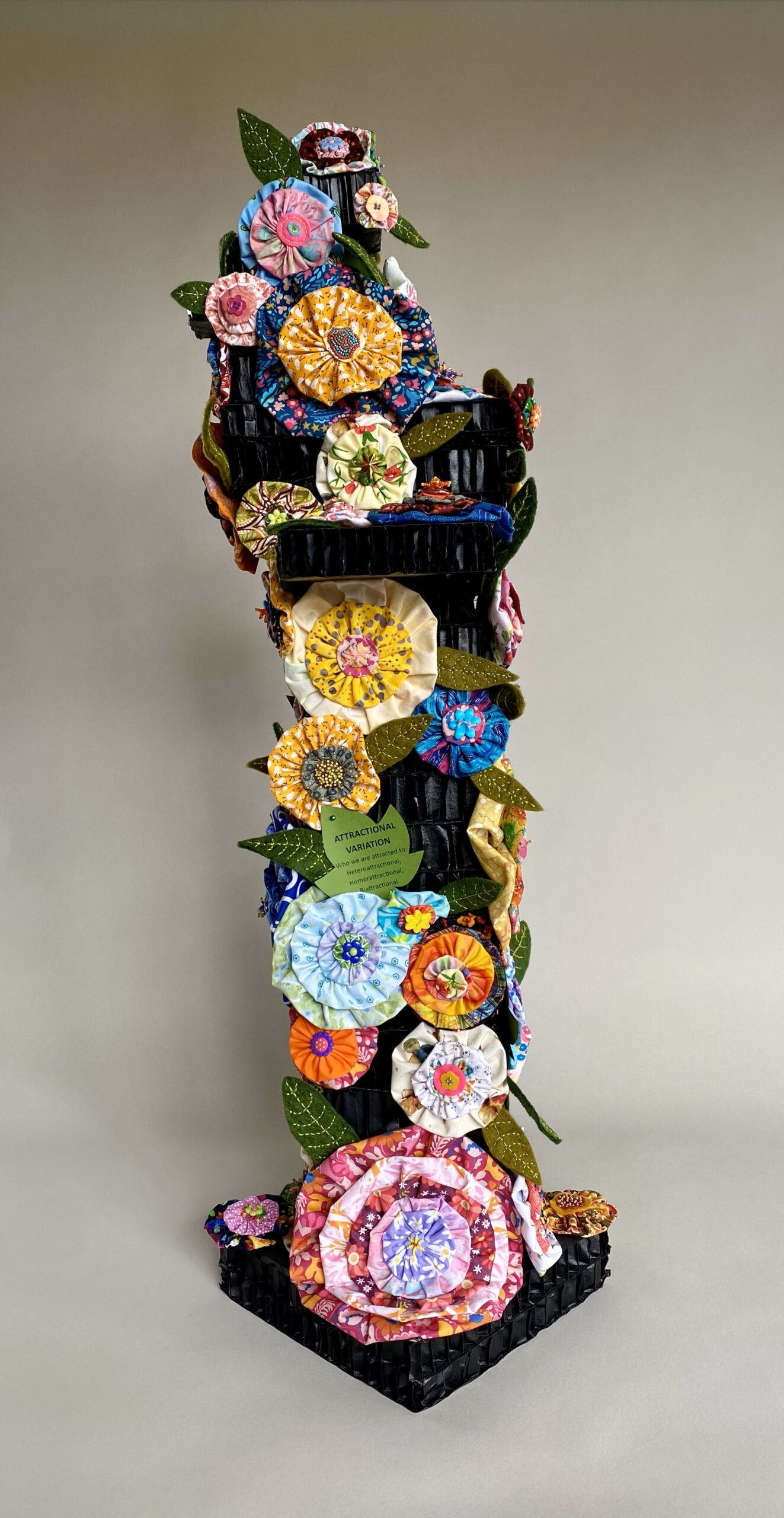
Garden of Human Variation, front, 2024
Fabric, thread, buttons, beads, corsage pins, felt, paper, on cardboard armature. 36" H x 12" D x 12" W
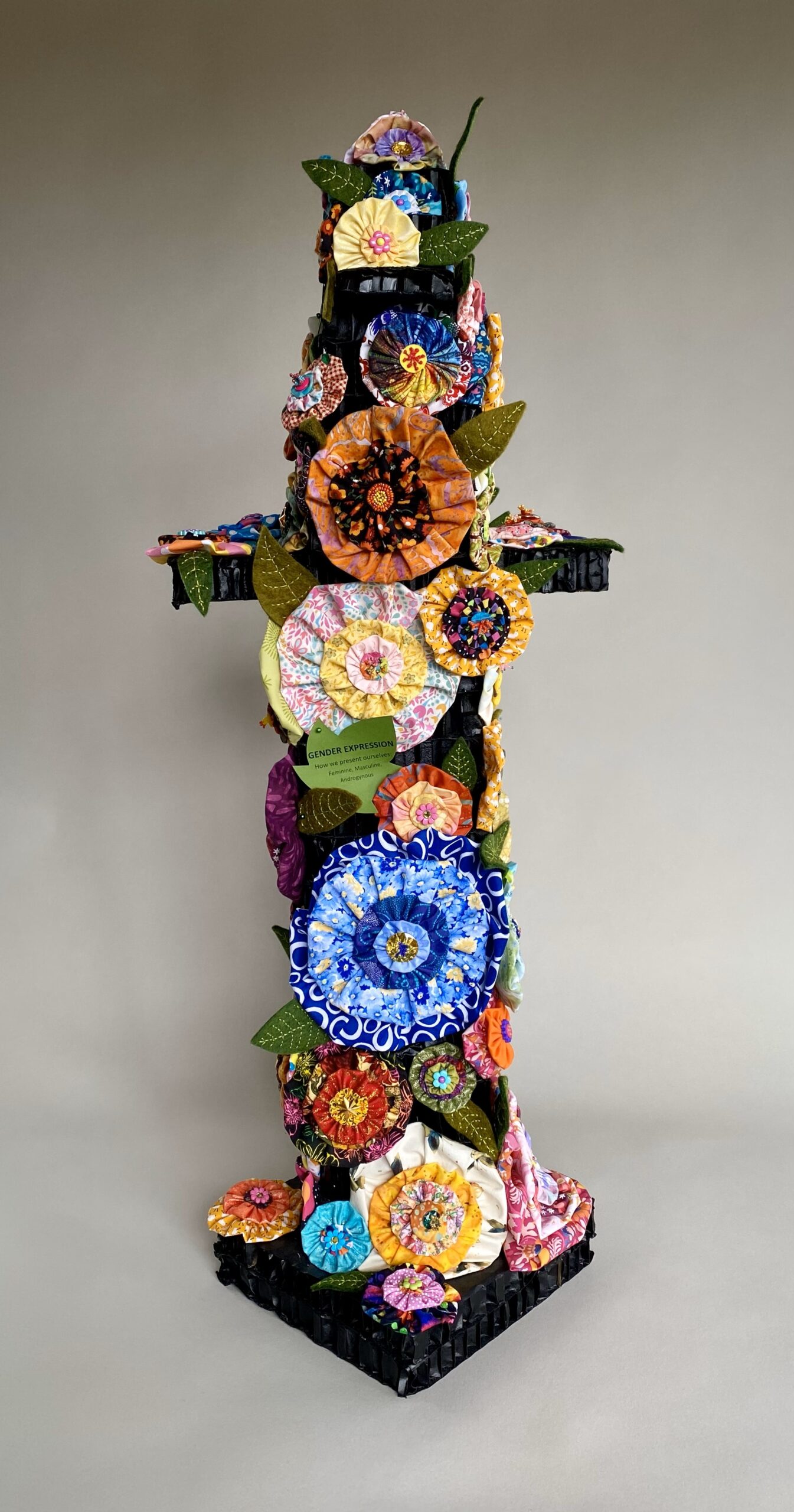
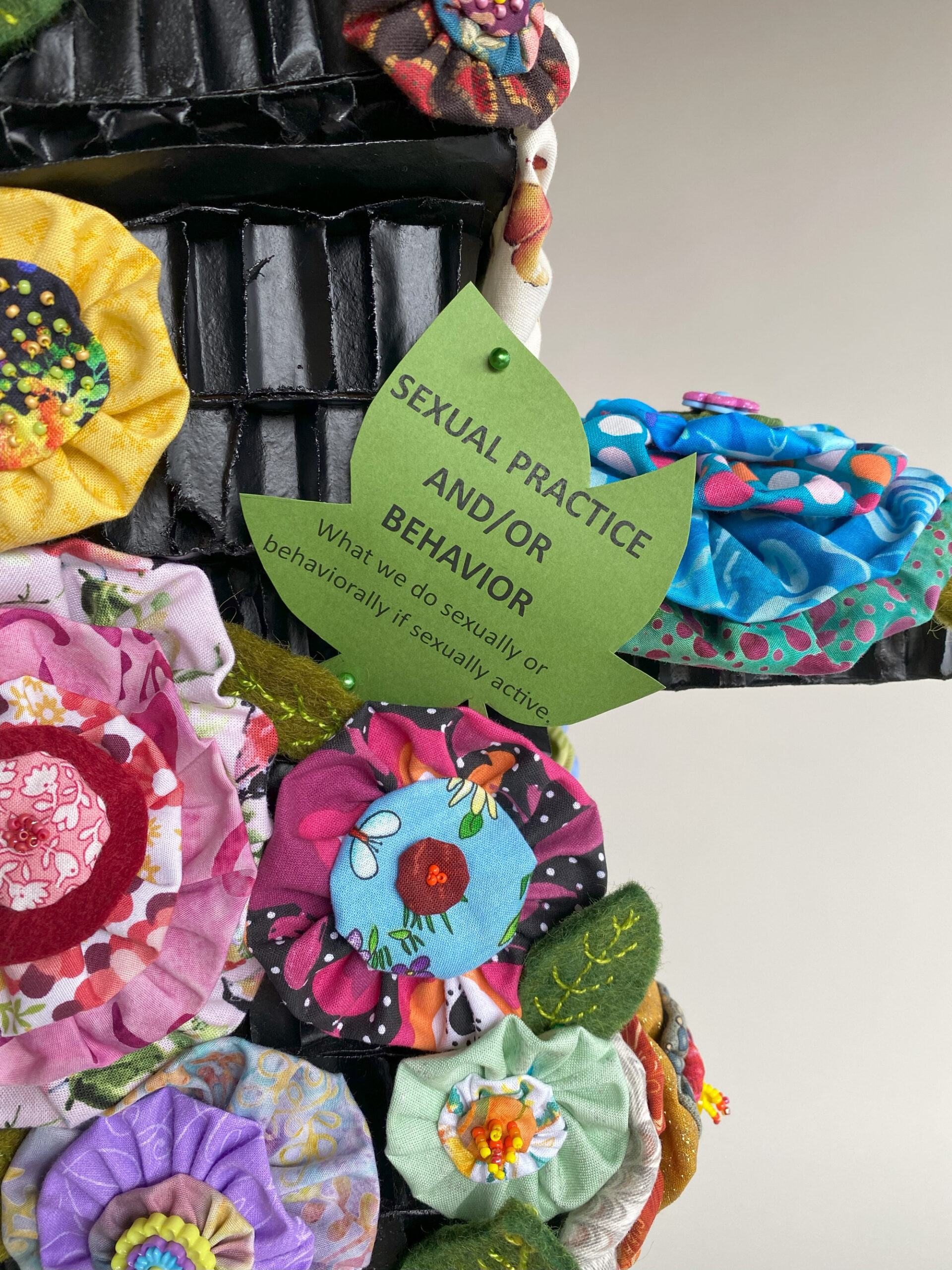
This is the first component of an installation-in-process that arose out of a need to help me understand the terms we use to describe ourselves sexually. As an elder I found terms, that usually appeared in a medical or psychological context, now confronting me on application forms. Plural pronouns, applied to individuals felt awkward at first. I wanted to respect people in my community by learning the meaning of the words and how to use them correctly. I chose to share what I learned in a way that would be non-threatening. Fabric yo-yos are a traditional fiber technique often used to make toys, quilts, household items. I make them in various diameters, stack them up, and use them symbolically to represent the sexual variation within the human race. I include information on paper leaves on each side of the sculpture. My research is ongoing and at least 5 more sculptures will follow. Understanding how amazingly varied we are within our human existence may help us see the world with more empathy and compassion.
Dolores Slowinski
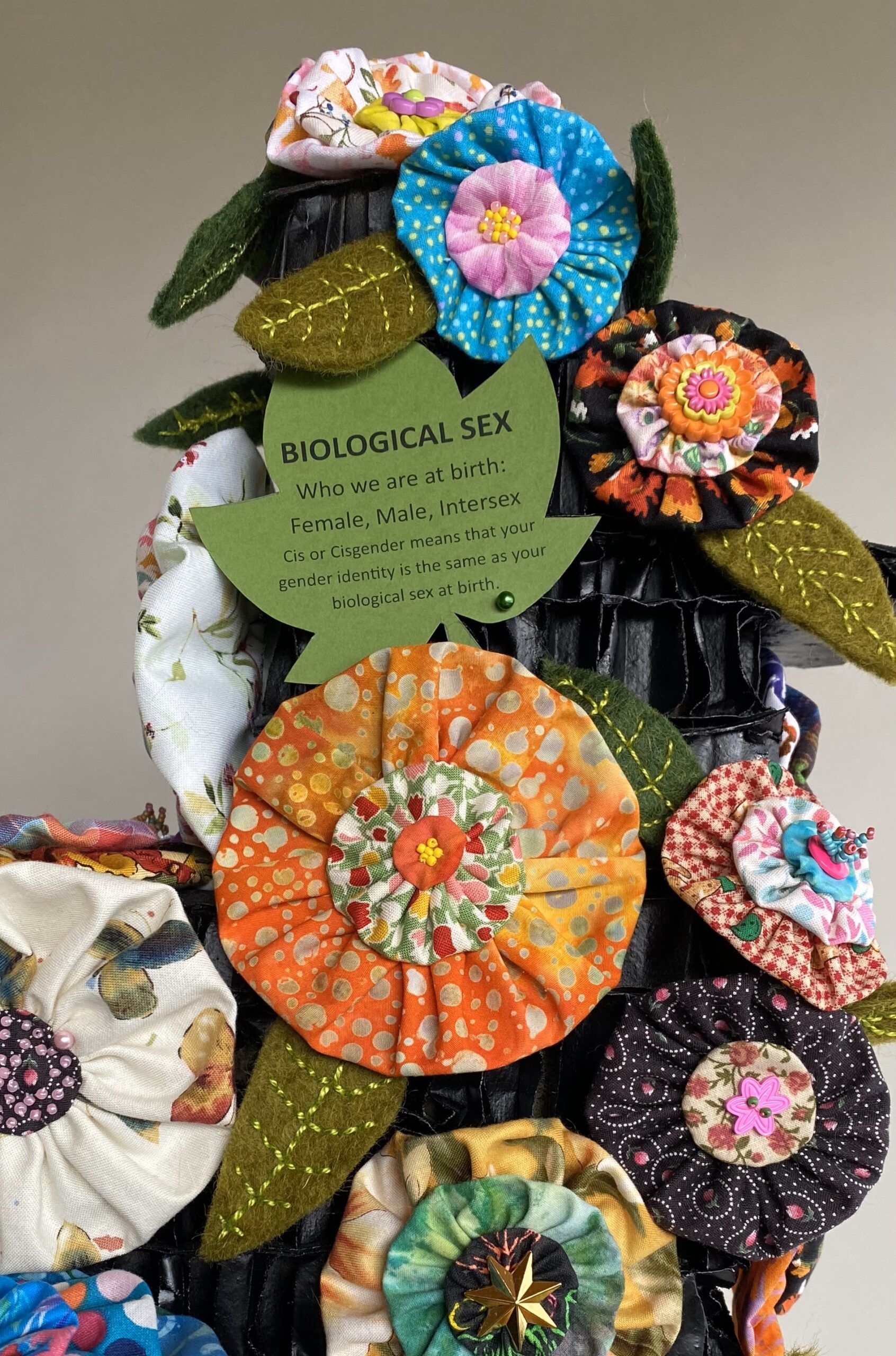
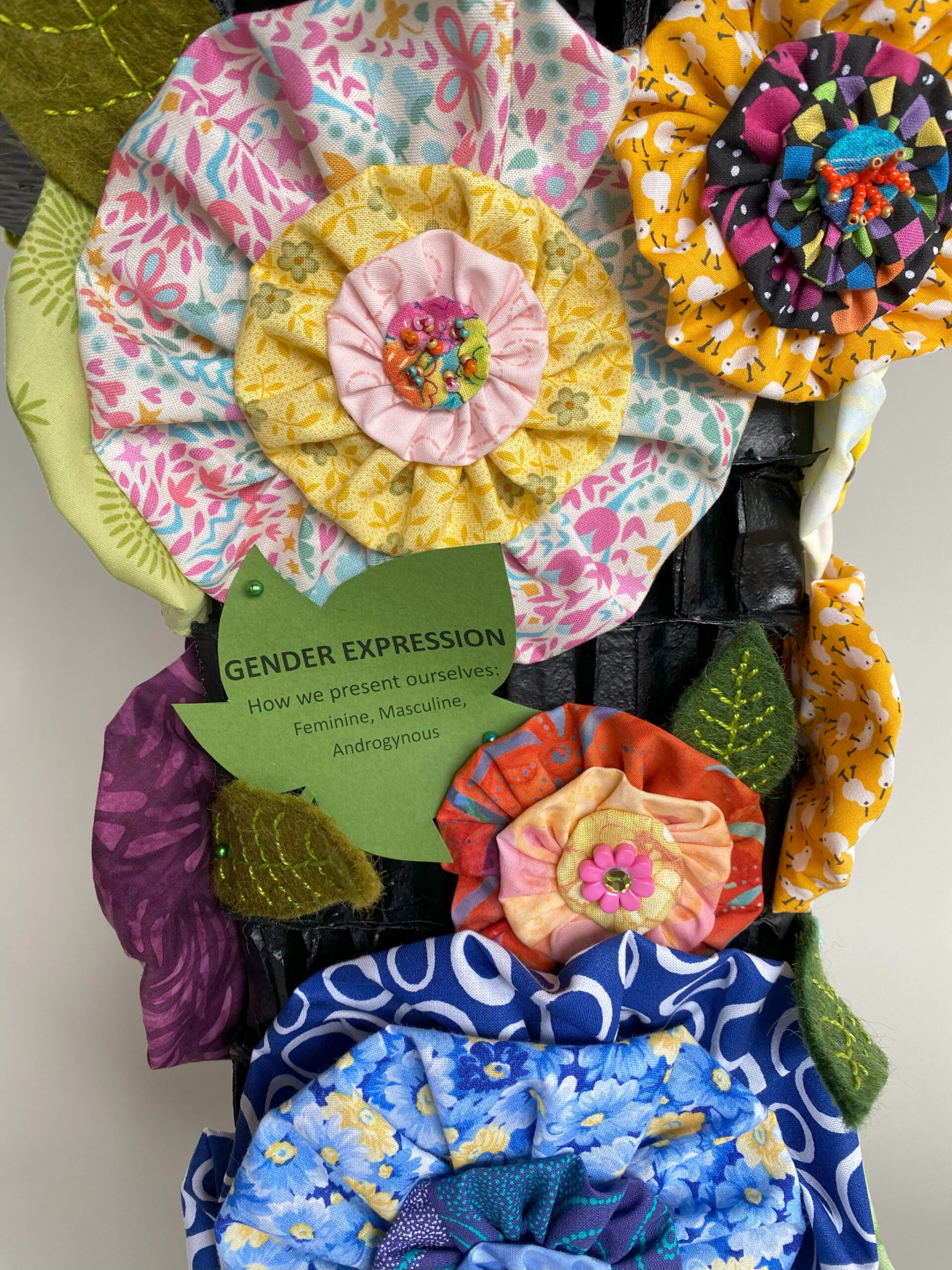
Garden of Human Variation, front detail 1, 2024
Fabric, thread, buttons, beads, corsage pins, felt, paper, on cardboard armature. 36" H x 12" D x 12" W
The text on paper leaves explains the terms used to describe human sexual variation. All human beings are sexual beings. At birth we are identified by our reproductive or sexual anatomy: female, male, or intersex. Intersex people my have chromosome patterns, reproductive or sexual anatomy that does not fit with typical binary ideas of the female or male anatomy.
Dolores Slowinski
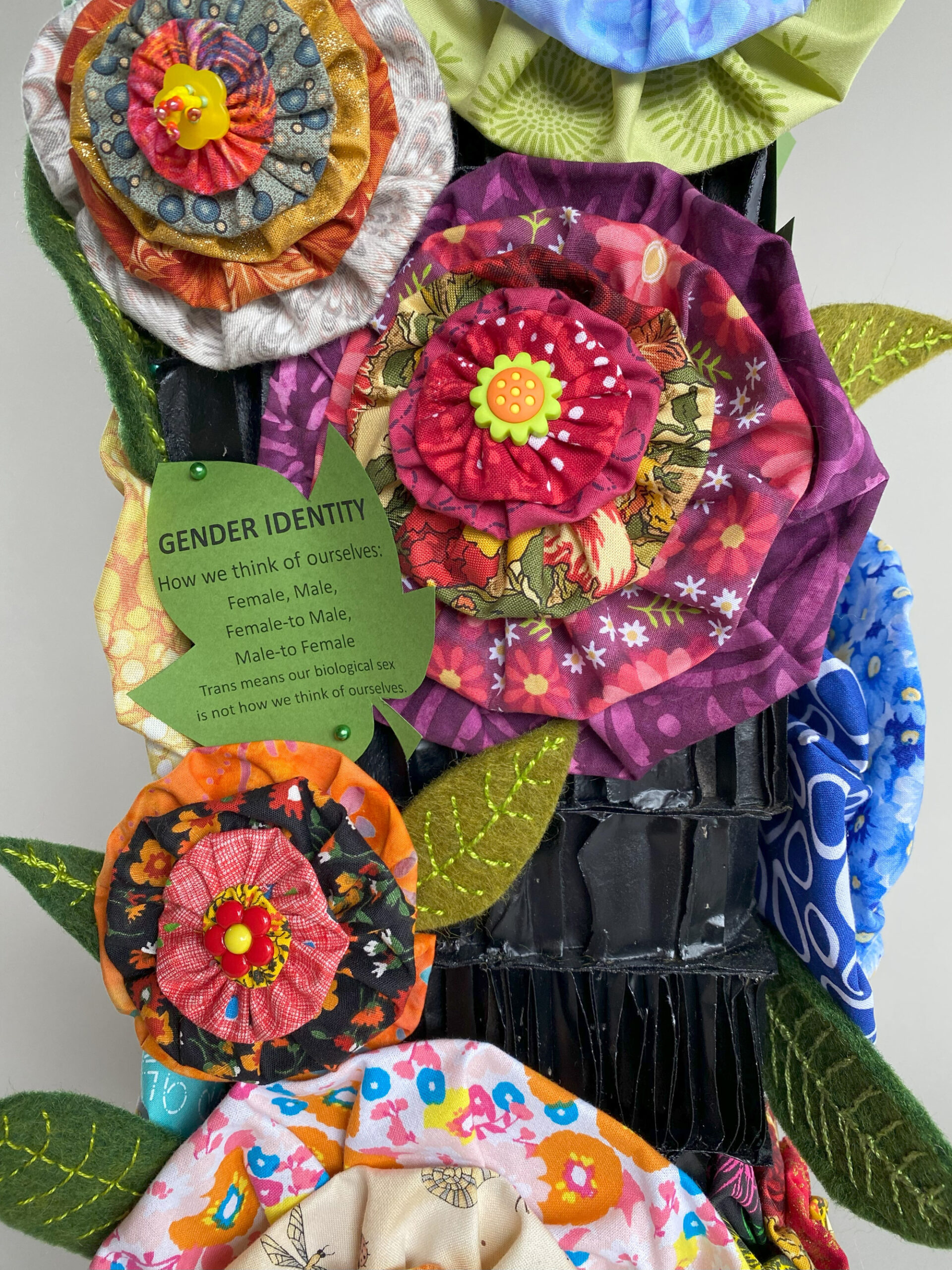
Garden of Human Variation, front detail 2, 2024
Fabric, thread, buttons, beads, corsage pins, felt, paper, on cardboard armature. 36" H x 12" D x 12" W
As we grow into who we are, however, we may find ourselves in agreement or conflict with our bodies. If we are born female and identify as such, or are born male and identify as such, we are CIS gender: meaning that our birth sex agrees with our sexual identity. If we find ourselves in conflict with our bodies, have a female body, but identify as male or have a male body but identify as female, we are Transgender: meaning that our birth sex does not agree with our sexual identity. This conflict may be so uncomfortable that we want to change our sexual anatomy to conform to our sexual identity.
Dolores Slowinski
Garden of Human Variation, Blue side, 2024
Fabric, thread, buttons, beads, corsage pins, felt, paper, on cardboard armature. 36" H x 12" D x 12" W
Sometimes the fabrics were stacked to form monochromatic flowers or flowers with contrasting color layers. I purchased some of the fabrics, but as word spread of the project, my sister, fiber friends, friends of friends, all donated fabric from their stashes. I even received fabric and yo-yos from a woman whose mother was a quilter and had died. One of those yo-yos, red and cream check, forms the base layer for a smaIl yo-yo near the top left, above the orange & black flower. Others appear elsewhere on the sculpture. In this way, the project is also multi-generational.
Dolores Slowinski
Garden of Human Variation, Blue Side, detail, 2024
Fabric, thread, buttons, beads, corsage pins, felt, paper, on cardboard armature. 36" H x 12" D x 12" W
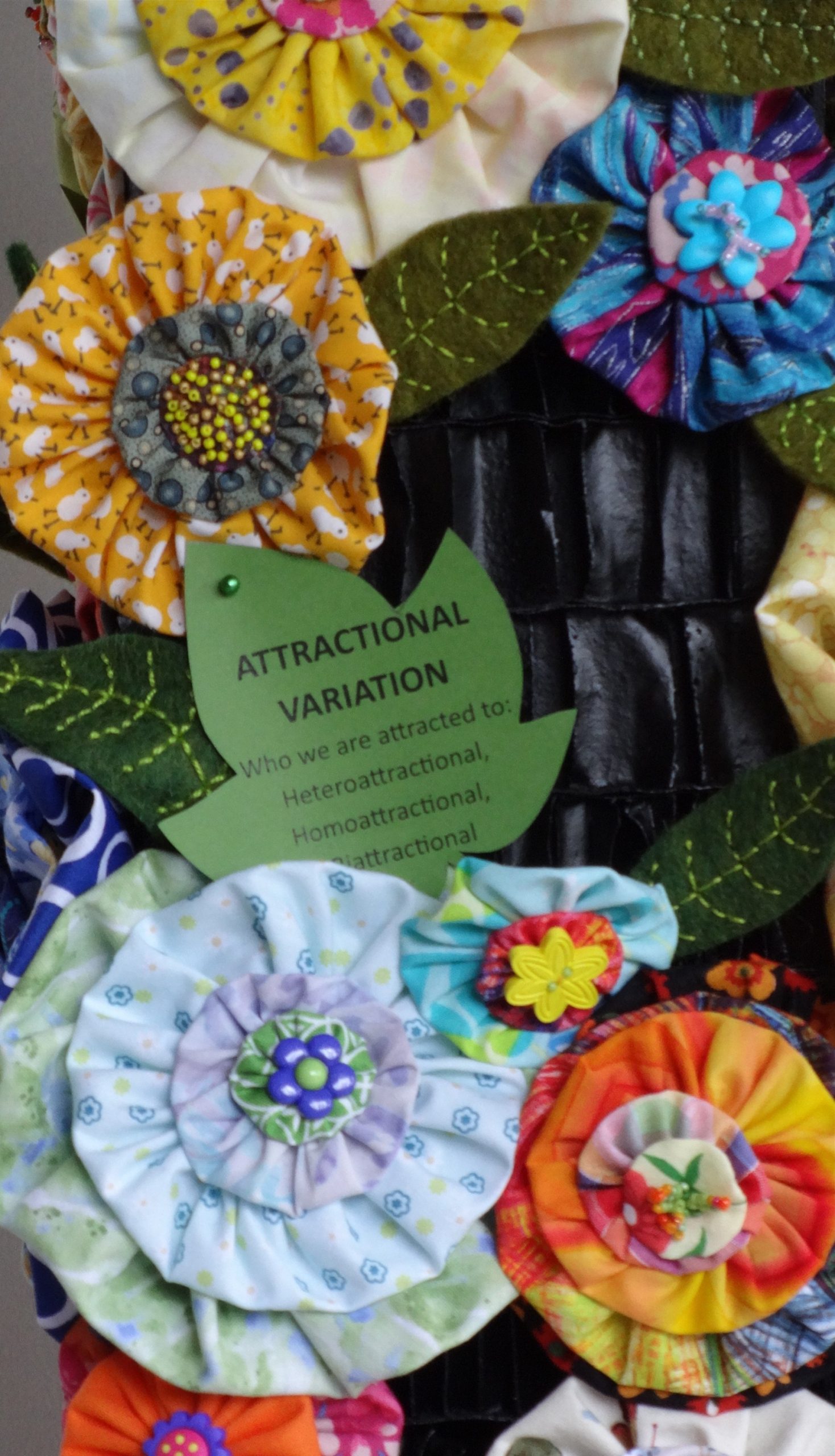
This image focuses on another leaf of text in this sculpture that combines fiber art with educational information.
Dolores Slowinski
Garden of Human Variation, Red-Pink side, 2024
Fabric, thread, buttons, beads, corsage pins, felt, paper, on cardboard armature. 36" H x 12" D x 12" W
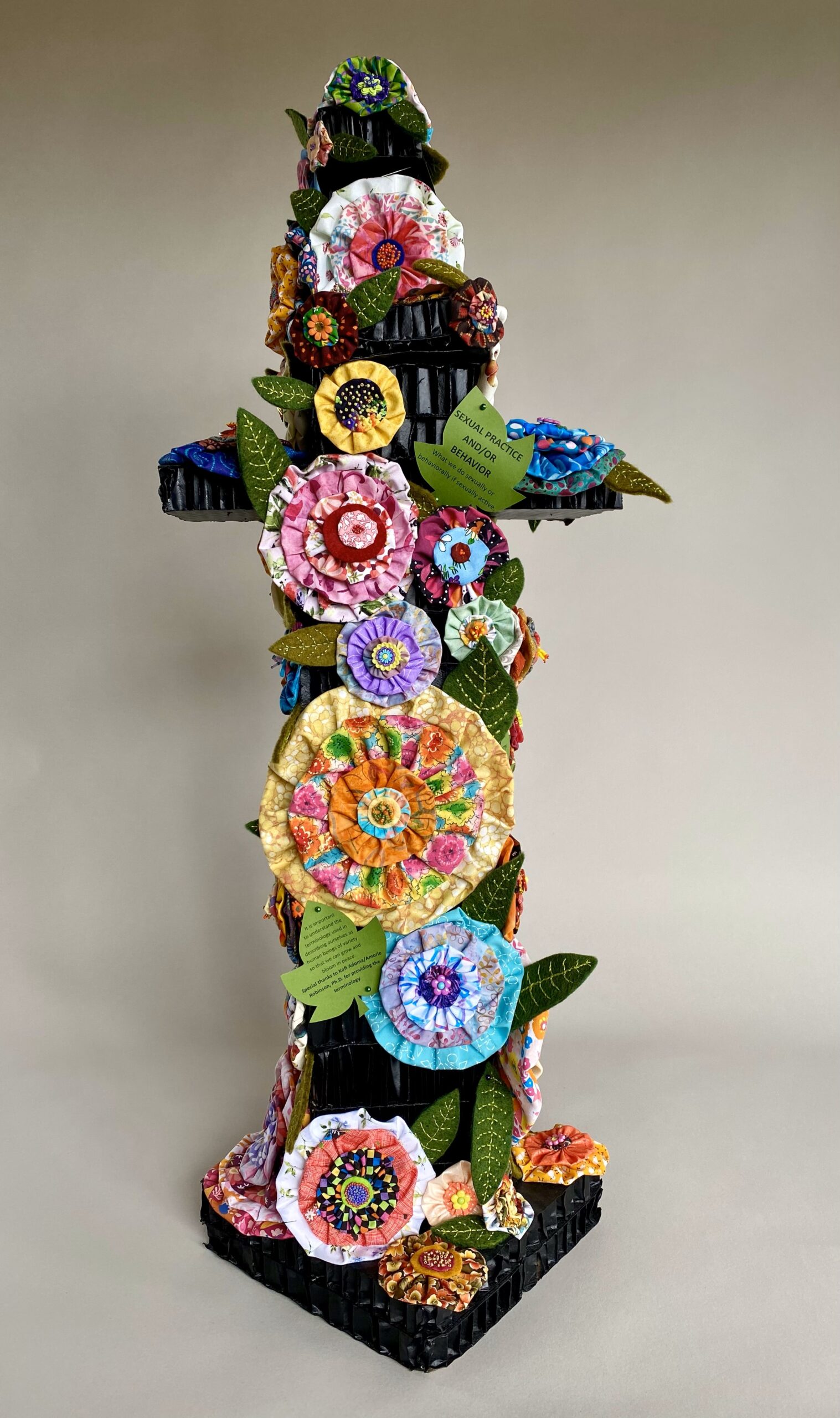
In this image you can see another leaf of text and the variety of yo-yo sizes used to form the flowers. The text leaf is intentionally not the same as the embroidered felt leaves so that I could print the leaves, cut them out and position them to be read easily.
Dolores Slowinski
Garden of Human Variation, Red-Pink side detail, 2024
Fabric, thread, buttons, beads, corsage pins, felt, paper, on cardboard armature. 36" H x 12" D x 12" W
We may grow into our birth sex, which agrees with our sexual identity, and be attracted to the opposite sex: hetero-attractional. Or we may grow into our birth sex, which agrees with our sexual identity, and be attracted to the same sex: homo-attractional. Or we may be attracted to both sexes: bi-attractional.
Dolores Slowinski
Garden of Human Variation, Yellow-Orange side, 2024
Fabric, thread, buttons, beads, corsage pins, felt, paper, on cardboard armature. 36" H x 12" D x 12" W
This is the fourth side of the fabric sculpture. We are all the result of our parents' sexual experiences. As we develop sexually, our emotions and understanding of ourselves can be confusing. Cultural pressures can not only add to the confusion but also can also be traumatizing. Sometimes counselling is necessary, not to change us, but to help us overcome trauma and to understand who we are so that we can live comfortably in our own skin, as well as in community with our fellow humans.
Dolores Slowinski
Garden of Human Variation, Yellow-Orange side, detail 1, 2024
Fabric, thread, buttons, beads, corsage pins, felt, paper, cardboard. 36" H x 12" D x 12" W
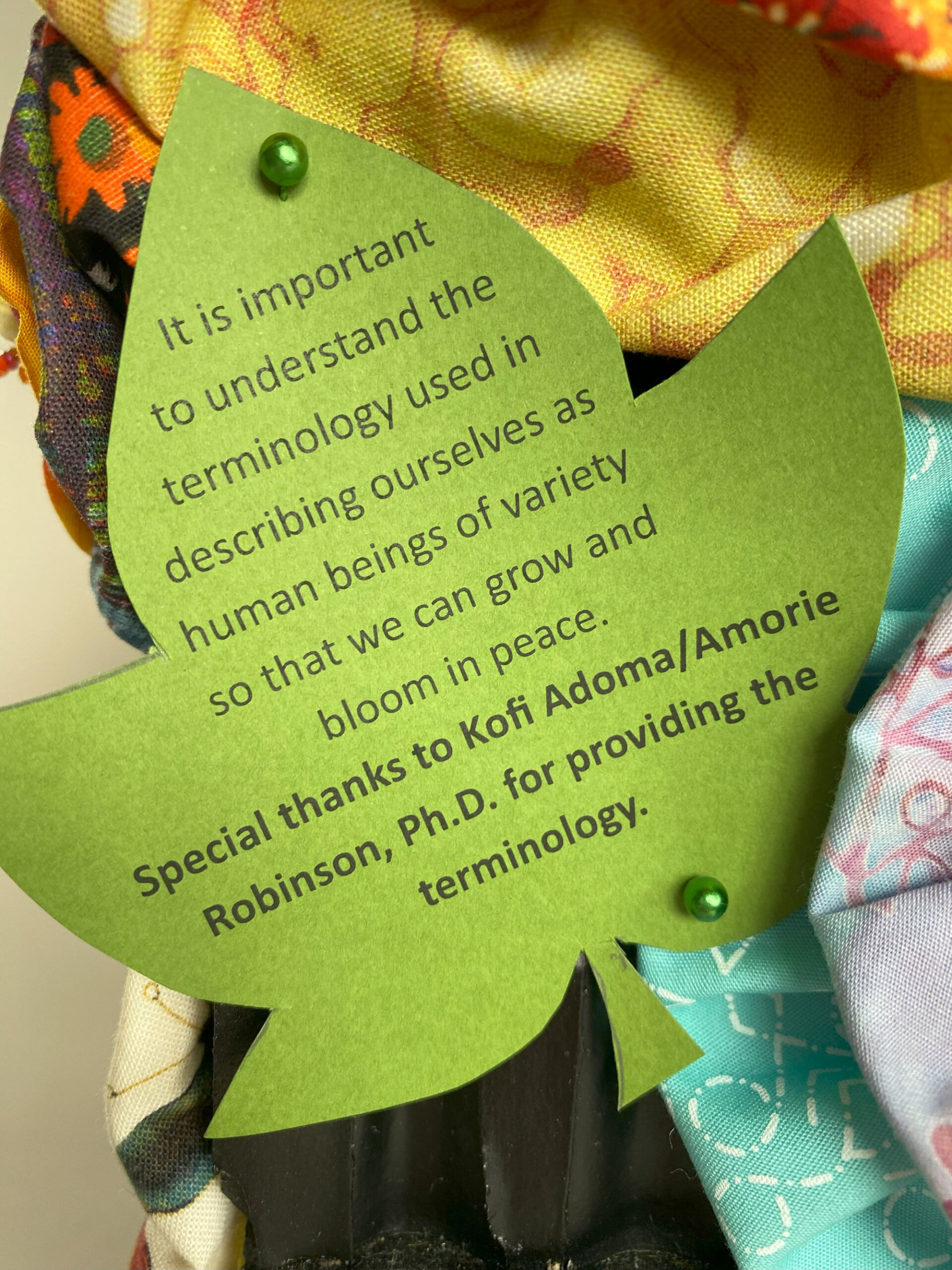
Garden of Human Variation presents information in a colorful, and non-judgmental manner to draw people in to enhance their understanding of themselves and others.
Dolores Slowinski
Garden of Human Variation, Yellow-Orange side, detail 2, 2024
Fabric, thread, buttons, beads, corsage pins, felt, paper, on cardboard armature. 36" H x 12" D x 12" W
This text leaf acknowledges the purpose of this sculpture and the role that Kofi Adoma, a clinical psychologist, and her explanatory text played in inspiring and contributing to this work. I made her acquaintance at her presentation about her friend, Ruth Ellis, an African American, lesbian woman in Highland Park, MI who was an LGBTQAI and civil rights activist throughout her life of 101 years. The Ruth Ellis Center, a non-profit agency in Detroit that is named for her, is dedicated to assisting LGBTQAI youth and young adults of color who are homeless, in the child welfare system, or are having difficulty getting health care.