Susan Clark
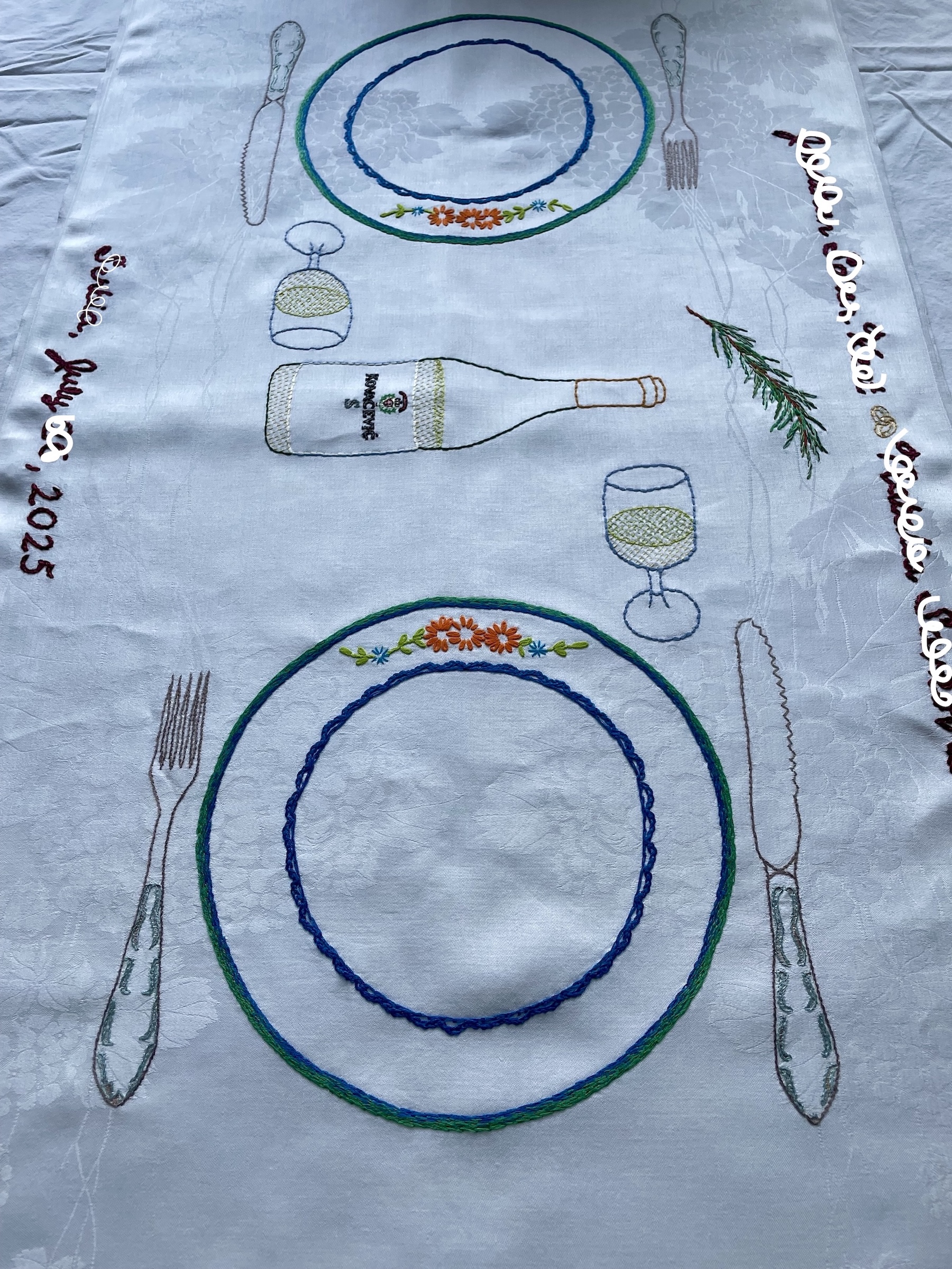
Wedding Tablecloth, 2025
Embroidery and hand painting on an antique damask tablecloth 35" x 50" (80 cm x 127 cm)
Hand embroidered antique damask tablecloth for a bride and groom featuring wine from the winery where they were wed.
Susan Clark
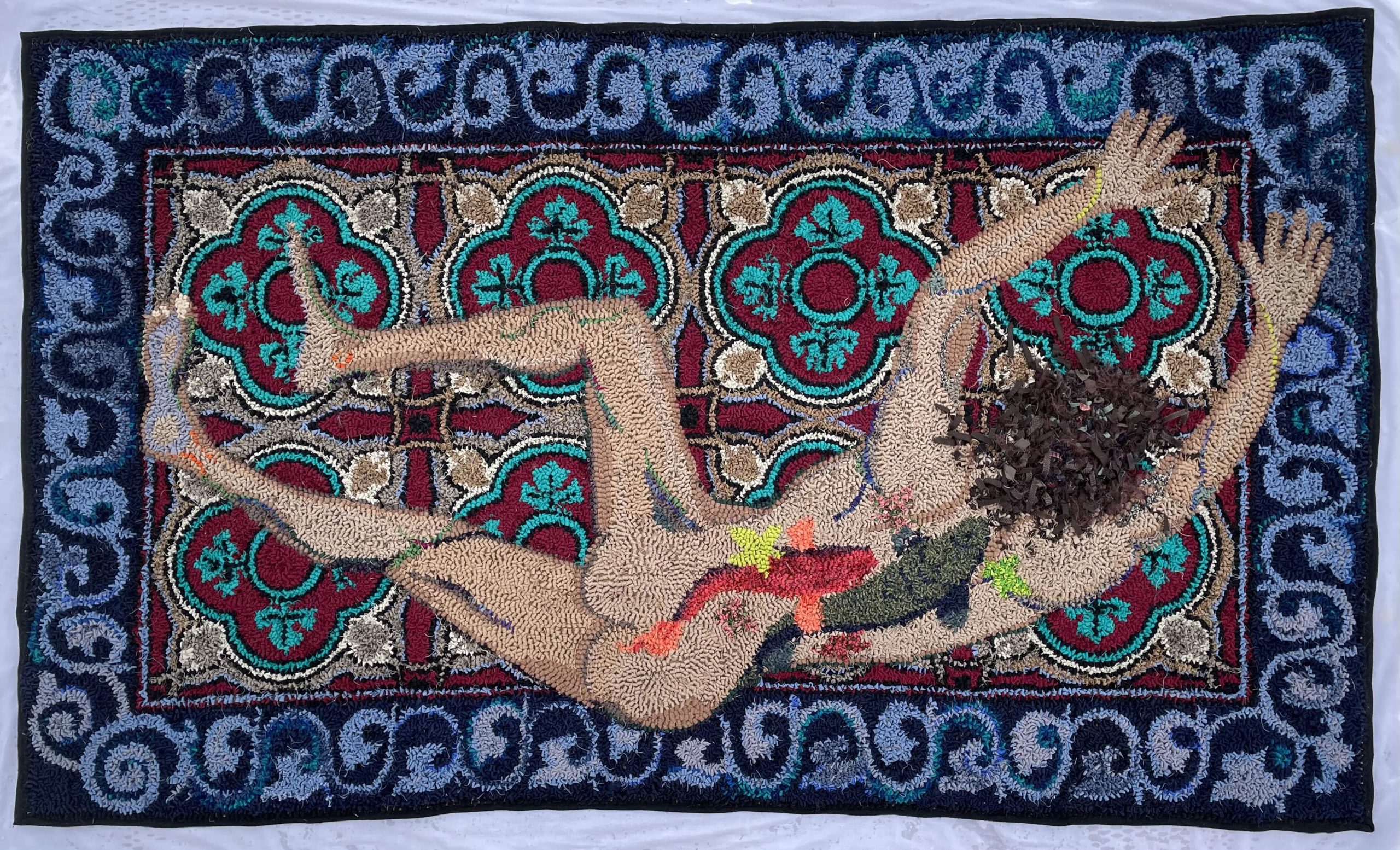
Rug: Sleeping or swimming, 2025
Traditional rug hand punching using slim hand cut strips of fabric, not tufted using a machine. The fabric used in this rug is recycled, and I made every attempt to use only recycled wool. The backing is burlap. 47.25 inches by 80 inches by .5 inch
The colourful, graphic background of this rug emulates the pattern and colour found in middle eastern encaustic tiles, which could be the cold, stone-like base of a pool or floor but instead is rendered in soft tufts of recycled wool and silk. The fish could be swimming, or tattoos on a sleeping or swimming body. The artist uses strips cut from discarded wool garments, some of which are over dyed, and hand punches them using a tool invented over a century ago.
Susan Clark
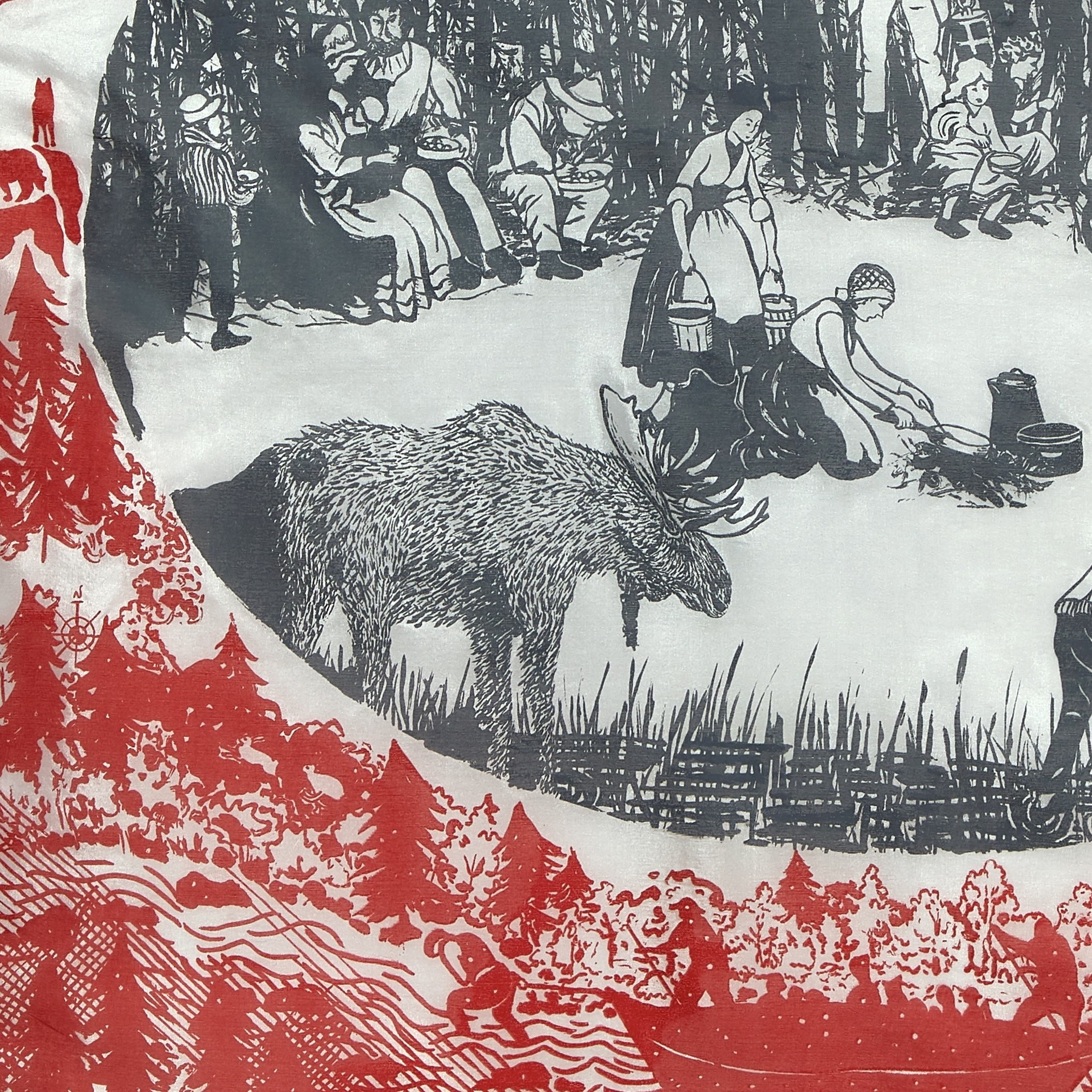
Detail from Journey to the Red River: Sept. to Nov. Upstream to the Red River 1821, 2024
Screen printed silk on damask tablecloth with embroidery. 84" long x 34" high; with tree: 84" long x 50" high
Clark's narrative and figurative work highlights the hard labour of women in support of historical migration to the Red River region of Canada.
Susan Clark
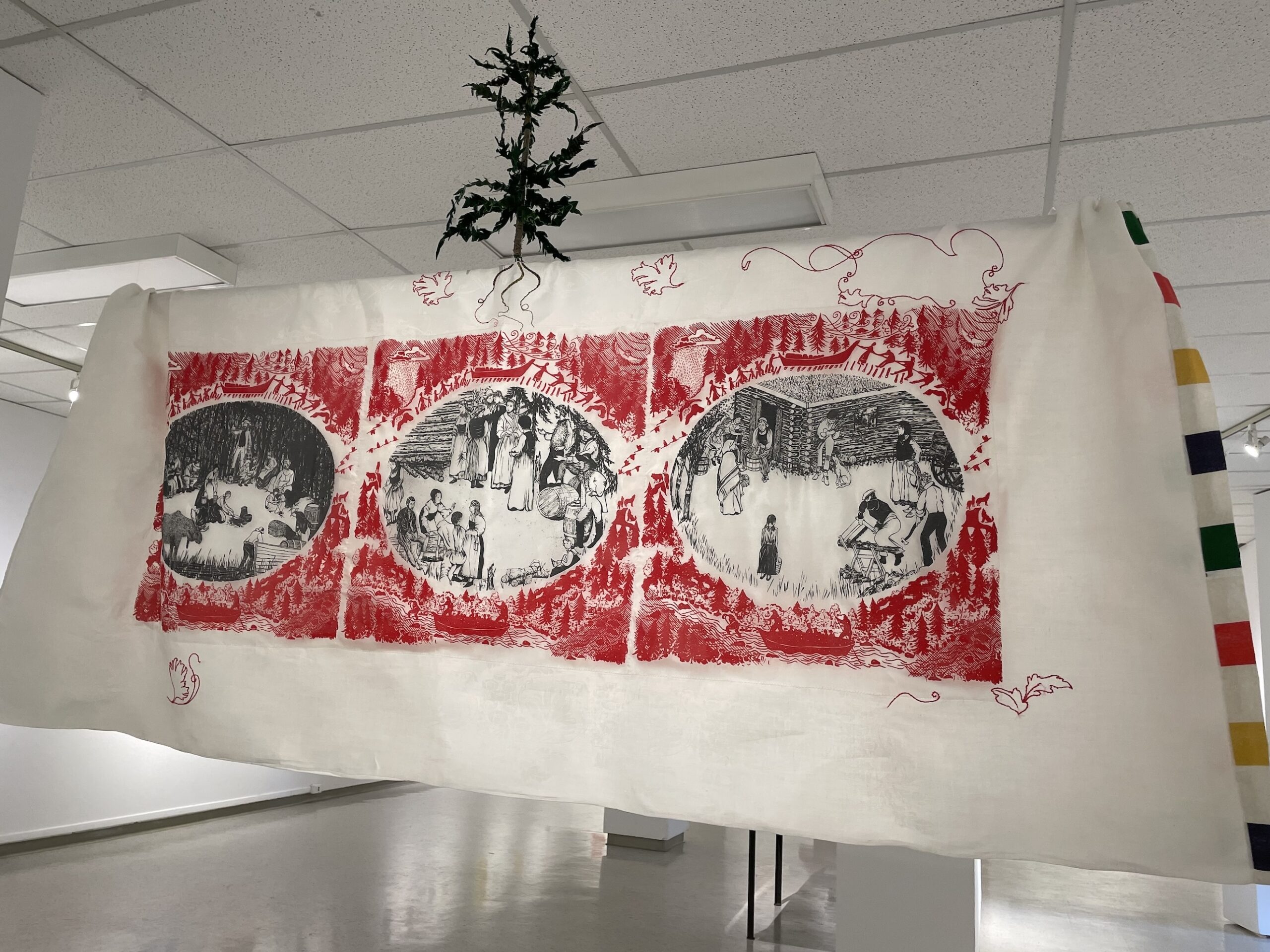
Journey to the Red River 1821 side 2 Gallery view, 2024
Screen printed silk on damask tablecloth with embroidery, tree handcrafted from textiles, Hudson's Bay colours sewn on 1 side. Tablecloth is hung so viewers can walk around it. 84" long x 34" high; with tree: 84" long x 50" high
Clark's work explores the role of women in historical migration. She feels casting light on early settlers and their struggles might help with the reconciliation process happening in Canada between Indigenous First Nations and colonists.
Susan Clark
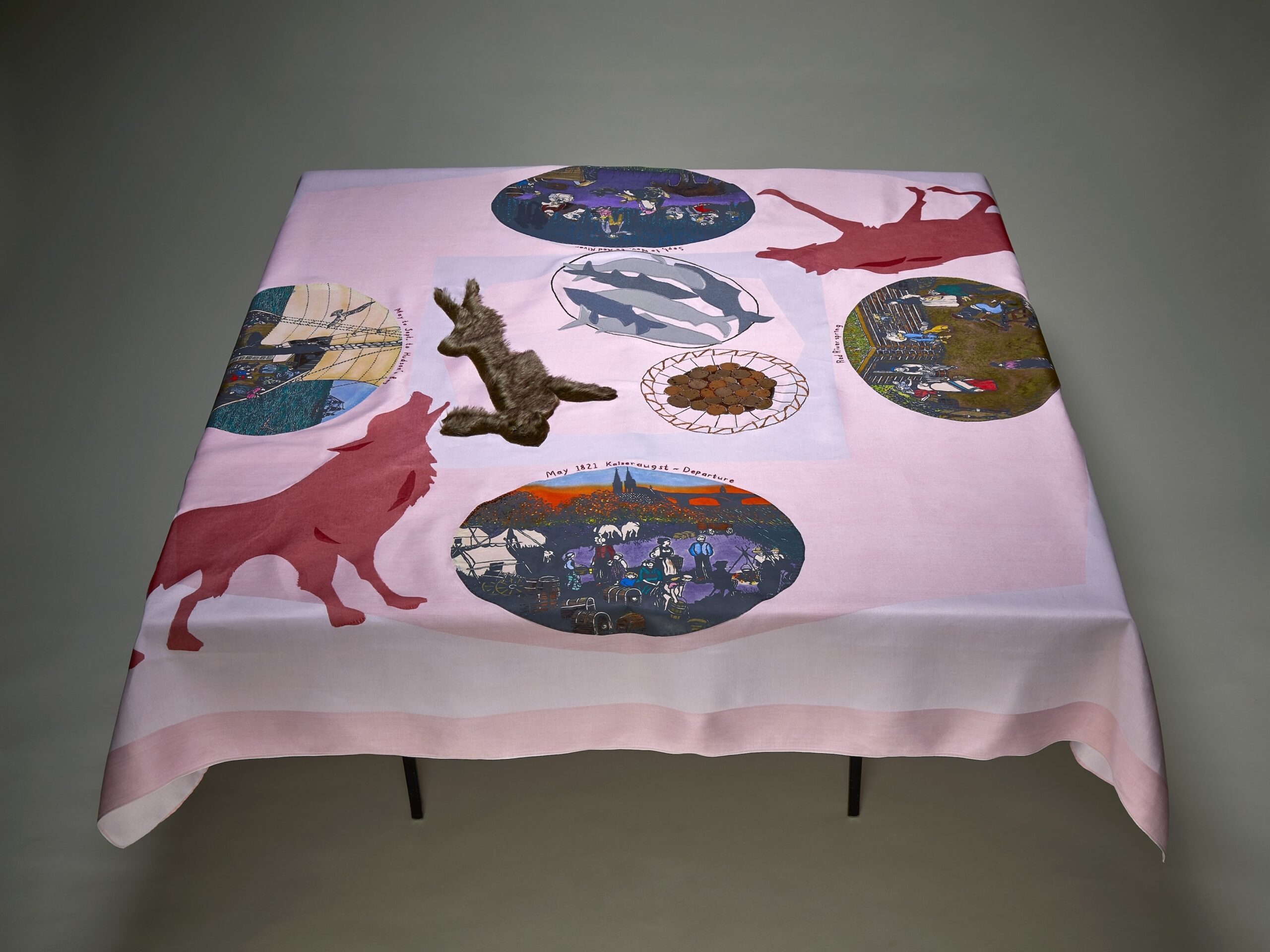
Voyage to the Red River 1821, 2023
Screen printed hand painted silk sewn on damask tablecloth with appliqué. 68" x 68" x .5"
My use of a repurposed, once-treasured tablecloth, with its own material history, references the spectre of starvation and predators during the early years of remote western settlement and also pays homage to women's craft.
Susan Clark
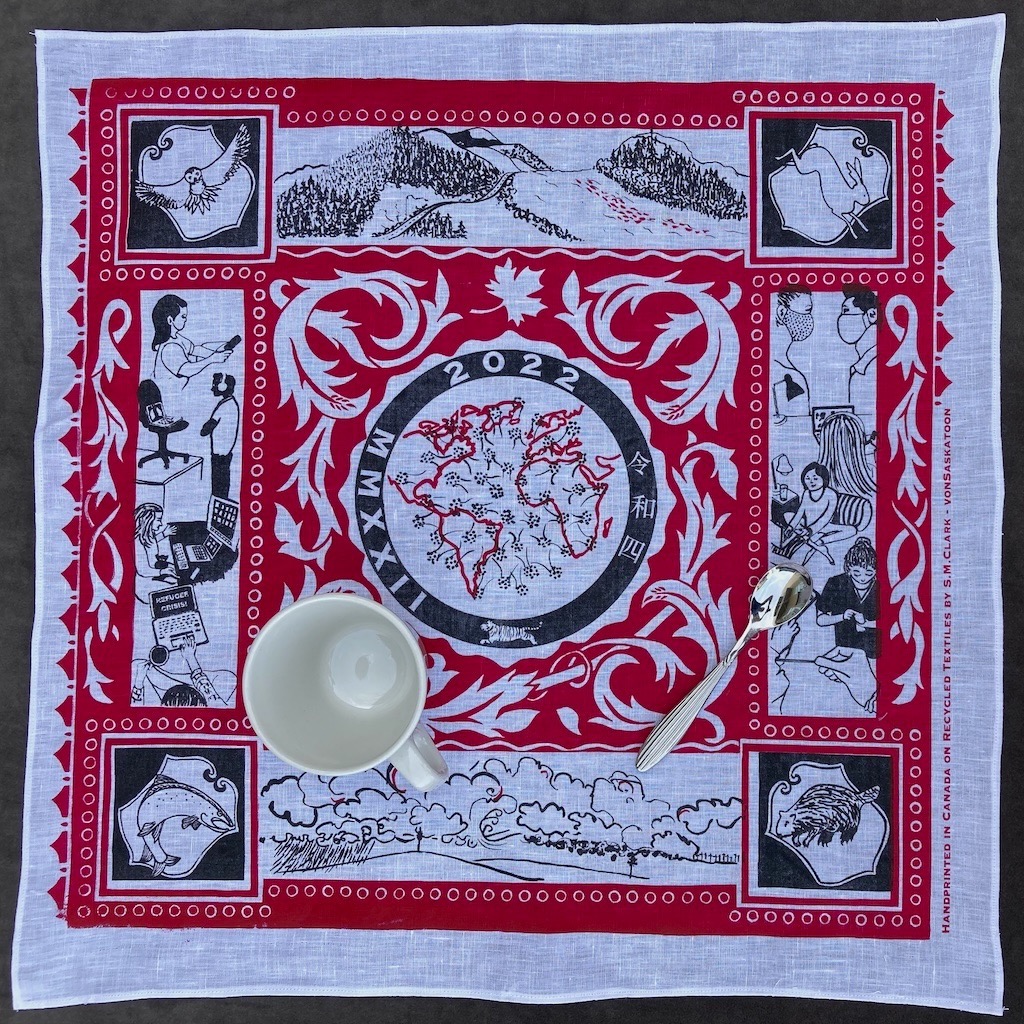
Pandemic Souvenir, 2022
Screen print on recycled cotton 21" x 21"
Susan Clark
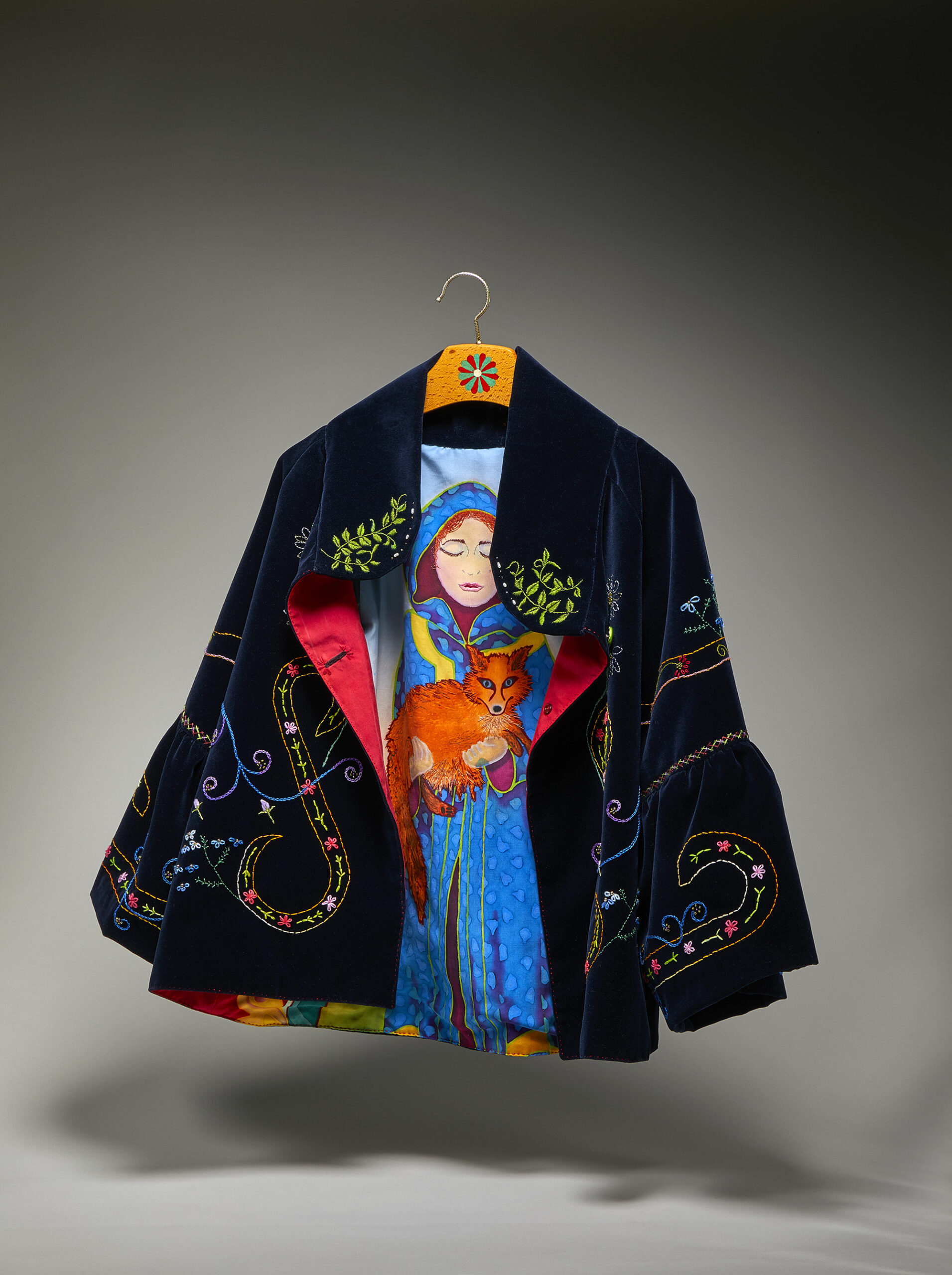
Folk Jacket, 2021
velvet, hand-painted silk lining, embroidery thread, beads Size: M
Inspired by European folk embroidered garments, I decided to make a hand embroidered jacket that paid homage to tradition. My hand-painted silk lining incorporates wolf willow and wild prairie roses. I thought often of my Grandmother, who supported her family as a seamstress in a northern SK sawmill town, while I stitched. Her family fled Seattle during the 1918 Spanish flu seeking safety in sparsely populated northern Saskatchewan.
Susan Clark
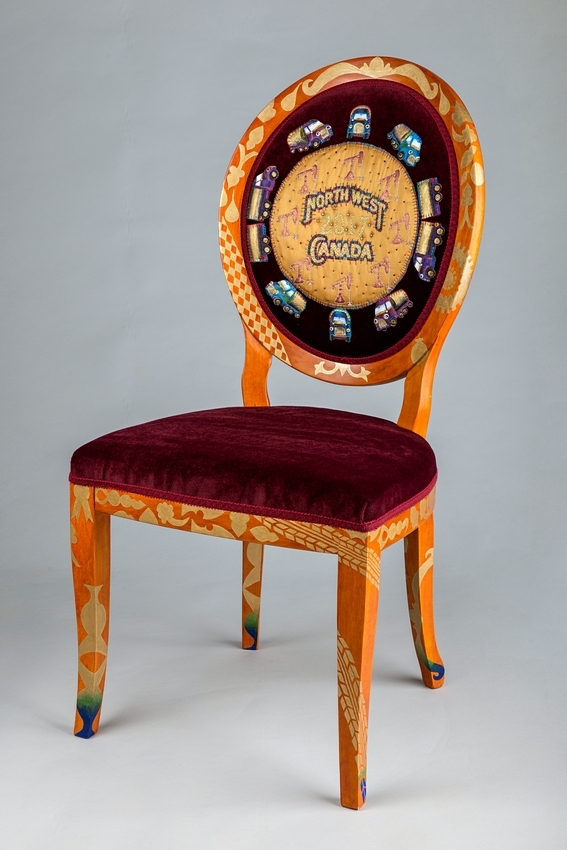
Northwest Canada Chair, 2017
Hand painted found wooden chair frame, embroidery, painting & embellishments, LED lights, sound, motion sensor 105 cm high, 52 cm wide, 50 cm deep
Copy & paste this URL into a new window to see this chair in action: https://youtu.be/_x7ZuwTbK9w In 2017, I returned to western Canada with its wide-open landscapes. Hours on the road are necessary to get anywhere. At one time, there were passenger trains and publically supported long distance buses, but now everyone drives them selves, and hauls their grain, etc. Young fellows who have done well in the oil patch buy themselves large impressive trucks. Other features of this resource-based economy such as oil derricks and diamonds figure in the embroidery. This noisy, bright chair is my kinetic reaction to all of this!
Susan Clark
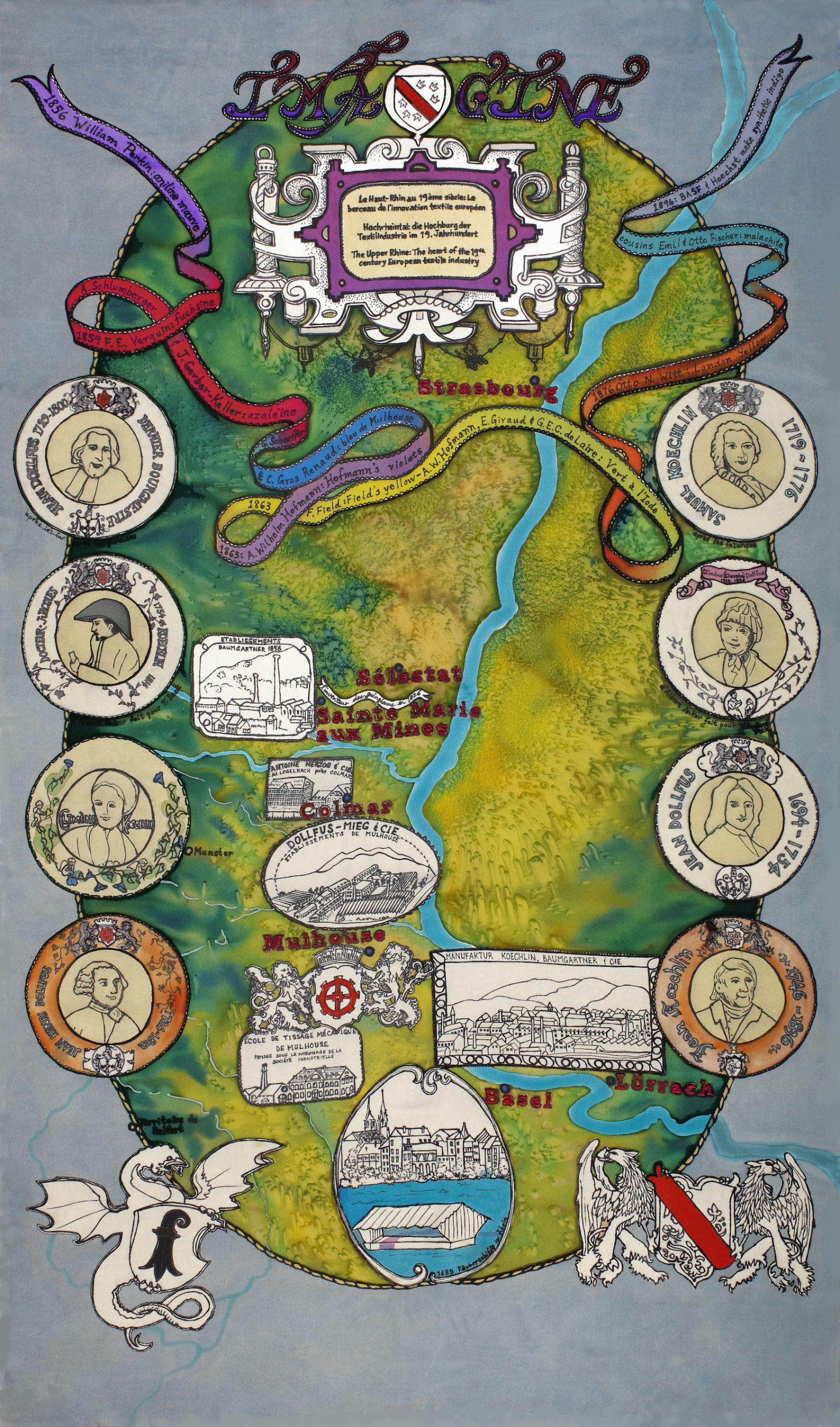
Le berceau de l’innovation Quilt, 2014
Painted, embellished silk quilt, embroidery, pearls 129 cm high, 75 cm wide x 2 cm
Little did I know that moving to Basel in 1997 was completing the circle in terms of my art. I had been a silk painter for over twenty years using synthetic dyes developed in the late 1860s, and manufactured and used in the textile industries of the Basel, and Mulhouse area across the border in France.