Amy Ahlstrom
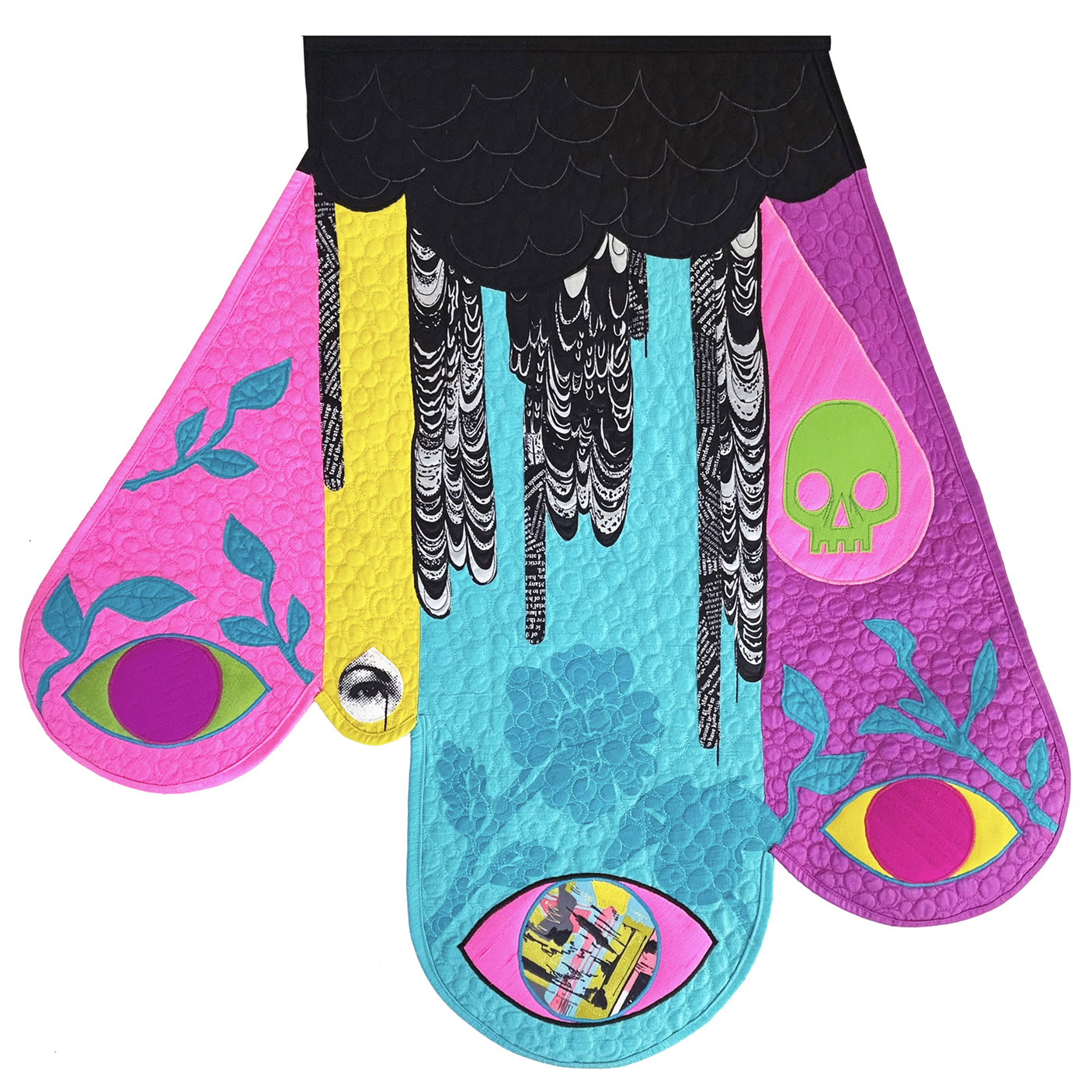
Quis custodiet ipsos custodes? (Storm Watch), 2024
Silk and cotton quilt [29.5" x 28.75"]
Quis custodiet ipsos custodes? (Storm Watch) is a silk and cotton appliquéd quilt that features large single eyes dripping from a cloudy black sky. The eyes reference watching and being watched; we are witnesses but are also being surveilled, via cameras in the streets or through the “eye” of a smartphone camera. The title in Latin is a famous saying that loosely translates to "who watches the watchmen?" and is often used to allude to political corruption and the abuse of power. The dripping newsprint text fabric represents floods of information and disinformation; within the constant storms of data, we must retain our awareness and vigilance in order to separate fact from fiction.
Gabriela Nirino
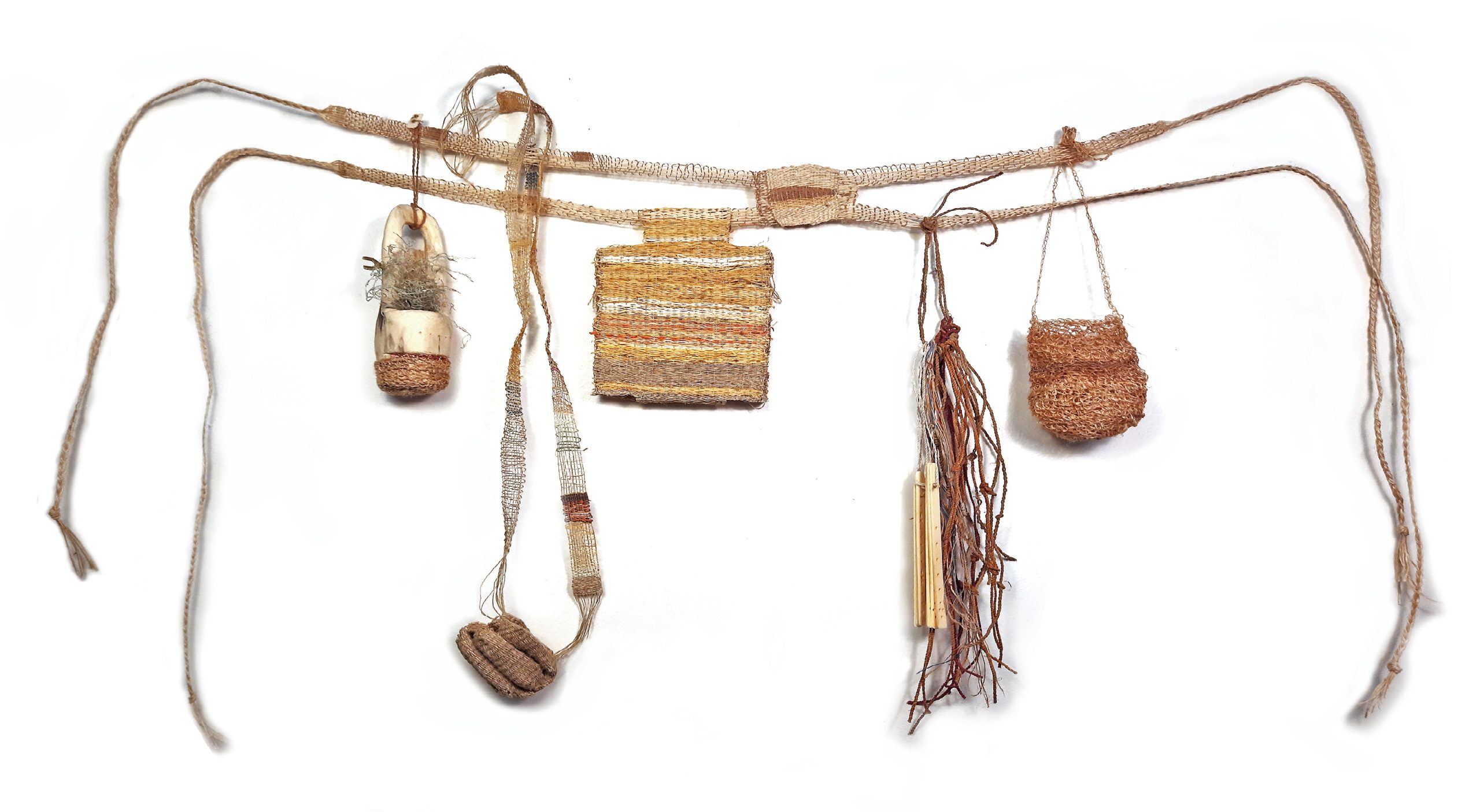
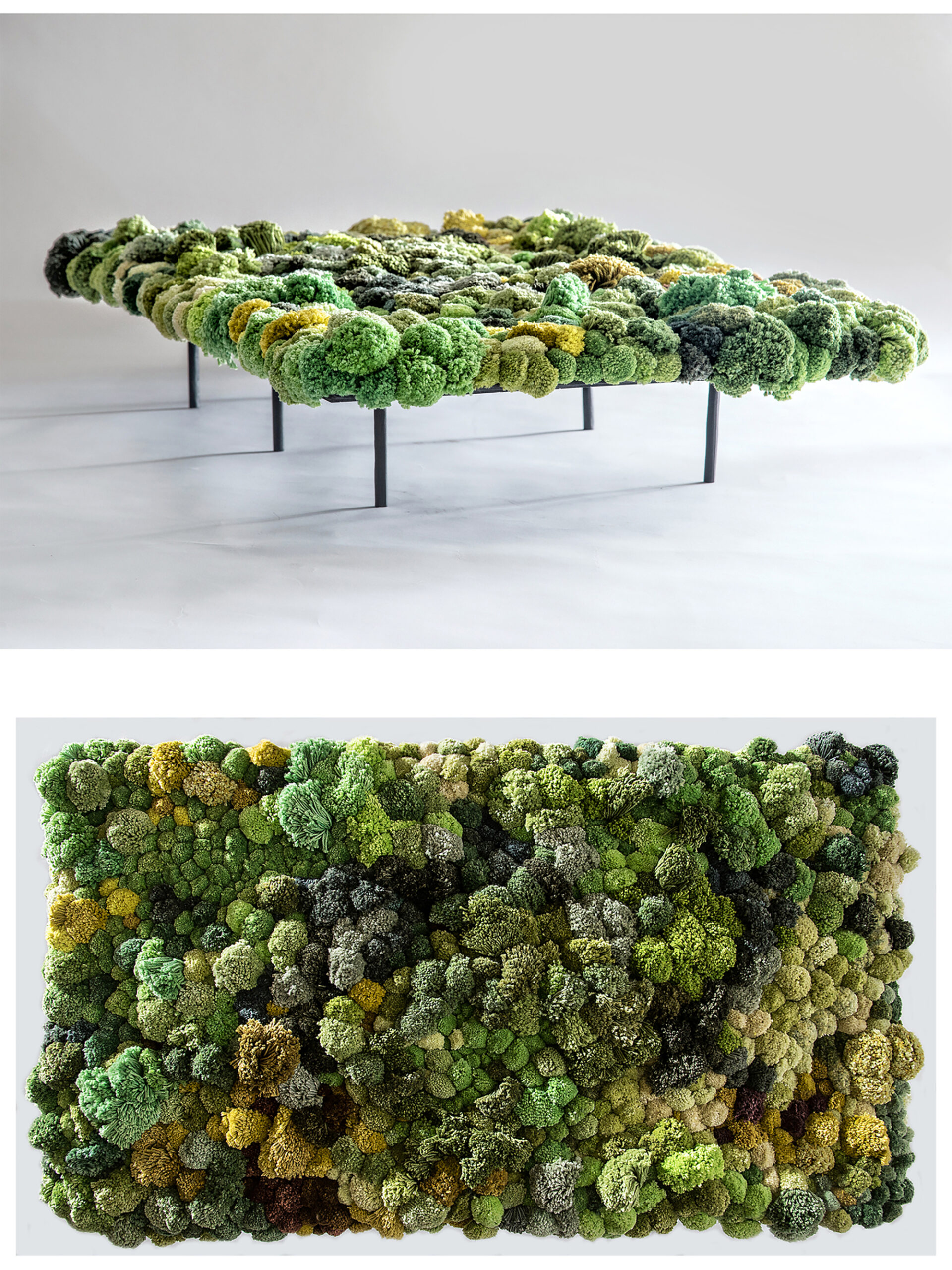
Terraforming Tool Belt, 2024
Hemp, chaguar, corn husk, phormium, jute, lichen, tree branch, copper, bronze, bone, feather, paper, stone. [12" x 49" x 1.6"]
What gestures are part of the language of an earth lovingly shared and co-created between beings of all species? In the apparent silence of the plants I listen. They transform what they touch into life. They grow in nurturing association, they explore without dominating. In a prodigious network they sustain life. Inspired by the chatelain, the piece imagines possible tools. Plant-based microbial fuel cell: the more that join, the more energy is generated. Box carrying healing elements: feather, quartz, wood, weeds, poetry. Empathizing ribbon: connects beings with each other through the woven plant interface. Secret pocket. Memory systems: analog (quipu), digital (perforated sticks). Bag for collecting and exchanging seeds.
Janine Brown
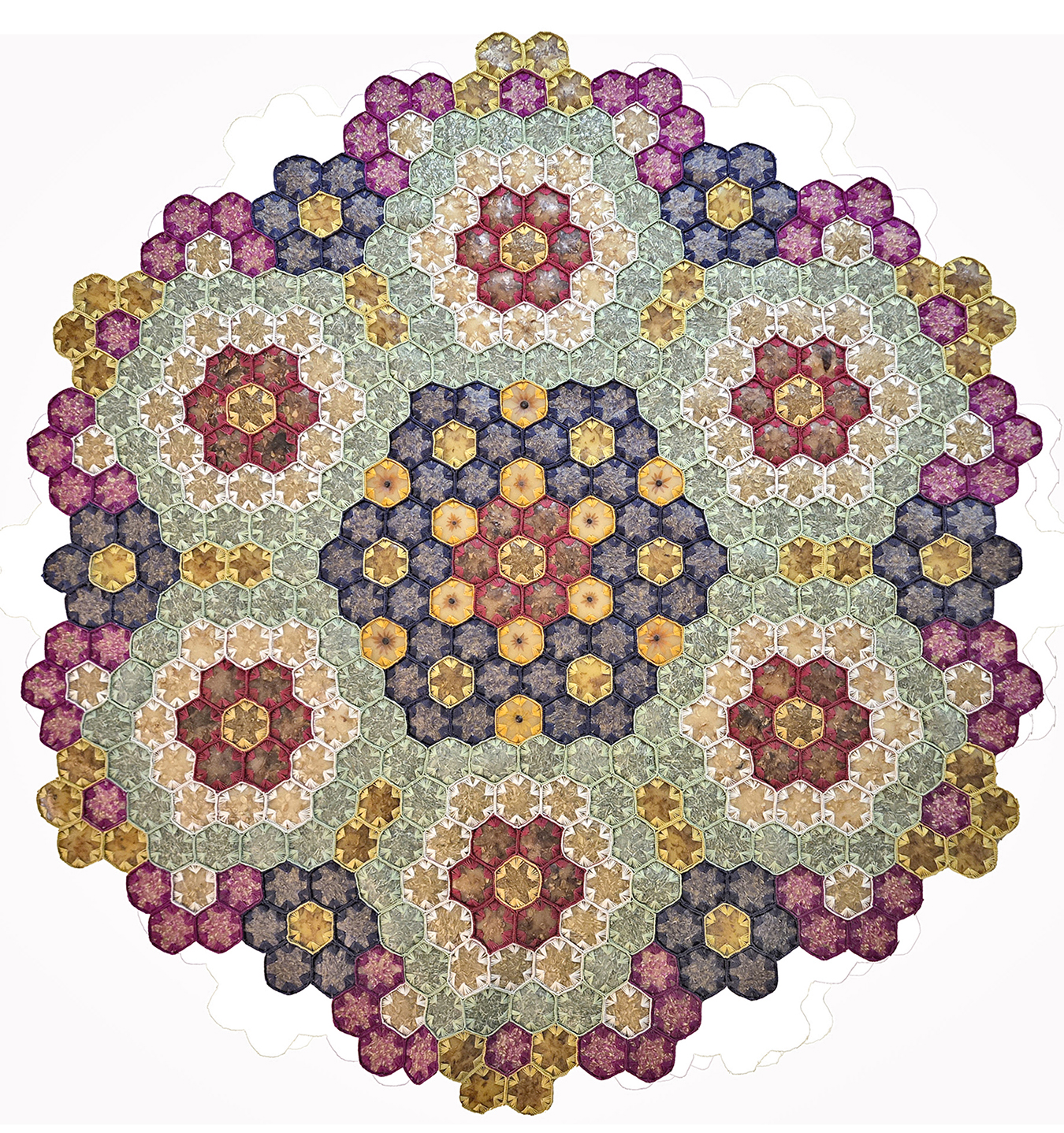
Grandma’s Flower Garden Was Filled with Love, Hope, Grief, Elegance, Innocence, Vanity, and a Little Bit of Justice
Home-cooked bioplastic, red rose petals, calendula petals, white zinnia petals, white hydrangea petals, cornflower petals, yellow dahlia petals, globe amaranth petals, brown-eyed Susans, hand-stitched with crochet thread and pearl cotton [58" x 62.5" x 0.25"]
This piece is a variation on the Grandmother's Flower Garden quilt pattern using Victorian Floriography and home-cooked bioplastic. Each of the flowers used in the quilt has it's own meaning as suggested in the title. The piece is an homage to home economics by cooking the materials and stitching them together. The intent is to make the invisible labor of women visible.
Joanna Rogers
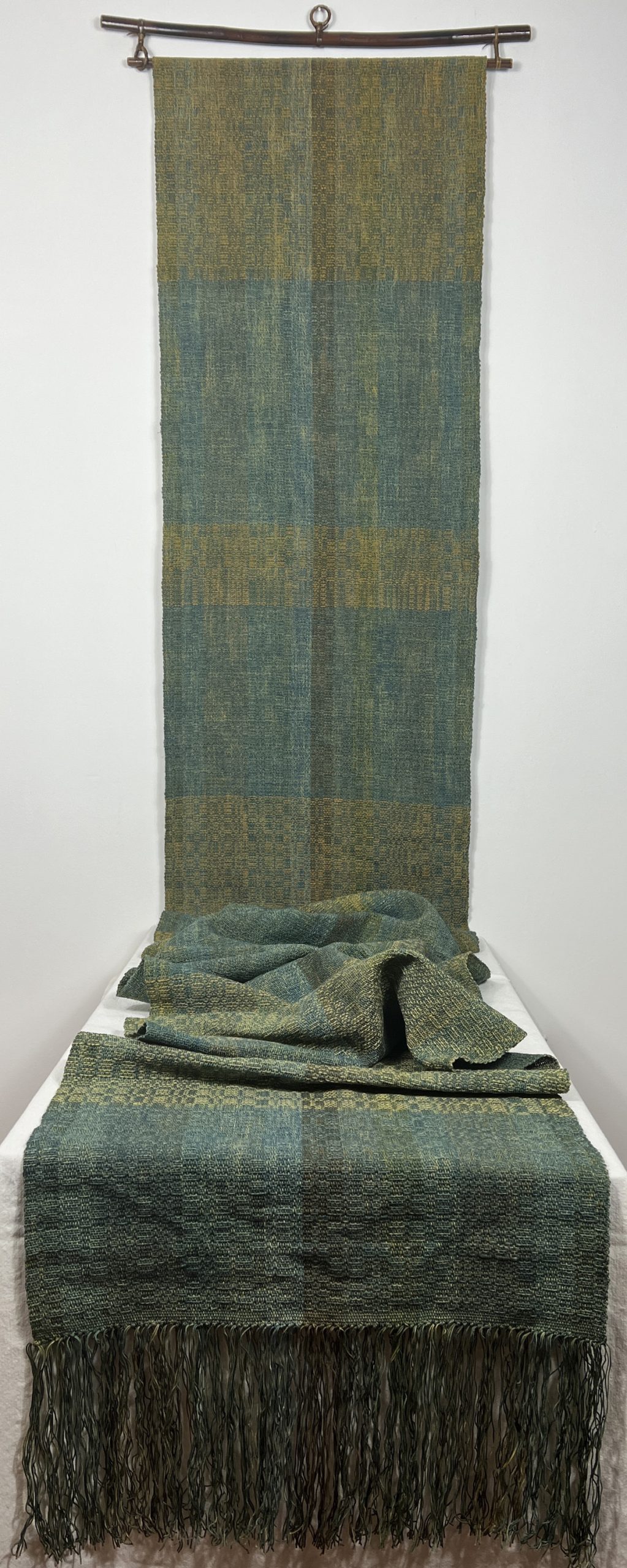
Only Remember Me — -. .-.. -. — .-. . — . — … . .-. — ., 2024
Mercerized cotton warp and tabby weft, linen pattern weft. Dyed with Carrot Tops, Daisies, Willow, Marigolds, St. John's Wort, Zinnias, Dahlias, Cosmos, Onion Skins, Indigo. [19" x 180"]
I harvested plants from my garden (or kitchen in the case of the onion skins and carrot tops) and dyed the warps and wefts with these. I then overdyed the mercerized cotton and half the linen with indigo to create a distressed verdigris effect. Only Remember Me is from the poem Remember Me by Christina Rossetti and could be the last words our endangered species silently scream before they disappear forever.
Therese Zemlin
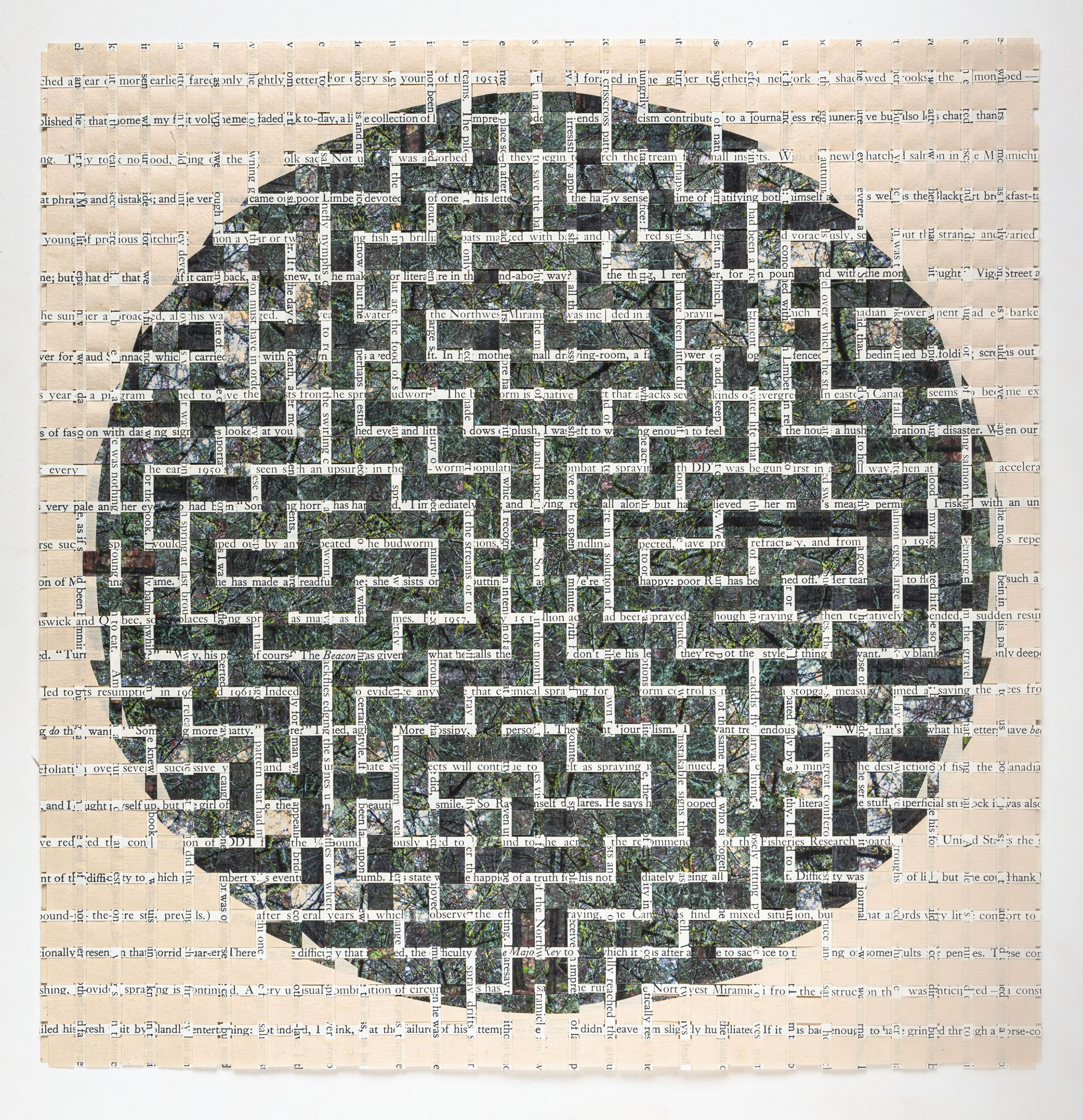
Mandala 3: Lichen on Spruce Branches, 2022
Inkjet prints on Japanese paper cut into strips, text strips cut from book pages, hand plaiting [12 x 12"]
The weaving draft is by computer scientist Ralph Griswold, 2005, #41477, from Handweaving.net. Book pages are from Silent Spring by Rachel Carson, and Next Time by Henry James. (Cut up book pages) The photo of spruce trees killed by a spruce budworm infestation was taken in Brimson, MN. The patterns in textiles mimic the patterns in nature. Patterns of human behavior are evident in short stories by Henry James, and as described by Rachel Carson in her timeless and important writings. These associations are woven together in the Mandala series: They are not meant to be obvious in the woven work, but hopefully begin to seep in around the edges of the viewer’s awareness.
Tommye Scanlin
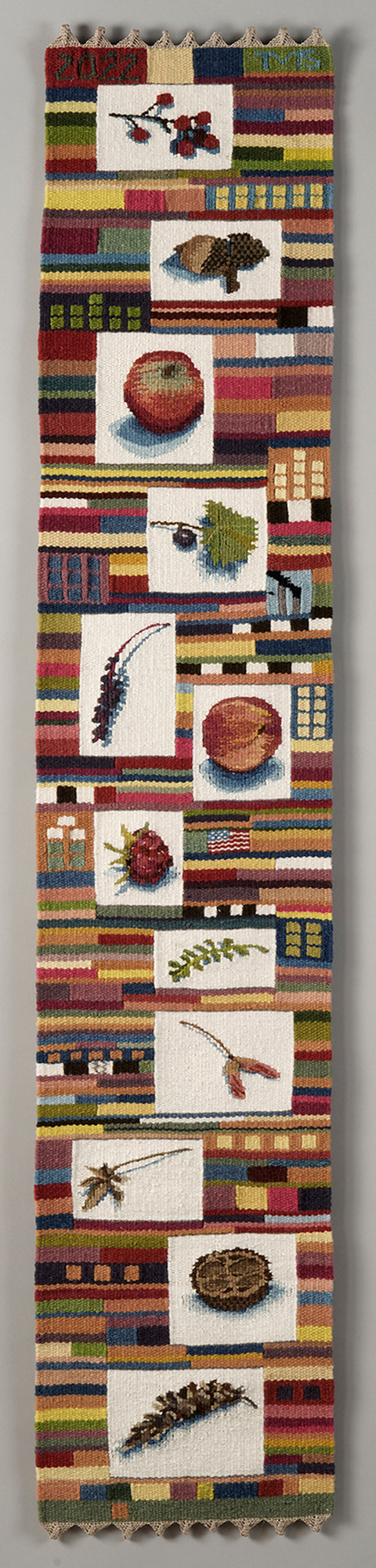
A Year of Nuts, Seeds, and Fruit, 2025
This is one of my tapestry diaries. Each seed, nut or fruit was found during the month in which I wove it, beginning at the bottom with January and moving up. [56" x 11.25"]
This is one of my tapestry diaries. Each seed, nut or fruit was found during the month in which I wove it, beginning at the bottom with January and moving up.
Ipsita Roymoulik
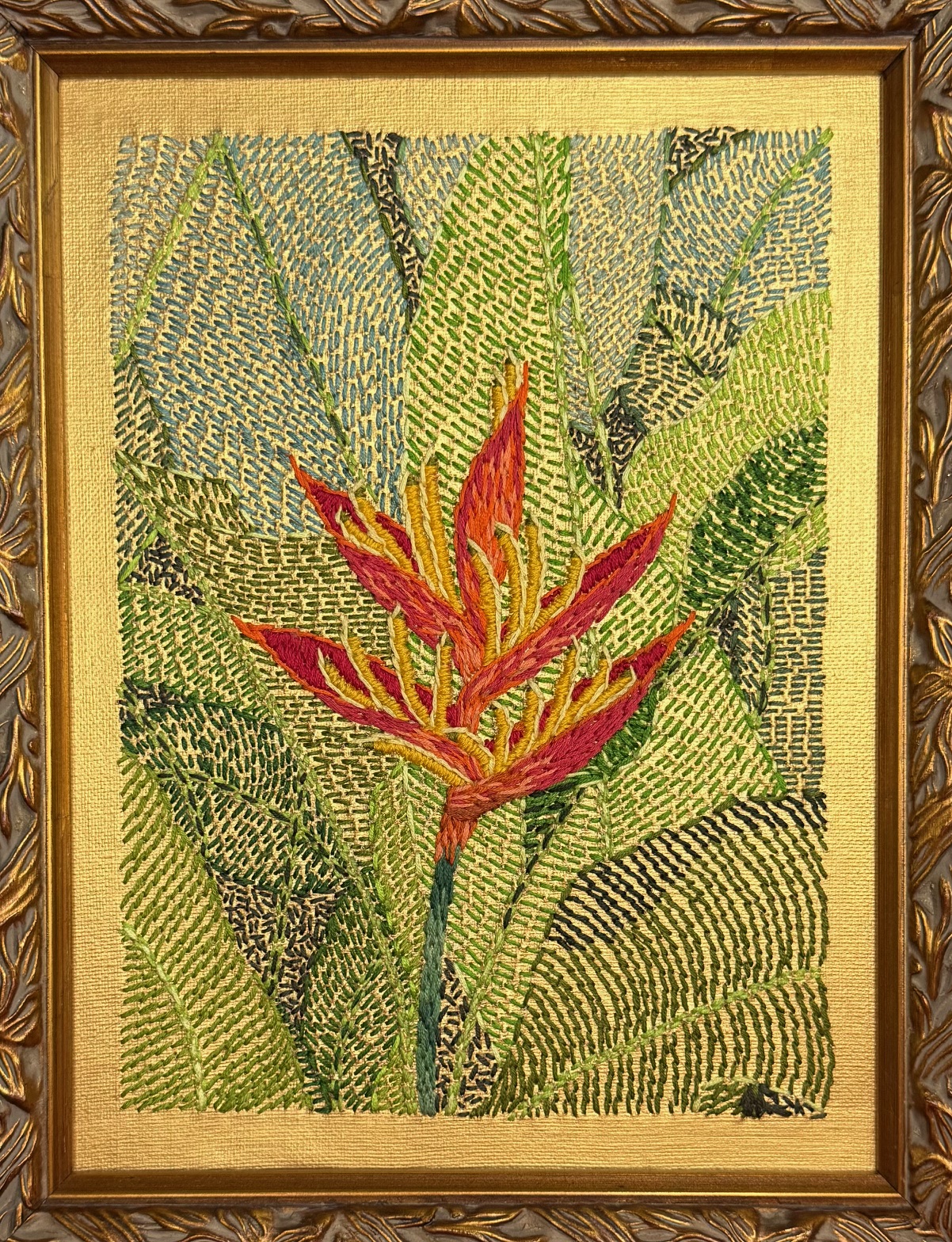
Spice Garden, 2025
Canvas, acrylic, embroidery floss [9"x 12"]
Inspired by a spice garden in Kerala, this piece features a heliconia bloom catching sunlight as it emerges from a screen of fronds. Kantha-inspired stitches trace the play of light across fronds on a luminous gold acrylic background capturing the lush vibrancy of the tropics. This series transforms personal photographs into luminous needle art where I explore reflections, textures, and the shifting shapes of water, light, and landscape. Together, the pieces capture fleeting moments of stillness and beauty, held in the rhythm of the stitch.
Anita Bracalente
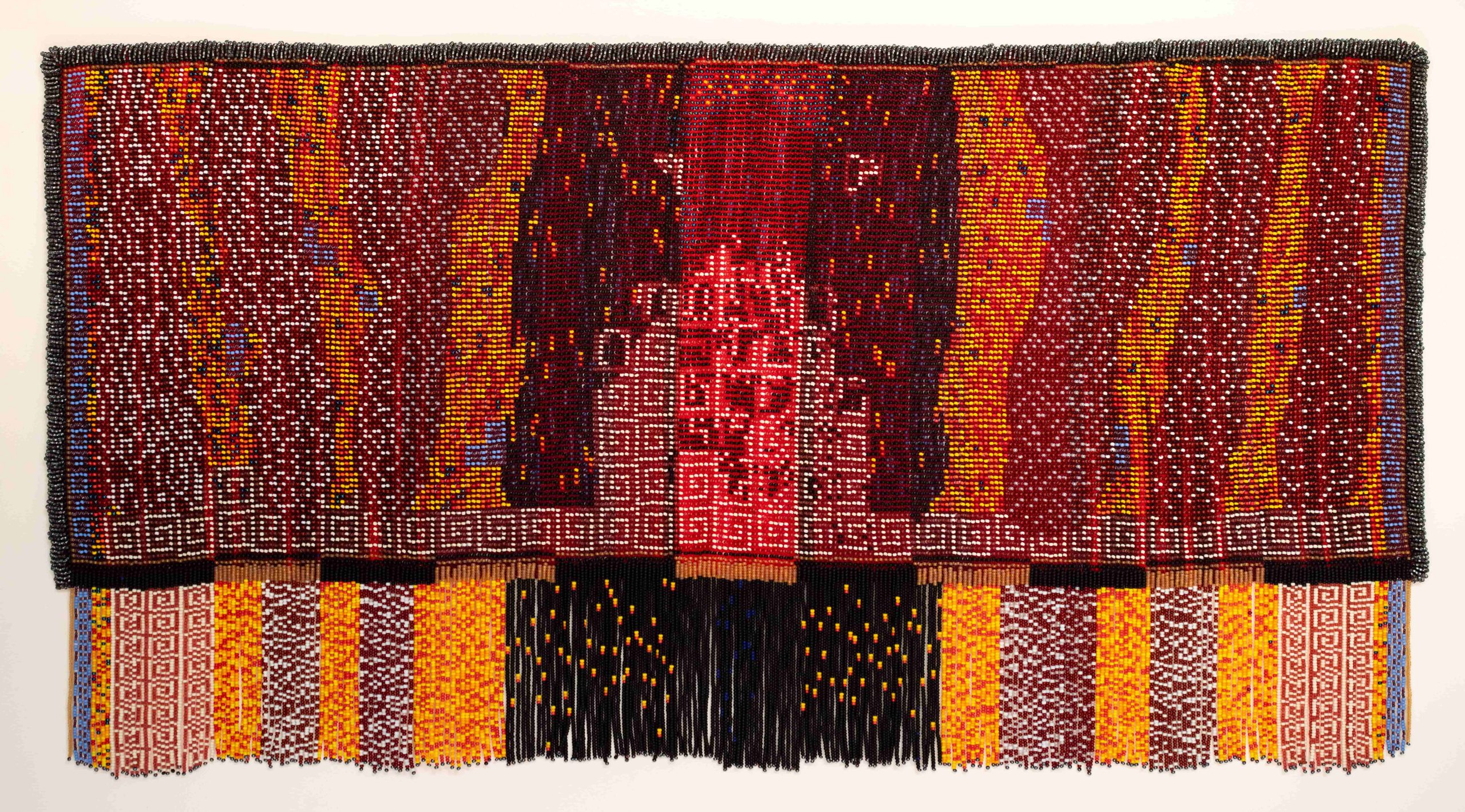
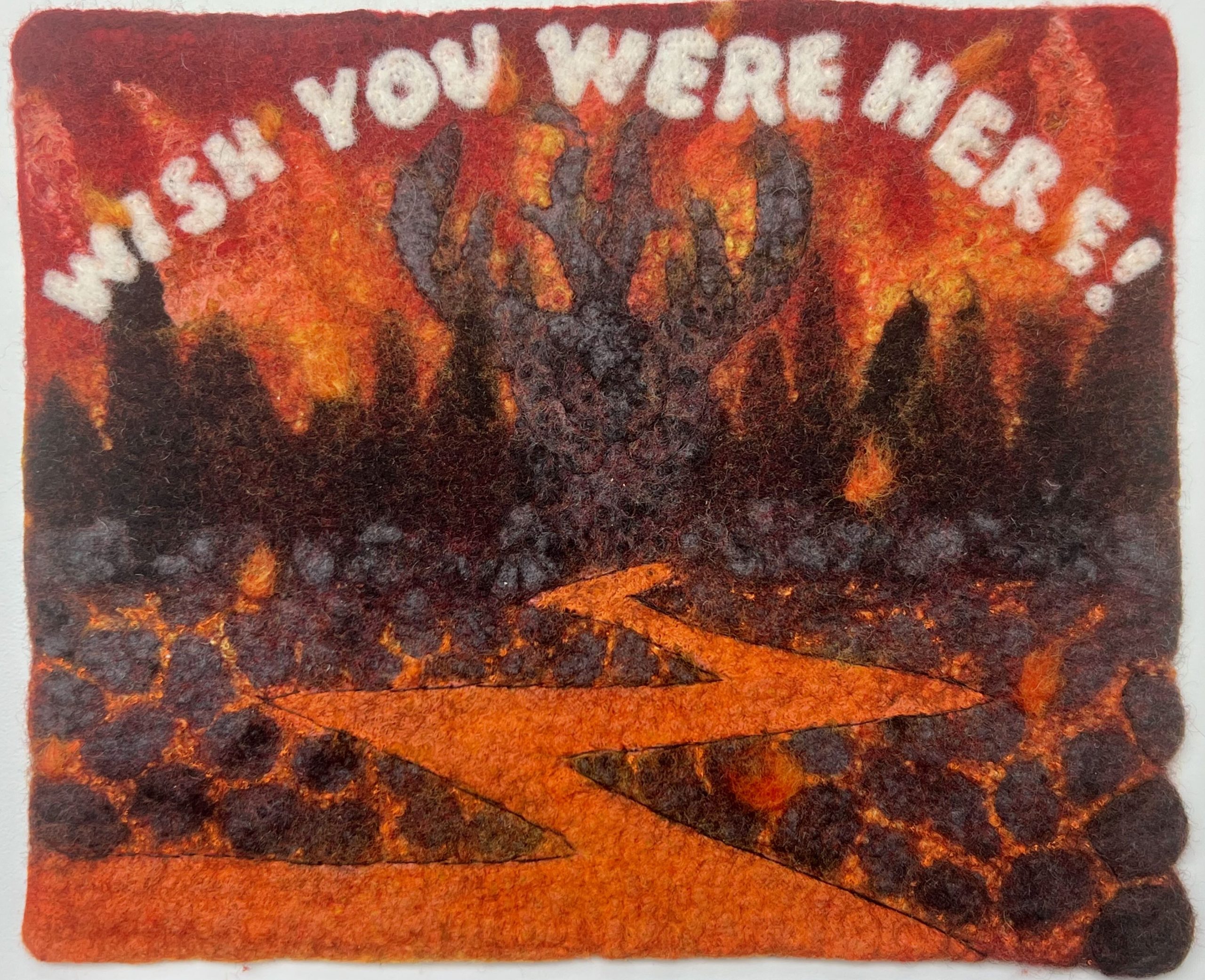
Pliny’s Demise: World on Fire, 2024
Czech seed beads #11, DMC Perl Cotton #11 knitted beads [13" x 26"]
Pompeii and Mount Vesuvius continue to be a metaphor for our current climate crisis.
Luana Rubin
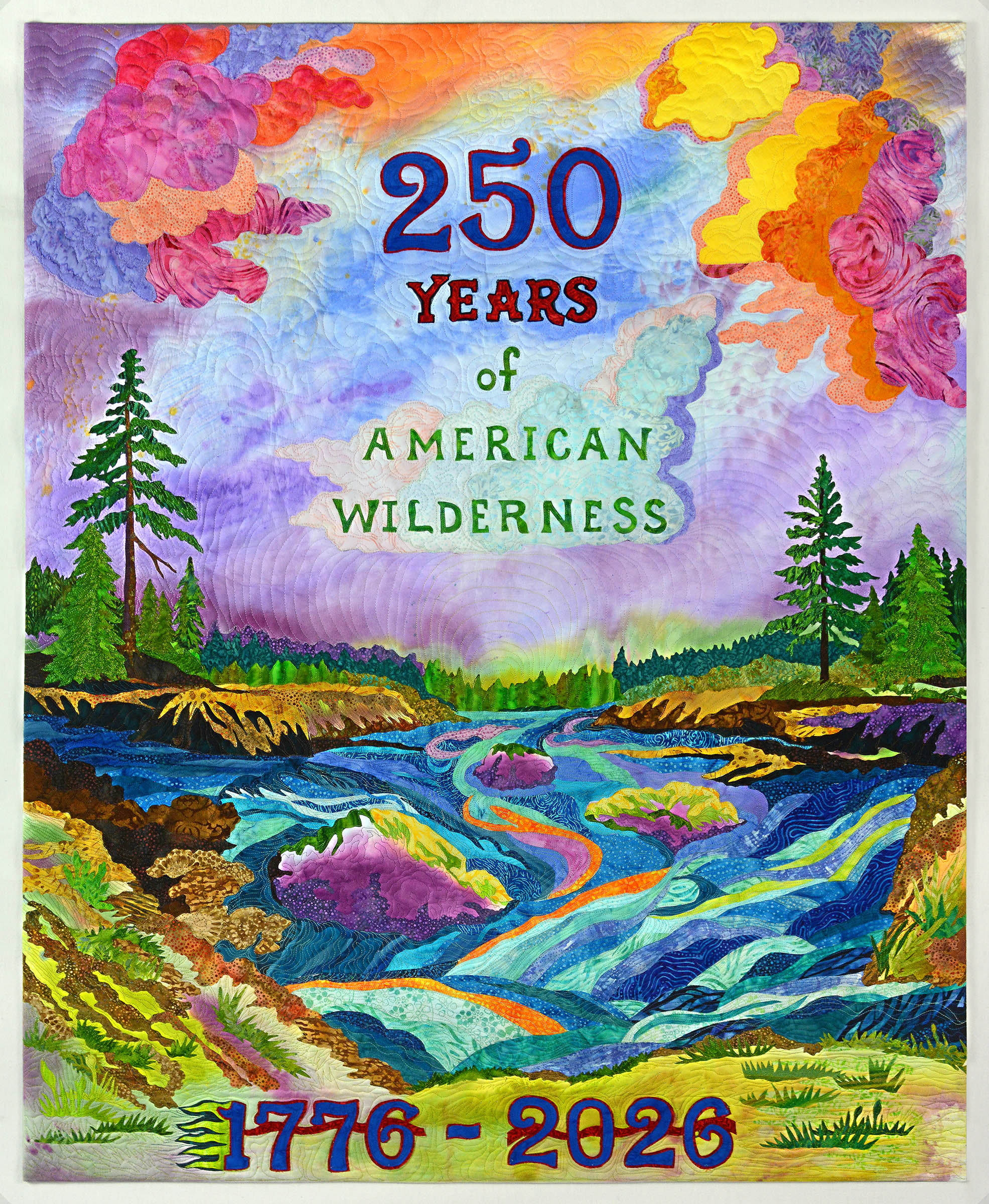
250 Years of American Wilderness, 2025
Painted Evolon with Golden Fluid Acrylics, Fused Applique, Freemotion Stitching. [40" x 50"]
This quilt is to celebrate the National Park System and our precious public lands. It is also to honor the National Parks and other public lands rangers and caretakers. This was made for a Semi-Quincentennial exhibit that will open at the New England Quilt Museum in July 2026.
Ari Feldman
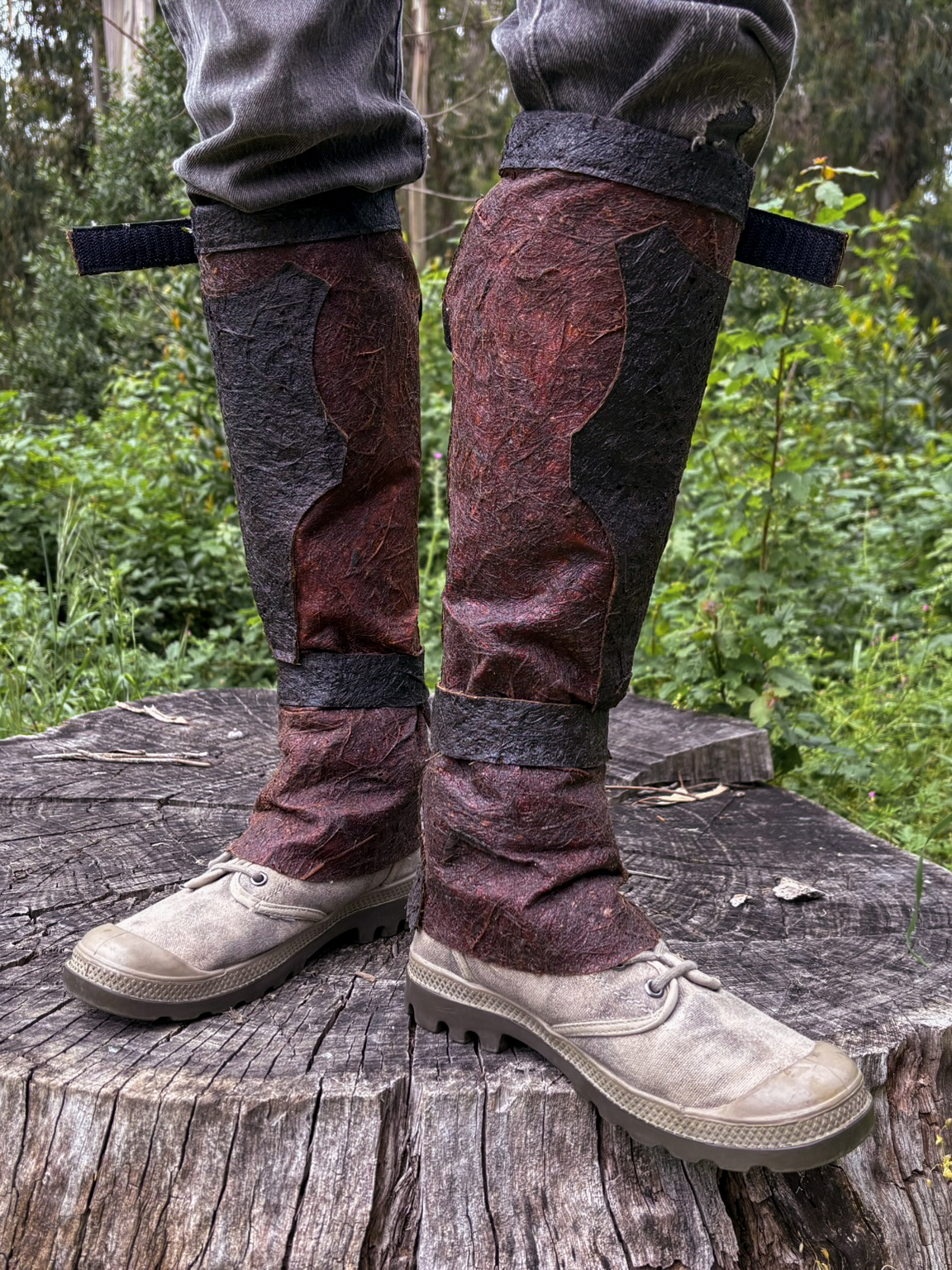
Understory Gaiters, 2025
Eucalyptus bio-leather [17" x 12"]
Understory turns wildfire threats into regenerative solutions by repurposing invasive eucalyptus trees in the Bay Area, which exacerbate fire risks, into durable, plant-based leather. This leather is used to create resilient, tick-repelling workwear for those removing the trees, promoting ecological restoration.
Andrea Dupree
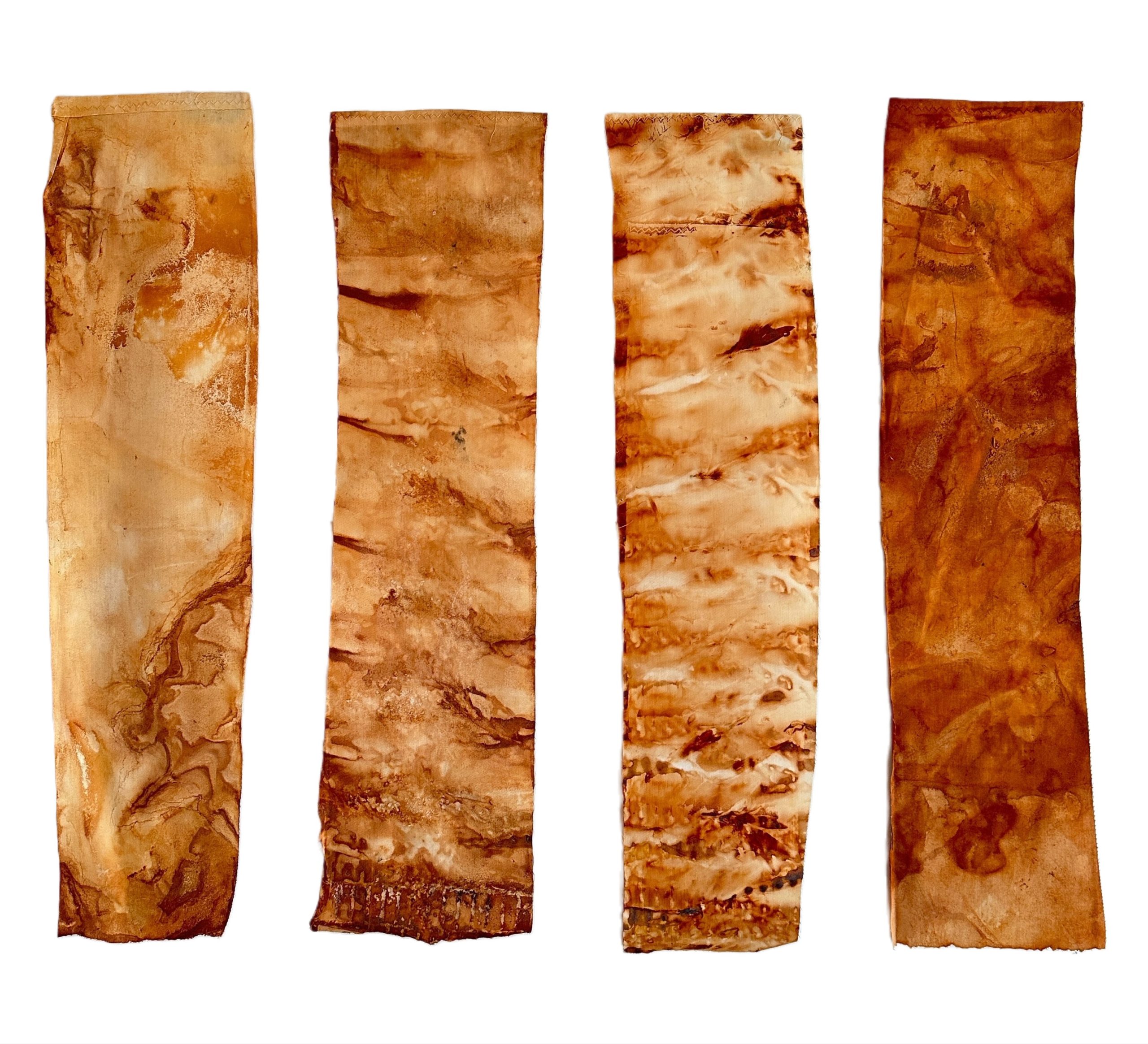
Remembering Land, 2023
cotton dyed with found rusted metal, vinegar, acequia water and kochia leaves. [24" x 24"]
From my ongoing ecological art project, Sense of Place. Sense of Place is an ongoing ecological art project exploring relationships between people and environment in Northern New Mexico through re-contextualized found materials, paths and ritual acts. The project site is located in Po-Woh-Geh-Owingeh “Where the water cuts through”; situated on land that was once a homestead ranch, surrounded by and surrounding land of the Pueblo of San Ildefonso, and shadowed by the once secret city of Los Alamos (birthplace of the atomic bomb). These dynamic layers of land use are ever present in my mind as I explore paths to understanding this place. Guided by Ecofeminist principles, I aim to examine site-specific history alongside parallels between colonization, discarded materials, open dumps, invasive plants and patriarchal mindset of gender, race, class and the environment. By referencing spiritual and religious traditions of altars, meditation gardens, processions and prayer cards, Sense of Place seeks to offer opportunities for reflection and reconnection.
Susan Lenz
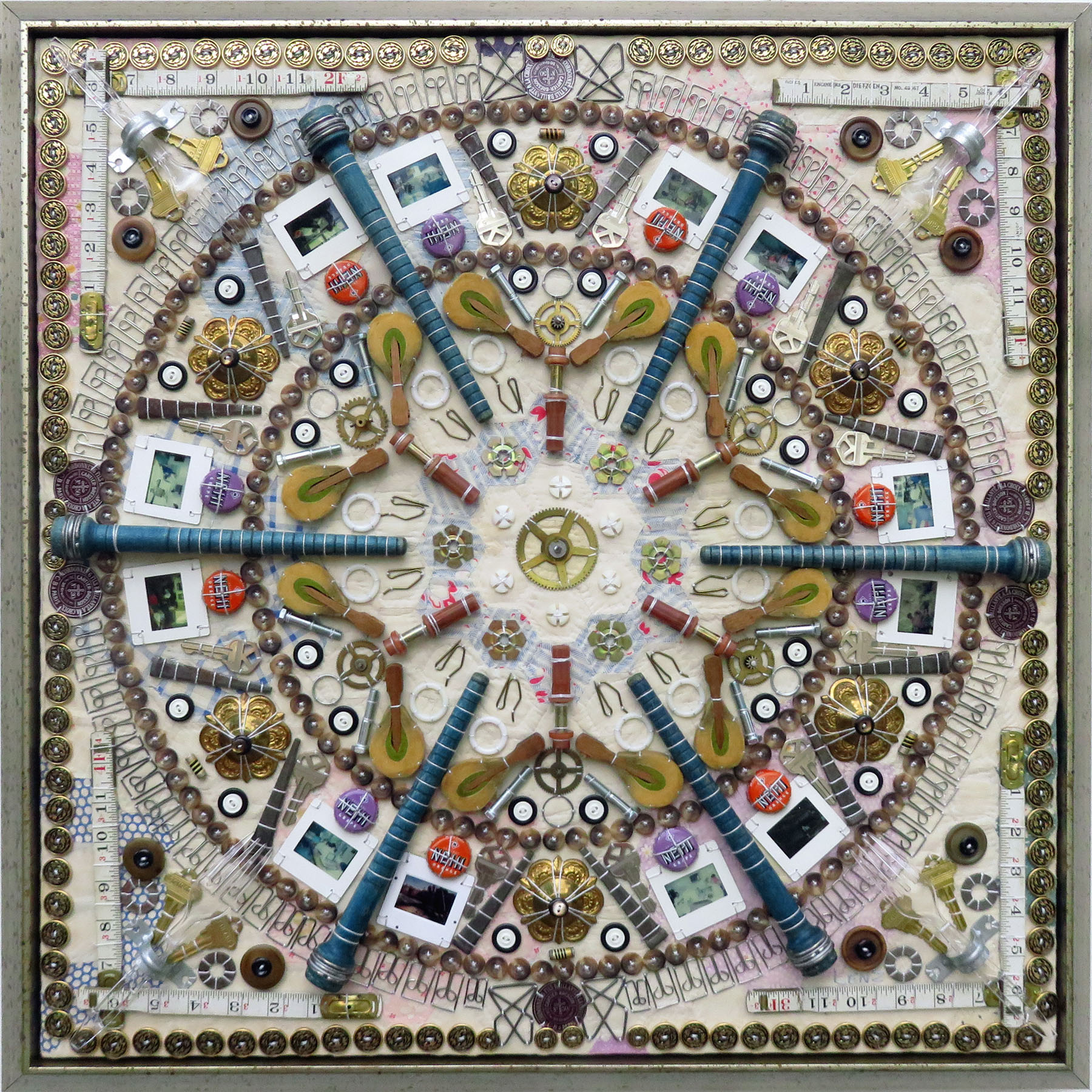
Mandala XV, 2020
Found objects and a section of a vintage quilt [29" x 29"]
Using multiples of seemingly mundane objects puts into perspective the abundance of life and the capacity to keep things as if for a "rainy day". Paper clips, keys, bottle caps, buttons, nails, plastic spoons, and old clock parts are found in most homes. These and so many other, often vintage items are repetitively hand stitched into meditative patterns on sections of old quilts, bringing an extraordinary new life to otherwise everyday things.
Emiko Kuhs
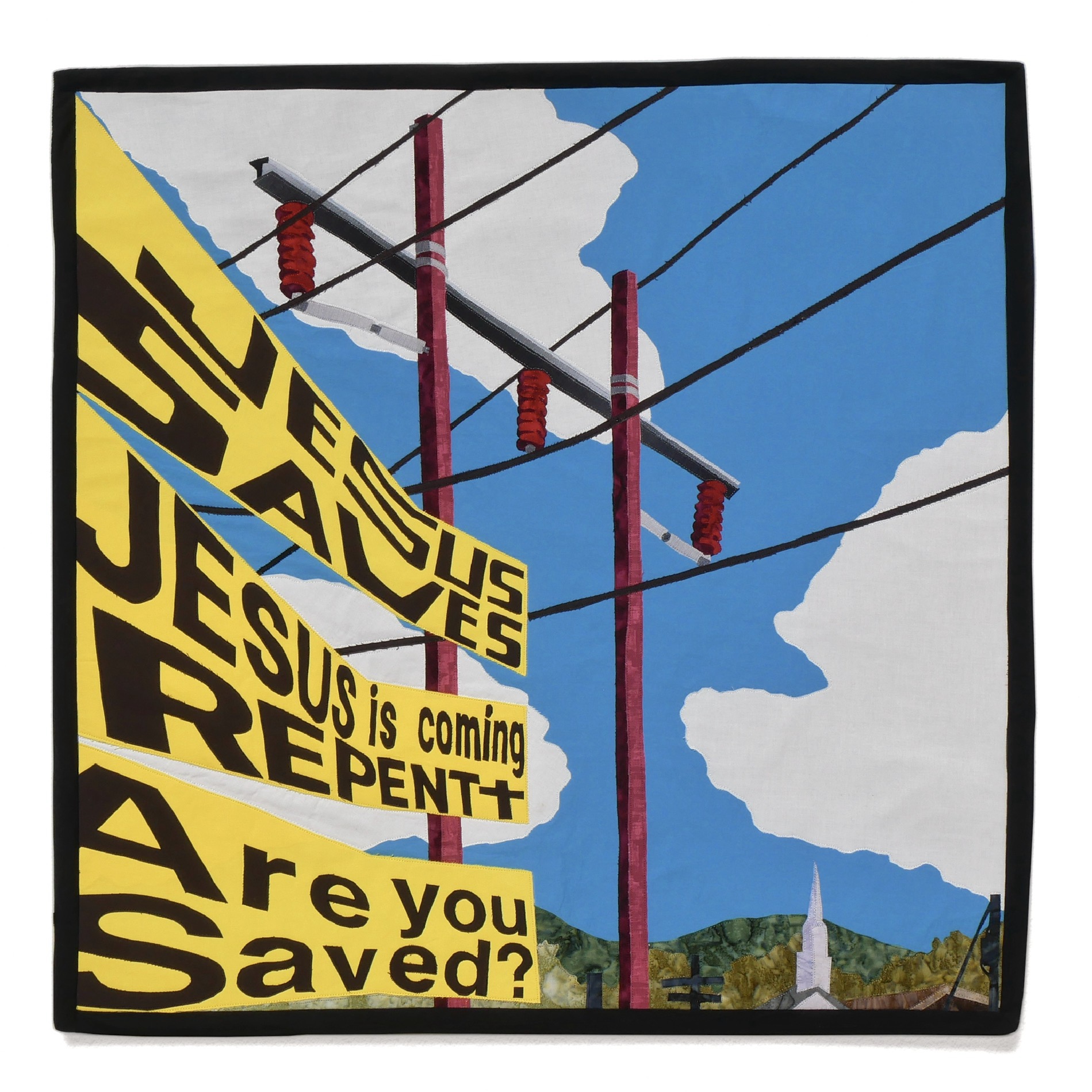
Back Burner, 2025
Cotton Fabric, Polyester Thread, Batting [37" x 37"]
This piece looks at the ever-present climate crisis and its impacts on the power grid. America’s outdated for-profit power grid is experiencing the repercussions of our country's commitment to ecocide, and those living in rural areas are paying the price. If action is not taken to halt our reliance on fossil fuels and change the way power is distributed, the consequences on the country's most vulnerable populations will be insurmountable.
Saberah Malik
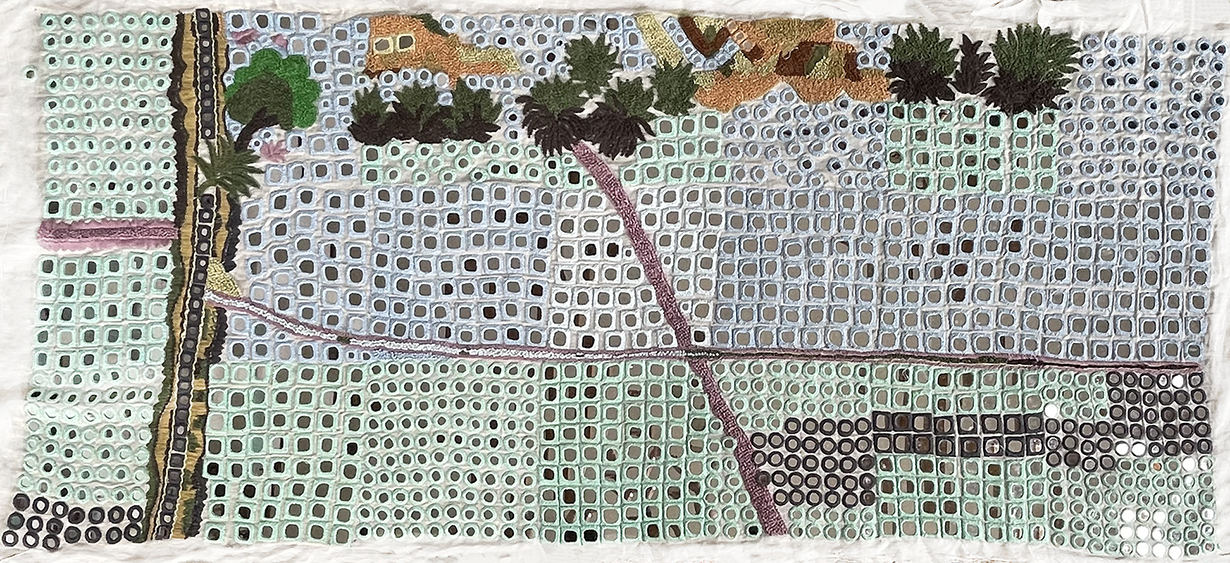
Water, water everywhere — beginning, 2025
Mirrors, embroidery floss [27" x 61"]
When a light source moves along the tapestry face, different areas ripple like sunlight or moonshine on water, creating areas of brightness, of hope. Barely contributing to global warming, Pakistan nevertheless suffers its worst consequences. Seeing themselves reflected in images responding to flood waters, makes the viewer complicit in the crisis, and responsible for remedial mitigation. These works communicate cause and effect to inform industrialized perpetrators about undeserved loss and trauma at the other end of the world. This work was supported in part by a grant from Rhode Island State Council on the Arts, through an appropriation by the Rhode Island General Assembly and a Grant from the National Endowment for the Arts. his work was supported in part by a grant from Rhode Island State Council on the Arts, through an appropriation by the Rhode Island General Assembly and a Grant from the National Endowment for the Arts.
Danielle Shelley
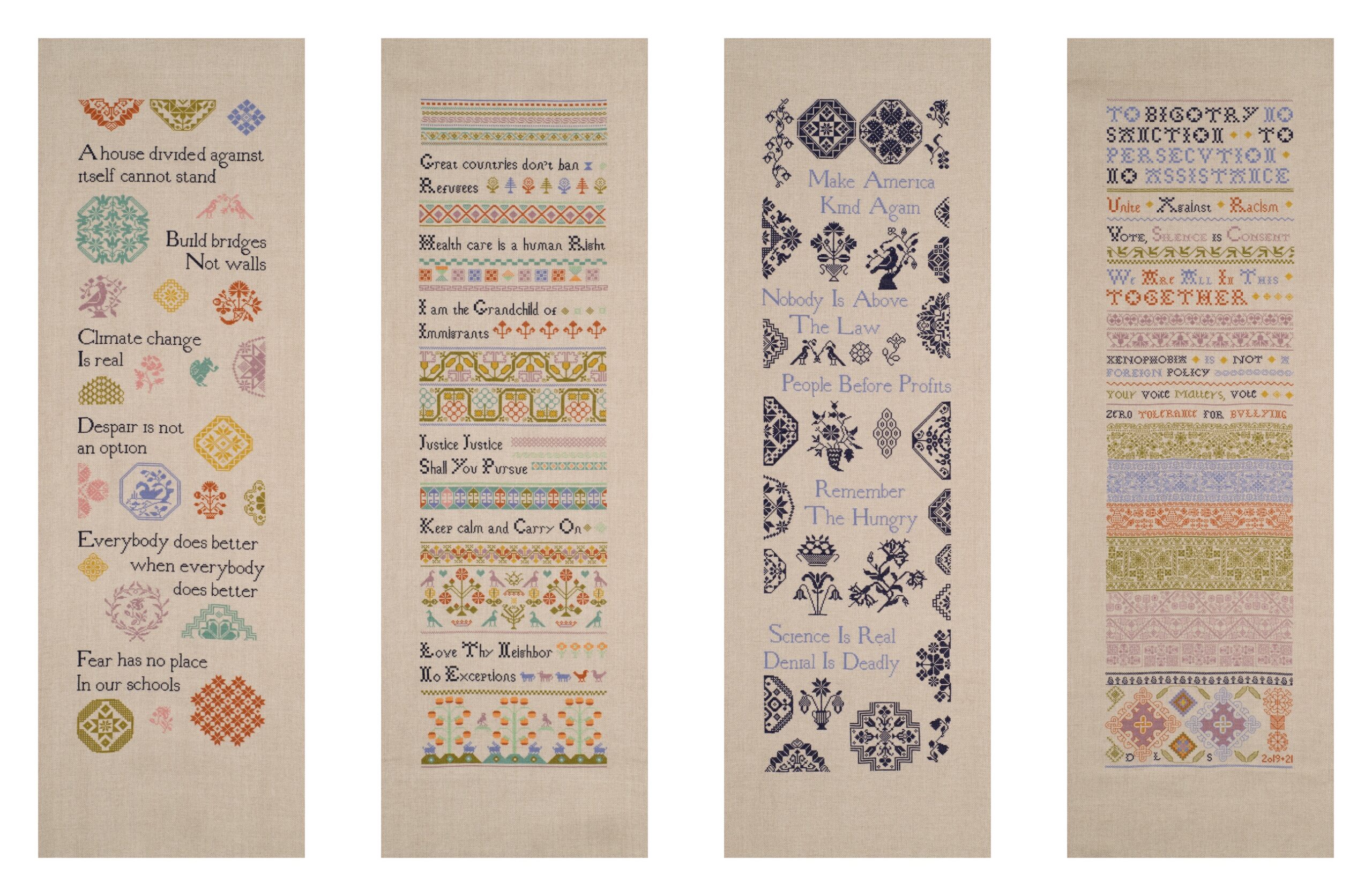
What Unites Us, 2021
Thread, raw linen Aida fabric [60" x 98" x .25"]
This 4-panel stitched work combines contemporary political button slogans with decorative motifs from American and English samplers of the 1690s up to 1820—the period whose ideals and contradictions form the background of our own troubled time. The slogans range from Lincoln and Washington quotes, to the Bible, to topical issues. I chose them not to reflect my own politics but to suggest important ideas Americans might be able to agree on. Panels 1 and 3 use the Quaker sampler style; 2 and 4 use the band sampler style. I hope the ideas in this work remind Americans who see it that both sides in our divided nation share a history and values that can bring us back into community.
Sarah Haskell
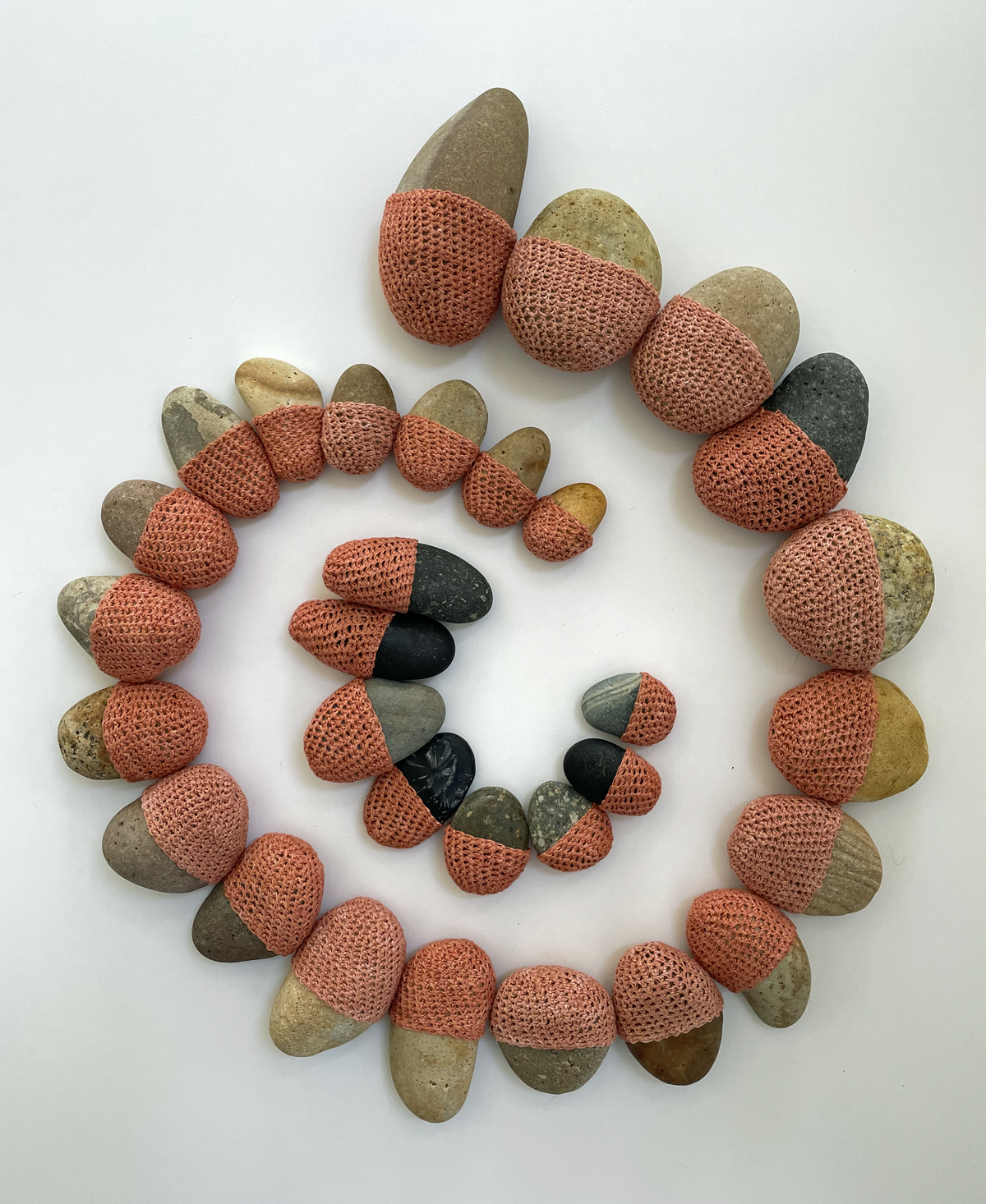
Hold Me Like A Mother:Pink, 2023
Maine beach stones, linen dyed with madder. Crocheted. [Variable]
In the summer of 2021 I began to crochet around Maine beach stones, binding them in a soft covering, held securely as a mother might swaddle her baby. There was something about the solid weight of these tightly wrapped stones that slowly began to ground me, giving me the perception of safety and security.
Jacqueline Mallegni
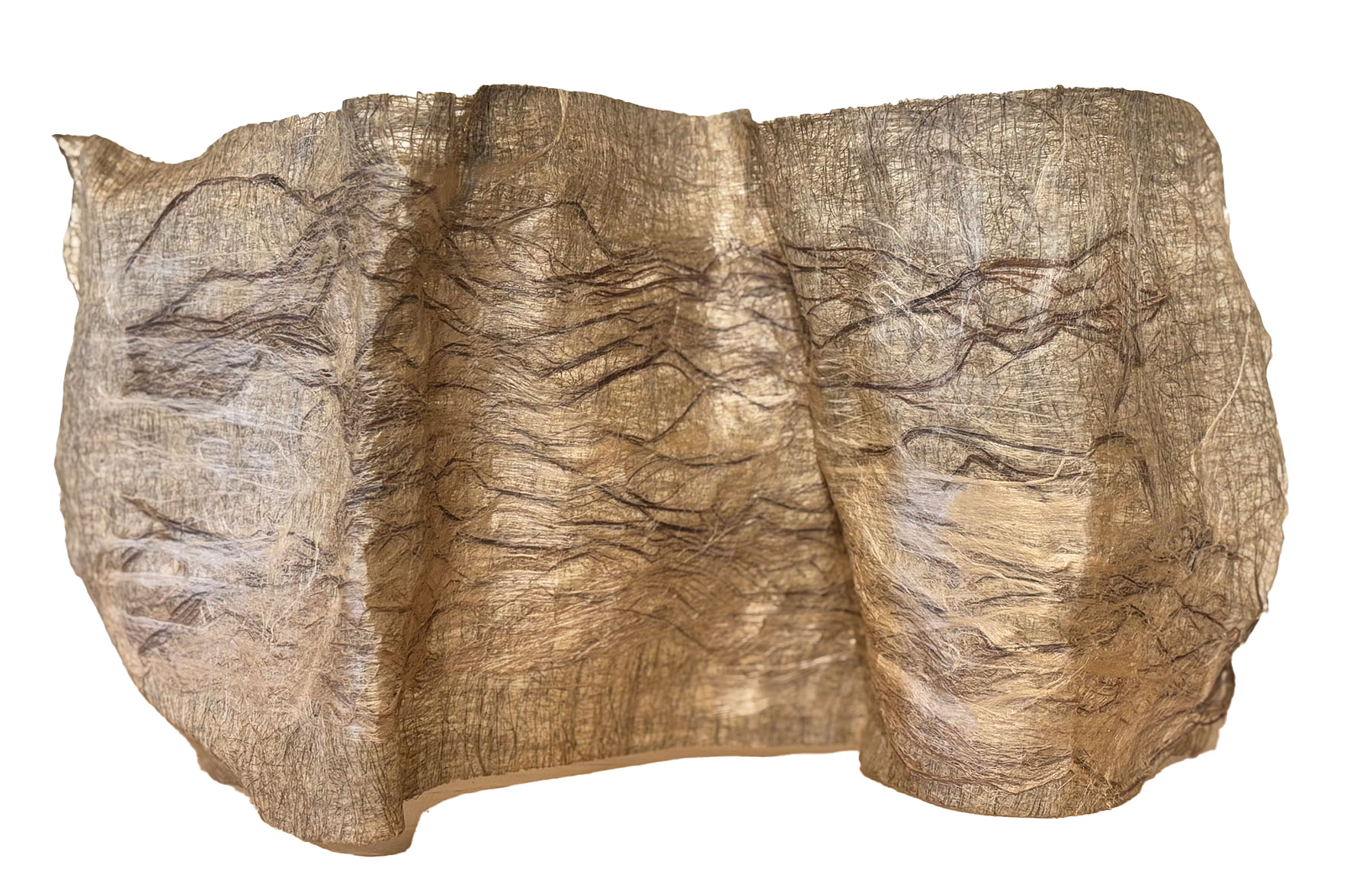
Tide Marks: One, 2025
Handmade flax fiber paper, silk, mulberry fiber [15" x 8" x 4"]
In response to tidal currents and impermanence.
Emily Sullivan Smith
Placeholder for Posterity: Color Portrait of the Forrest Floor, 2017-2019
Hand dyed cotton / bamboo yarn, nylon thread, wood [47” x 26” x 9”]
Emily Sullivan Smith’s work explores the push and pull between the natural world and human behavior. Implicit in the pieces is a balance, harmony and disharmony between the self-sustaining actions found in both the natural and human worlds. How human convenience, privilege and personal choice might push against the benevolent orders of nature. A quote from poet Mary Oliver conjures the sentiment of the work and the relationship of the viewer to it. Oliver writes in her essay, Upstream, “Attention is the beginning of devotion”. Sullivan Smith employs cultural and material knowledge from viewers to realize her ideas. Her work contains undertones of environmental activism, inviting viewers to infer their own relationship to the topics at hand. Individual histories, experiences and beliefs play a critical role in unraveling and tying together meaning. She often uses labor as a material, inviting audiences to take her labor into account as a surrogate for the labors of nature. Several of her pieces have taken years to complete or the assistance of other artists working in community. These efforts are intended to invoke the human understanding of work and time, calling attention to the fragility of the natural world and the dissonance between human and environmental timelines. In her practice, Sullivan Smith pulls from the global effects of humans on the natural world and also from her own small piece of land in suburban Ohio, where she fosters organic gardens, wild flower patches and her own awareness of the effects of her lifestyle on an individual scale. Travel and experiences in a variety of climates and micro environments from Iceland, the Pacific Northwest and the Eastern Sea Board to the mono-culture of her local grocery store all shape and effect her practice. Walking, deep looking and awareness of the effect of her senses on her psyche are the guiding forces behind her work.
Jessie McClanahan
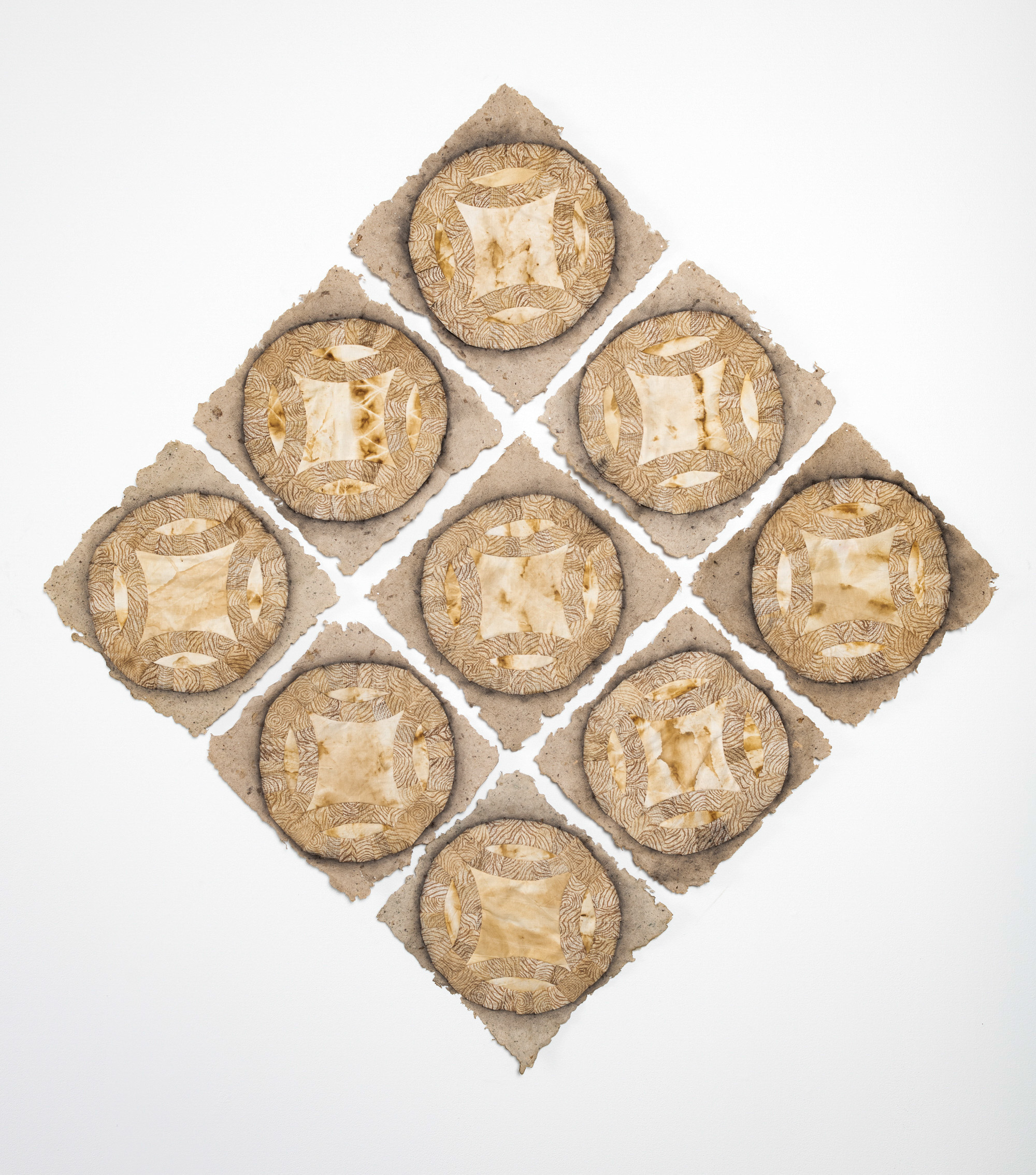
Till Death Do Us Part
American Chestnut paper, pigment & dye, coal pigment, copper [ 7' x 7']
When moving to Syracuse from west Virginia I learned the history of the American Chestnut, in their story and my transplantation outside of Appalachia ; I found kinship with them. With their leaves I created dyes and inks that I adorned the fabric with and used what was left to make paper. I made us a double wedding ring "quilt" of this paper, coal dust, and fabric that tied us together. The quilt was broken up into its individual blocks and has been shared across the globe telling the story of this tree and Appalachia.
Kerstin Katko
Dear Oligarchs, 2025
Wool, viscose, silk [6" x 10"]

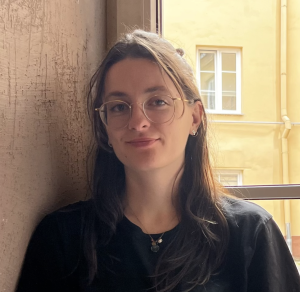 Elena Wise is an independent curator, weaver, and researcher based in rural Germany. She was a 2025 ArtTable Fellow at The Jule Collins Smith Museum of Fine Art at Auburn University, Alabama. She has worked on a number of international textile and heritage projects, including the 18th International Triennial of Textile in Łódź, Poland, Bertas Flachs Handwerks Gilde, Textile Culture Net, and European Heritage Volunteers. She has been awarded grants from the European Crafts Alliance and i-Portunus for her research, and she previously held the position of curatorial trainee at the TextielMuseum in the Netherlands. In her research and curatorial practice, Elena is interested in how artists and heritage institutions engage with traditional craft techniques and cultural memory to address current social issues and imagine alternative futures.