Gabriela Nirino
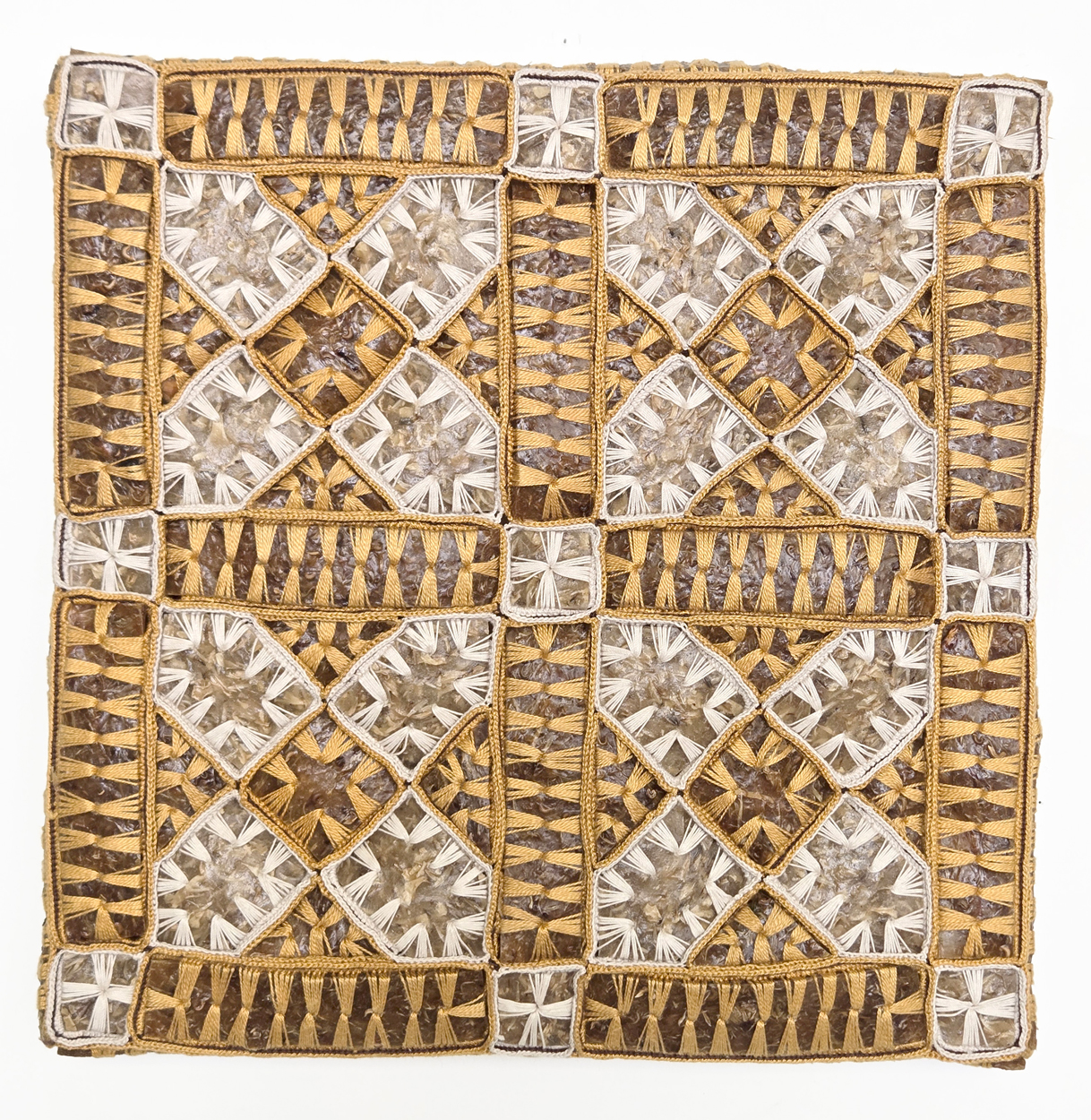
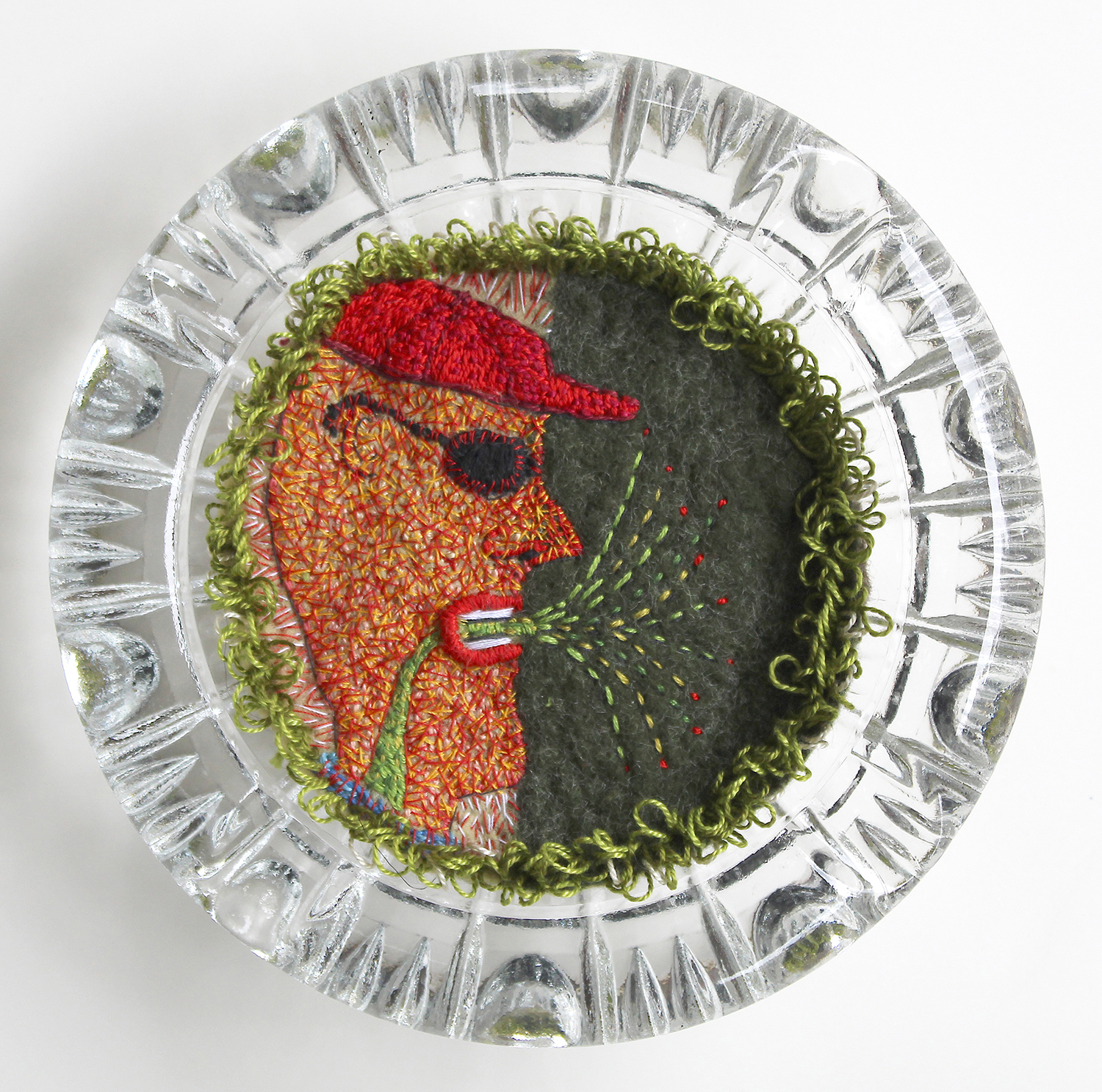
CHALA Project Brooch, 2019
Corn husk stripes, nylon thread, wood, steel. 14 x 7 x 7 cm
Vanessa O'Neal
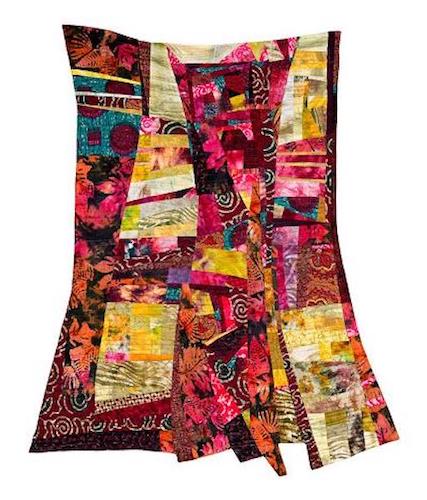
An Array of Design, 2020
African Ankara and Kente Fabric and Natural Gemstones Various
Theda Sandiford
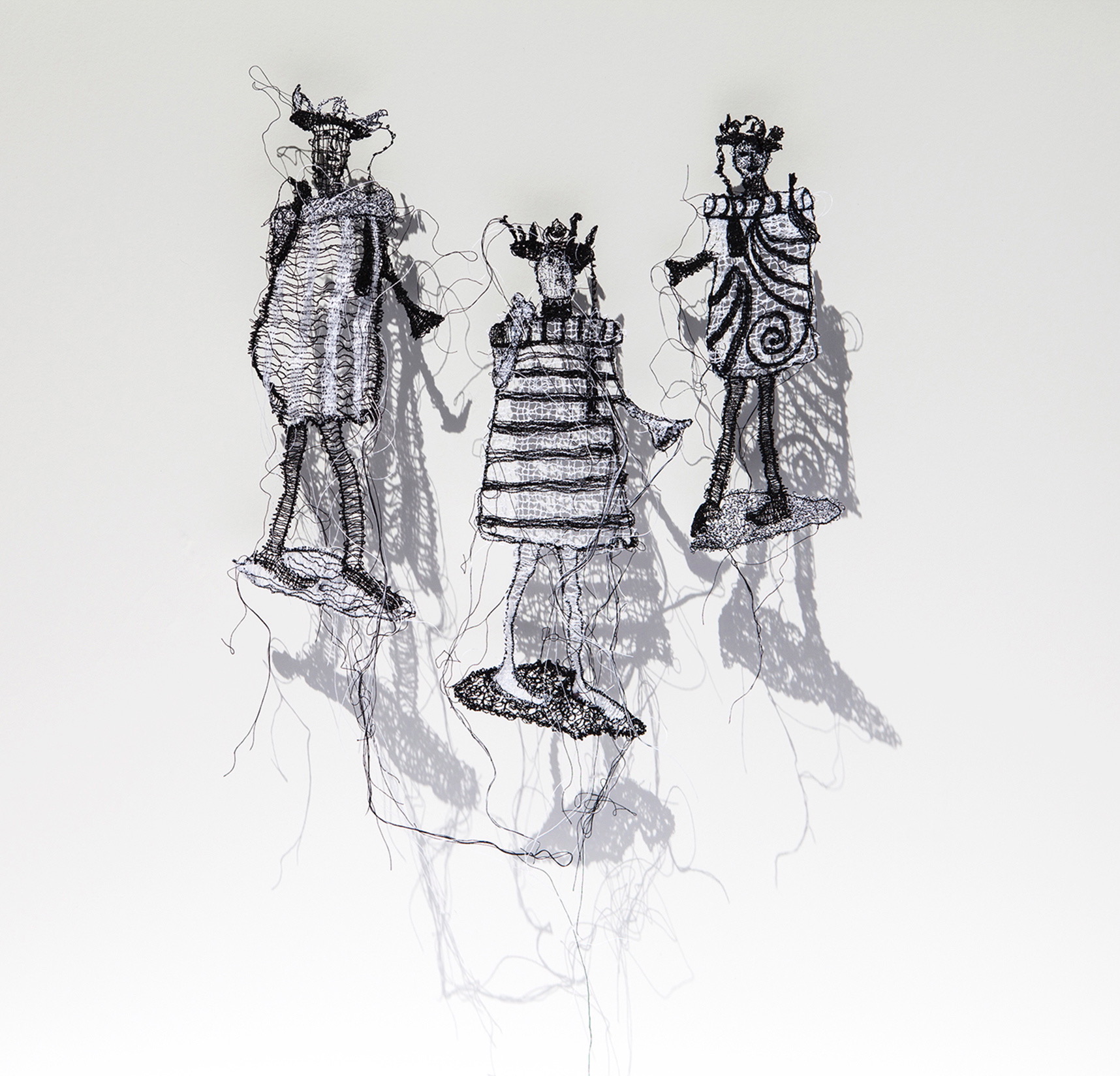
Chutes and Ladders, 2022
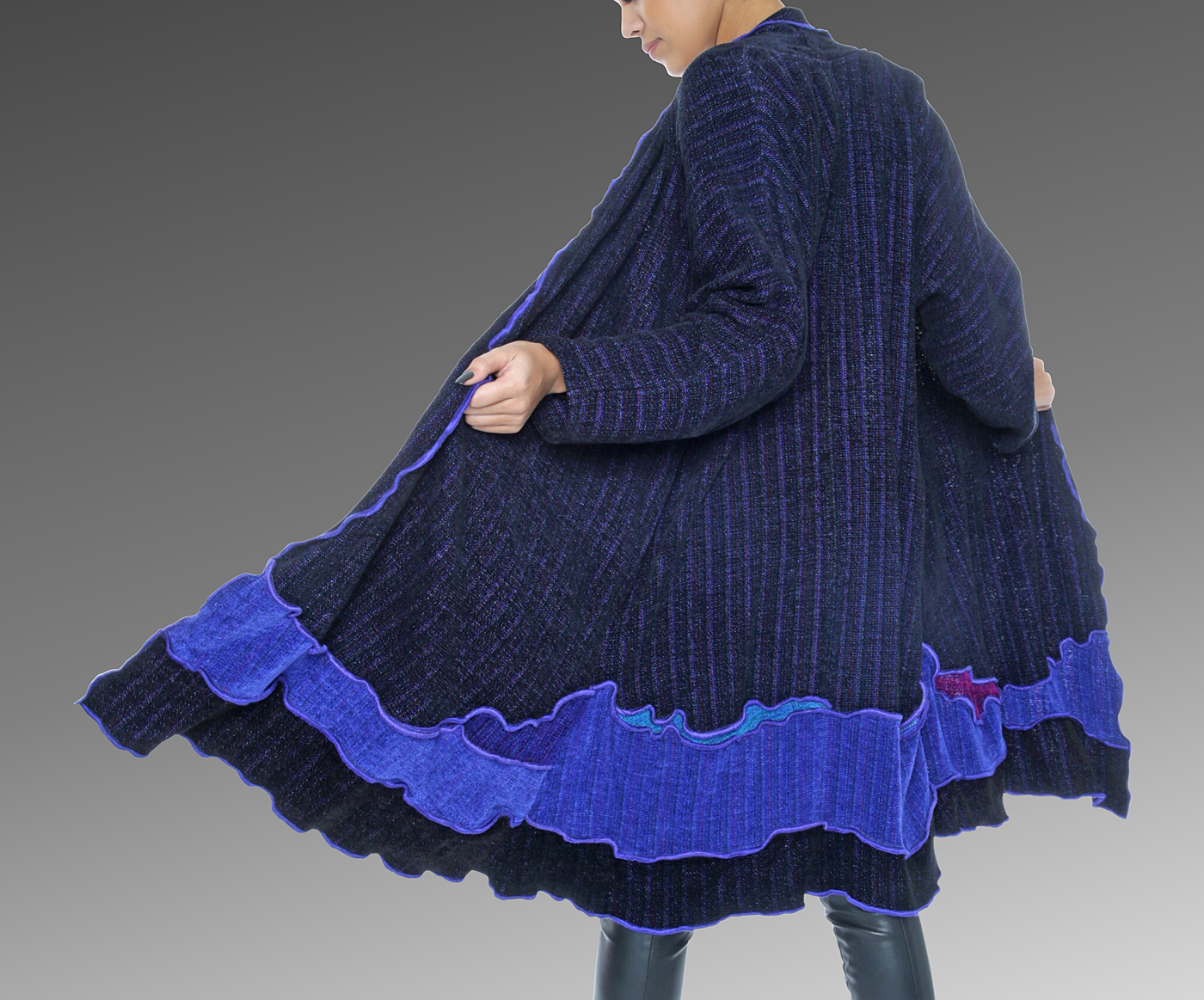
Black metallic yarn, handmade eyelash yarn, black and brown cotton/rayon poly blend fabric, African printed fabric, vintage African fabric wrapped on recycled polyurethane spliced jungle gym rope netting. 79 x 24 x 72 in
Peggy Wiedemann
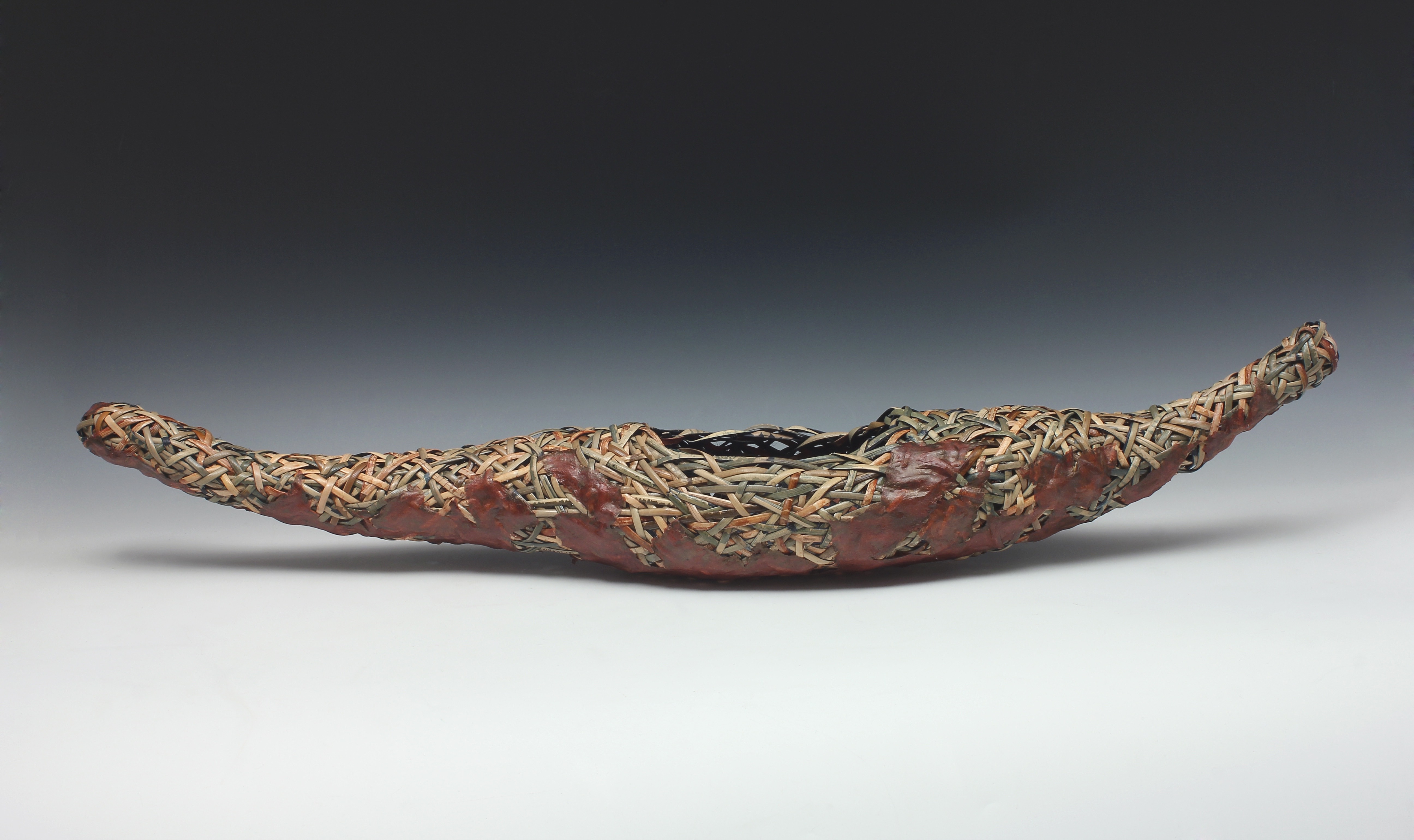
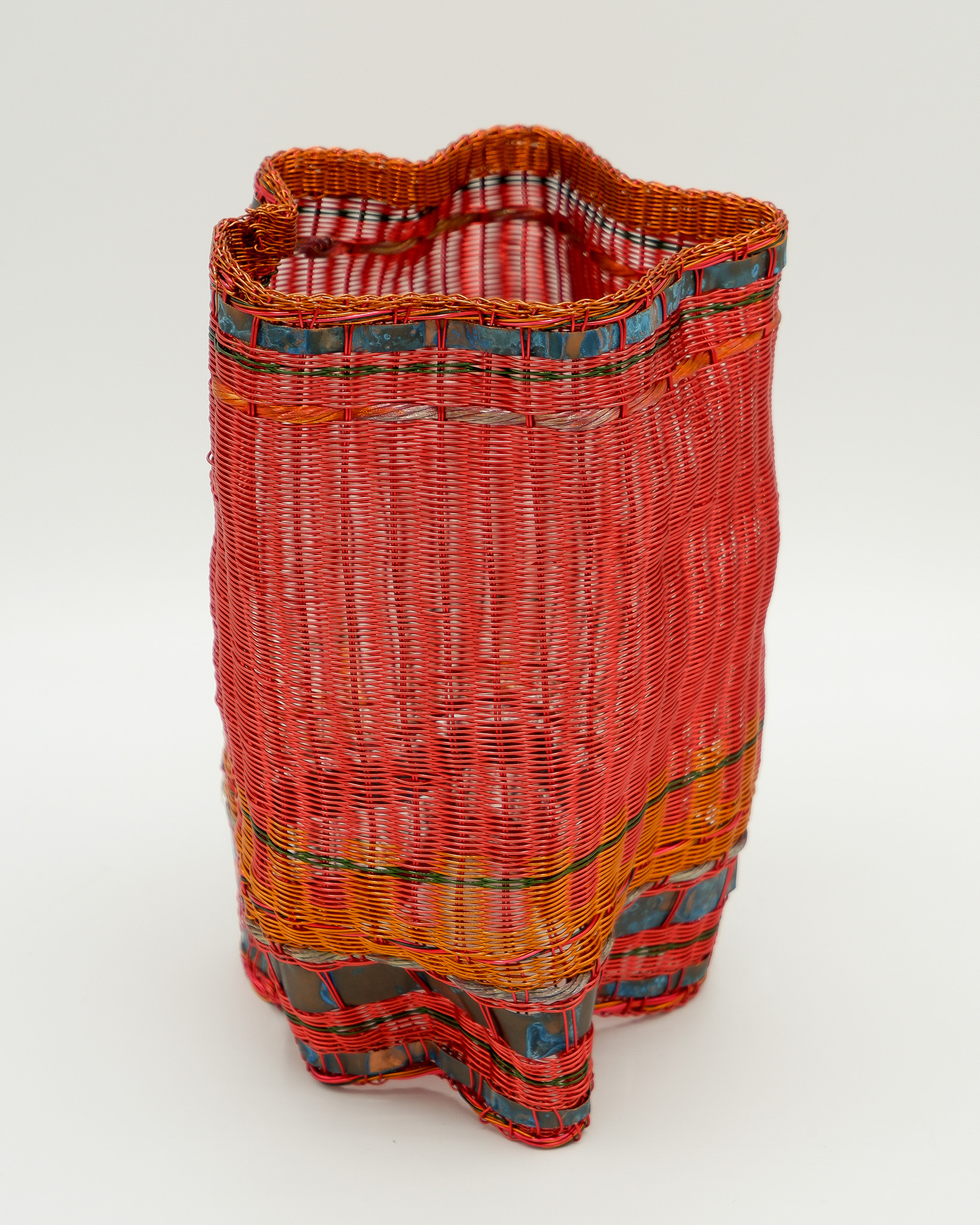
Carnival, 2022
Pine needles, Irish waxed linen, rag cordage from India, bee smoker, wheels, found objects 16" x 21" x 9"
Jo Westfall
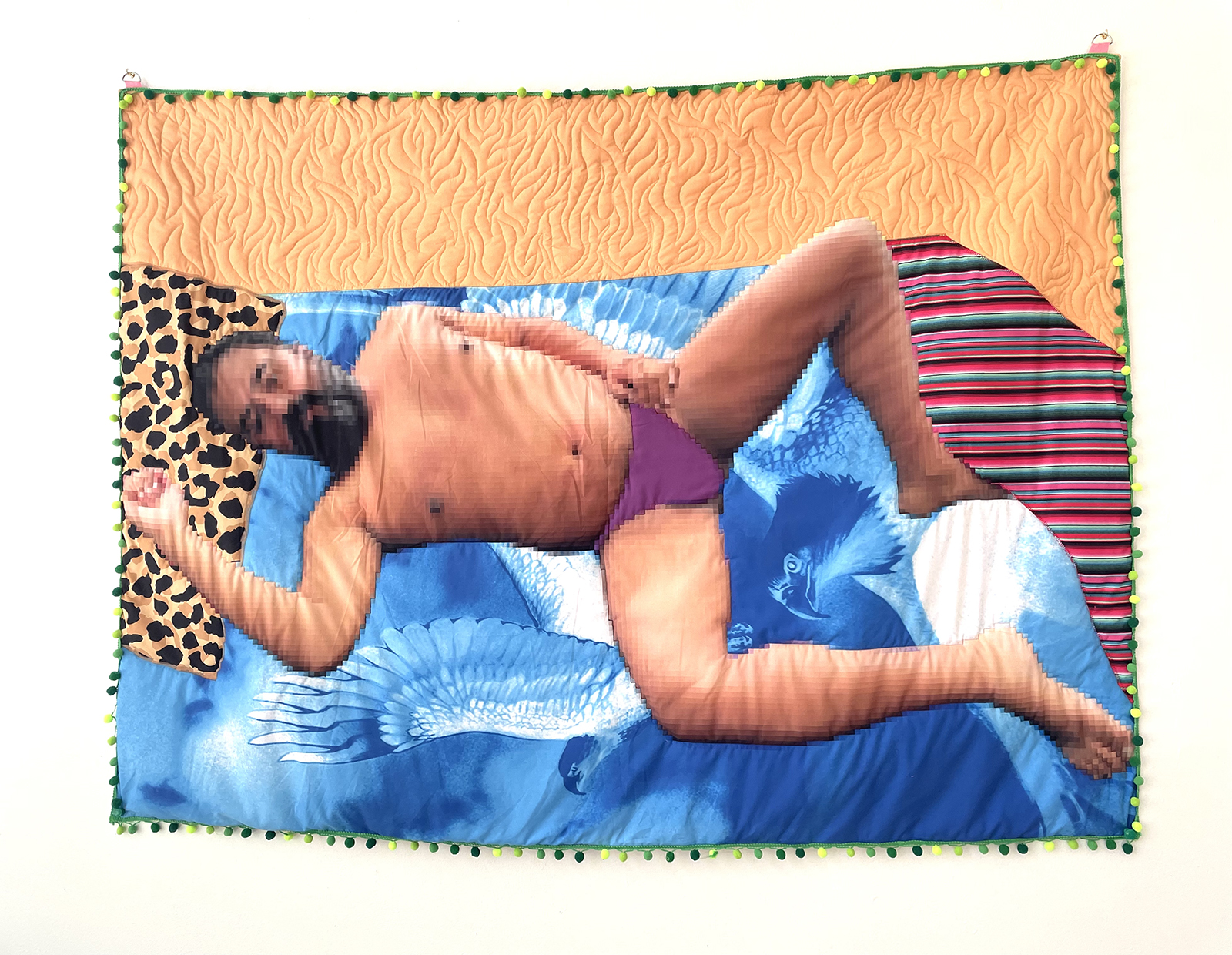
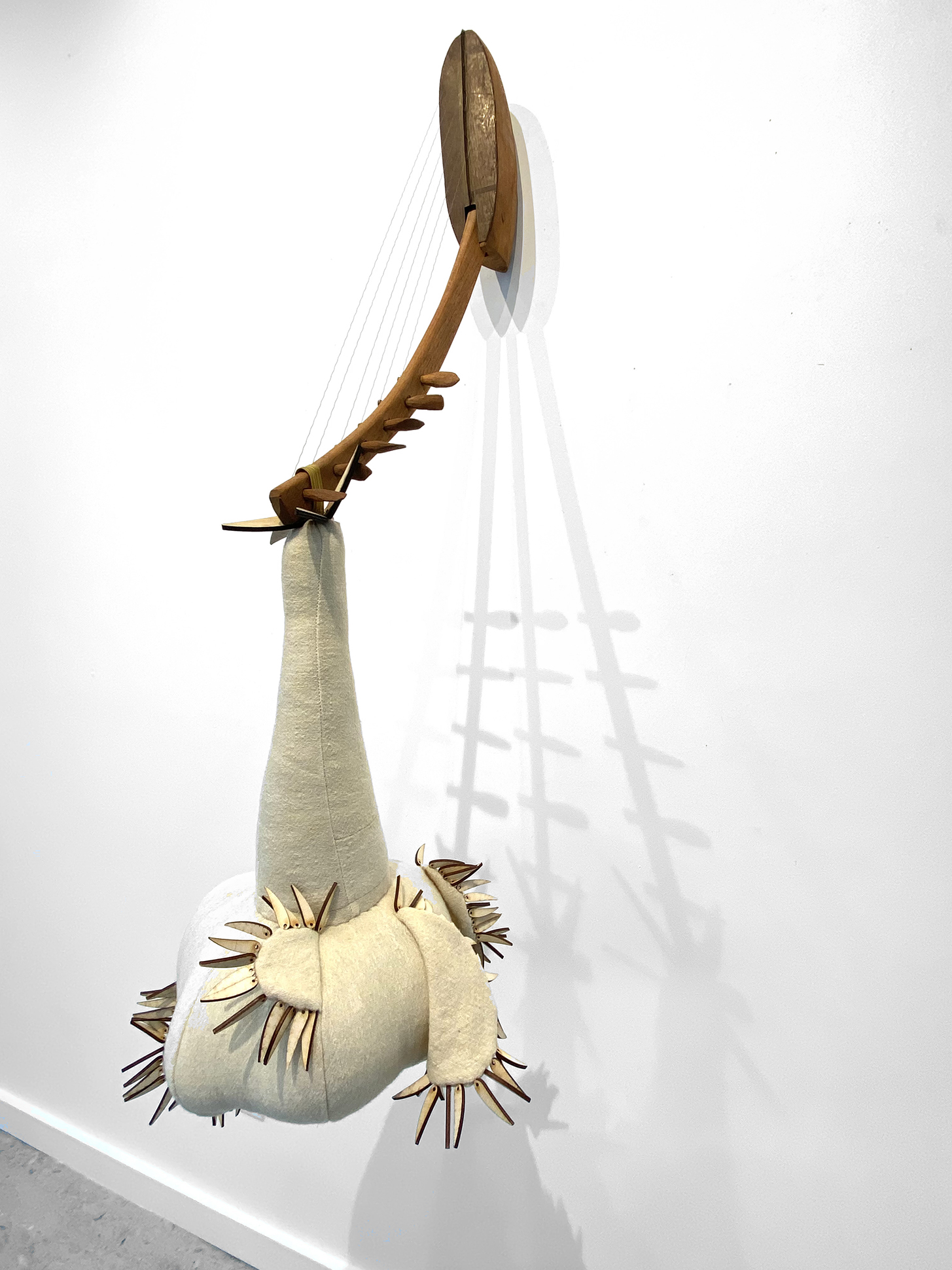
Insulation Theory, 2019
Polyester fleece, repurposed fabric, D-rings 3' x 5' x 2'
Saberah Malik
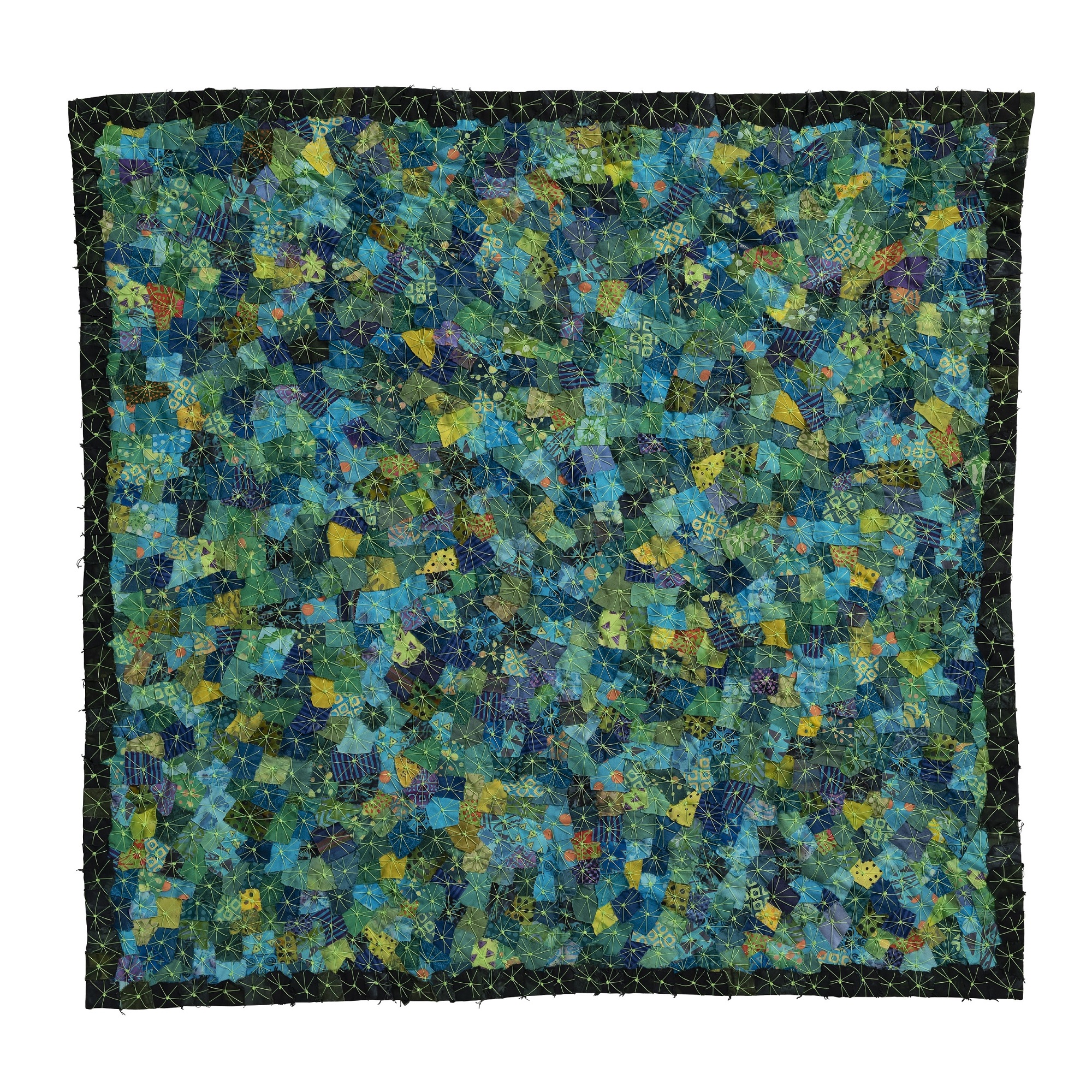
Water, water everywhere – beginning, 2025
Mirrors, embroidery floss 27" H x 61" W
Mary Lou Alexander
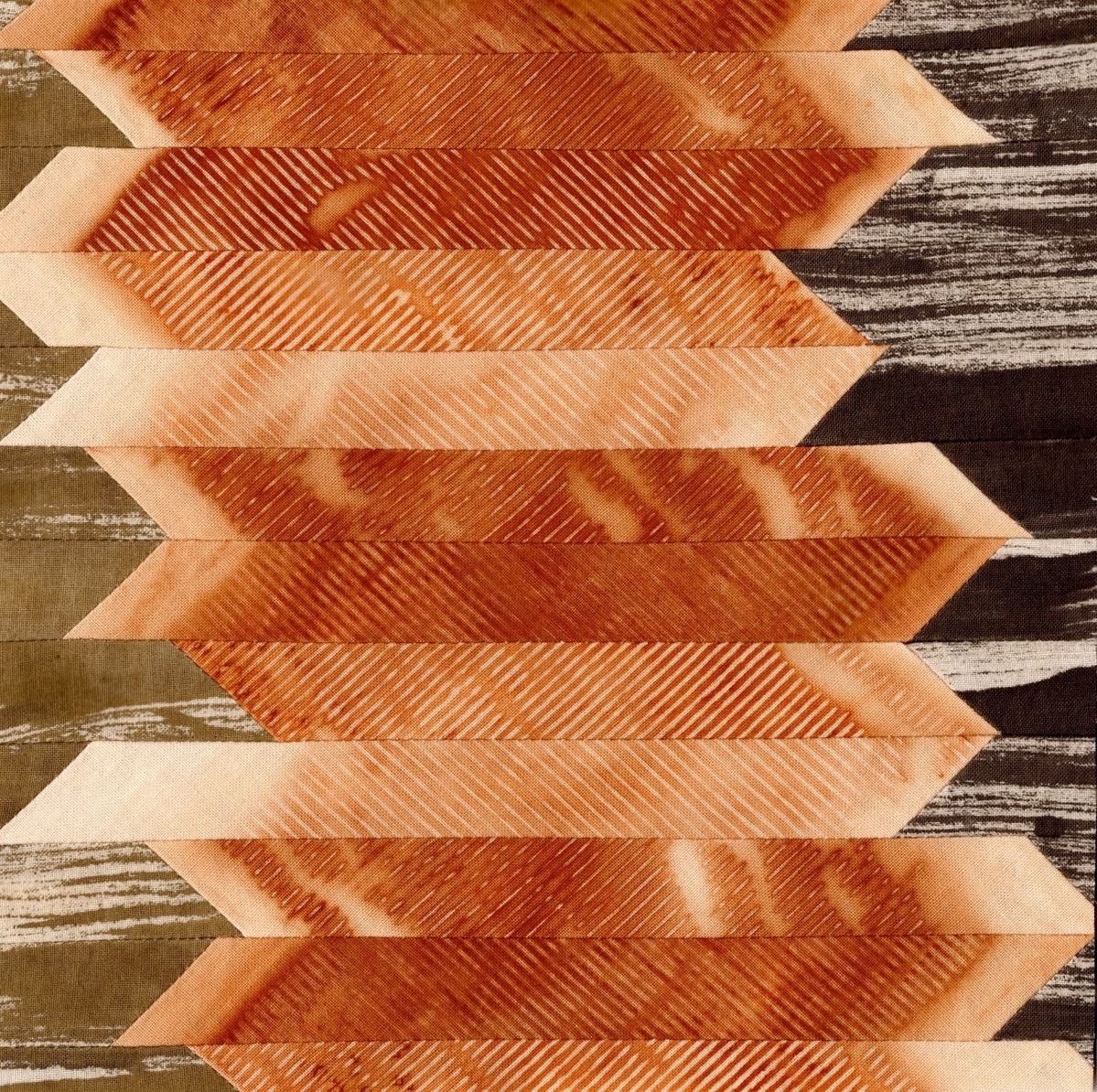
Things Fall Apart #8, 2022
Cotton fabric, fiber reactive dye, wool batting 55"H x 56"W
April DeConick
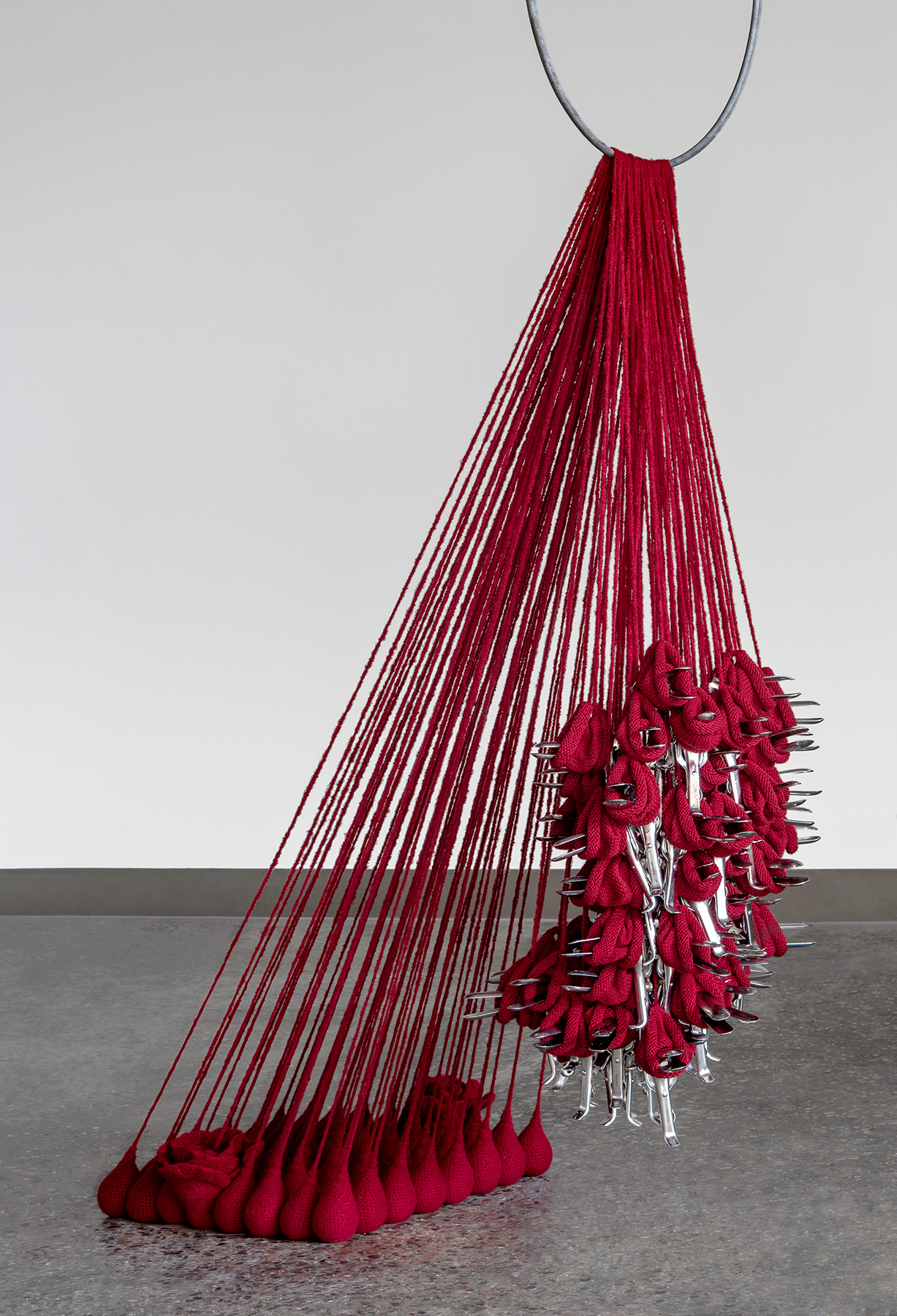
Tears of Our Mother, 2023
Wool, felt, acrylic, linen, ceramic 50" x 60"
Jill Stoll
Weft Extension (Study 1), 2025
recycled cardboard, glue 28.5" x 60"
Deidre Scherer
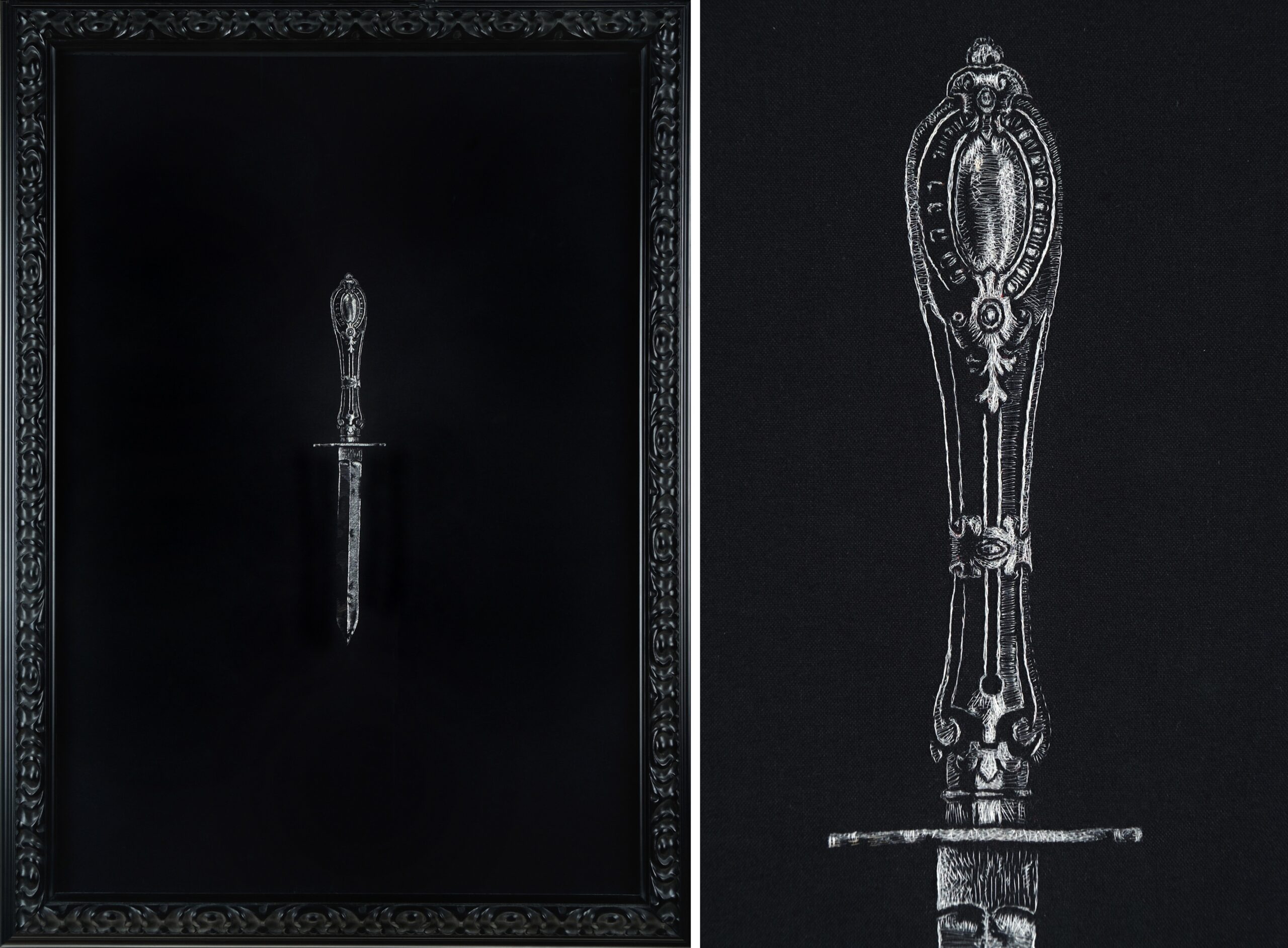
Unfolding Weave, 2017
Ink on matte paper, chine colle 21” height x 16” width x 0.25” depth, frame: 28” height x 23” depth x 1.5” depth
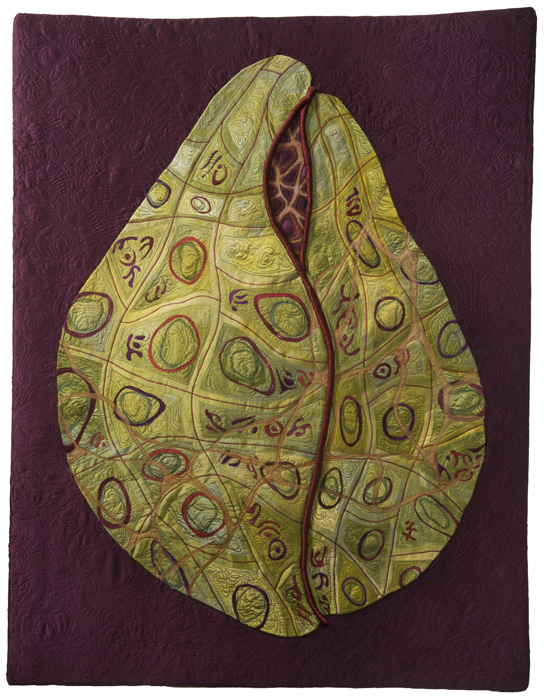
Lori Polak
, 2019
Hand-dyed silk and merino wool. 50"x60"
Rachael Mayer
I Know It’s Stupid Not to Be On My Own Side (Gentle Opportunities), 2023
Cotton fabric, recycled stuffing, wool felt 33in x 24in x 1.25in
Caren Garfen
MORAL COMPASS, 2024
Cotton, silk threads, 42 compasses. Hand stitch 65cm x 45cm x 6cm
Katayoun Bahrami
The Mirror, 2020
Cotton Yarn, Canvas, Acrylic Paint, Fabric Marker 36”x 48”
Adrienne Sloane
The Unraveling, 2017
cotton knit, poly & cotton fabrics Height: 73” Width: 38” ” Depth: 8”
Paulina Constancia
Beach Bums, 1996
acrylic and dimensional paints, buttons, paper clips
on a pre-framed canvas 15 x 15 inches
Sheary Clough Suiter
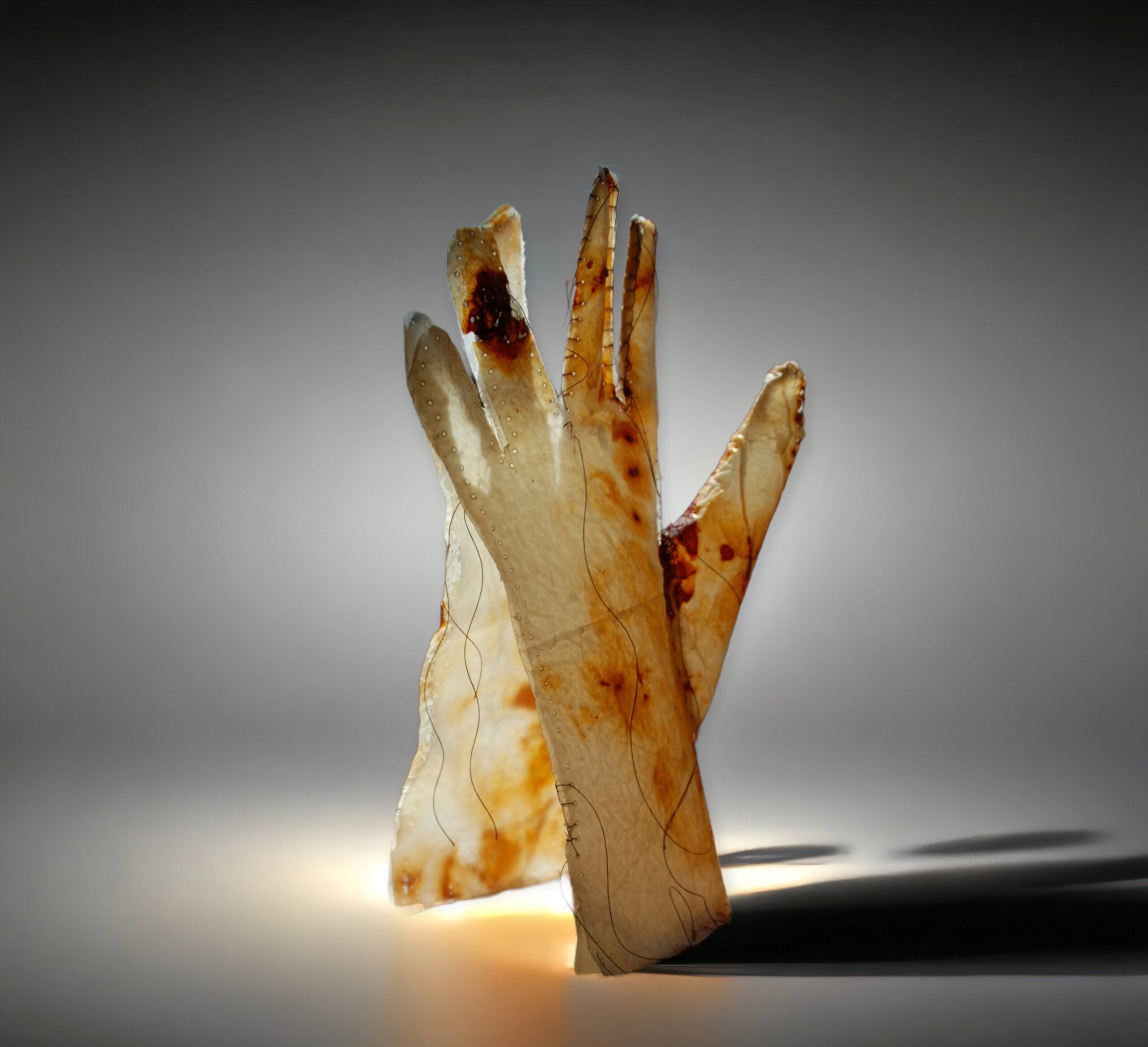
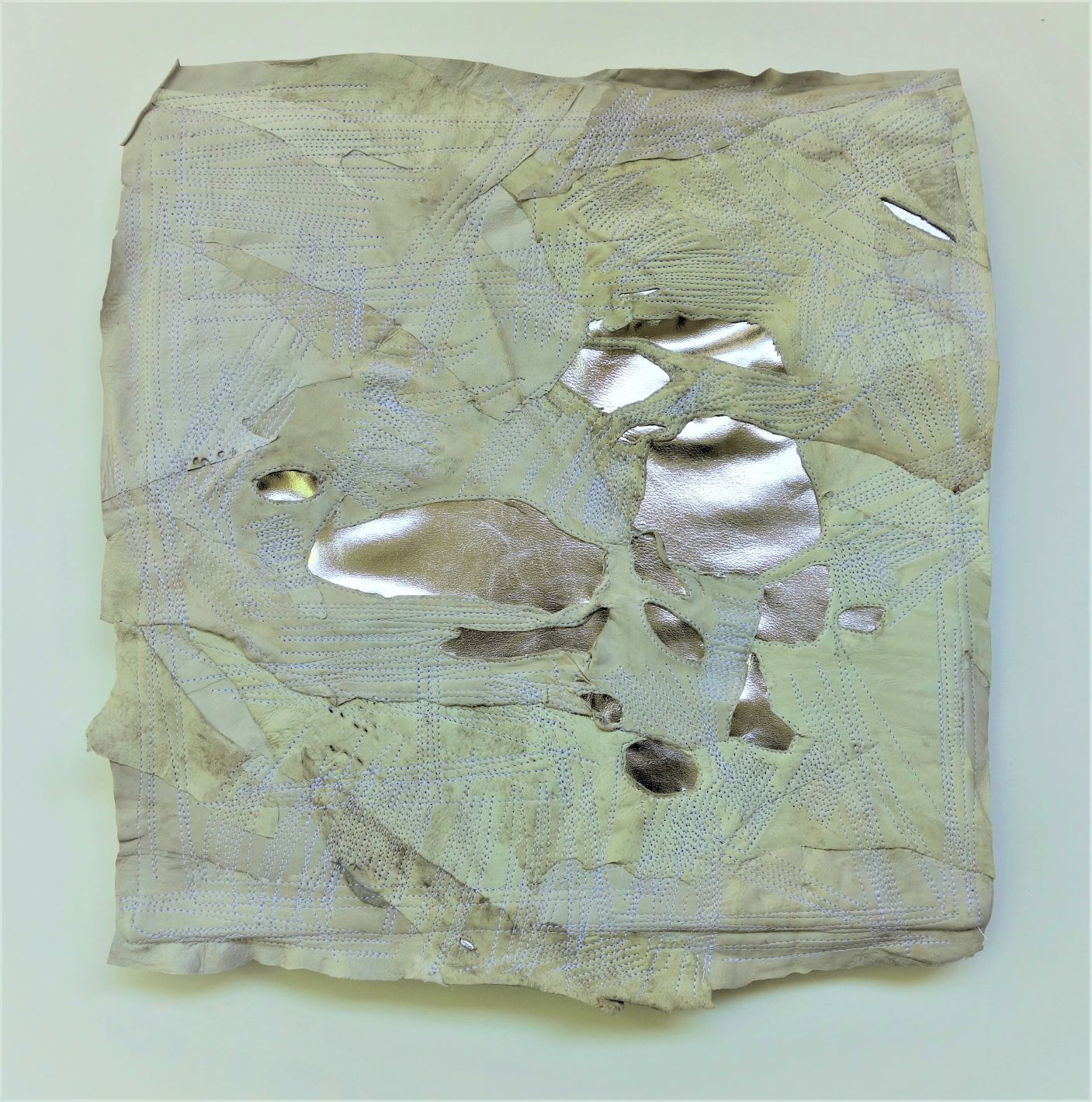
Mending Mother Earth, Vintage cotton tea towel buried in Mother Earth for seven months, stained and decomposed via soil, rain, rodents, and rusty objects. Suturing of the cloth, sticks, and dirt clods that were embedded after “harvesting,” utilizing a reclaimed eco-dyed crocheted doily, various reclaimed textile scraps, and hand stitching with cotton, linen, and silk threads., 2022 – 2023
Vintage cotton tea towel buried in Mother Earth for seven months, stained and decomposed via soil, rain, rodents, and rusty objects. Suturing of the cloth, sticks, and dirt clods that were embedded after “harvesting,” utilizing a reclaimed eco-dyed crocheted doily, various reclaimed textile scraps, and hand stitching with cotton, linen, and silk threads. 25 x 25 x 1 inches
Sheary Clough Suiter
Mending Mother Earth, Vintage cotton tea towel buried in Mother Earth for seven months, stained and decomposed via soil, rain, rodents, and rusty objects. Suturing of the cloth, sticks, and dirt clods that were embedded after “harvesting,” utilizing a reclaimed eco-dyed crocheted doily, various reclaimed textile scraps, and hand stitching with cotton, linen, and silk threads., 2022 – 2023
Eileen Braun
Knit Paper Vessel, 2024
Factory discard dressmaker pattern tissue paper innovative, self-directed explorations of thoughtfully selected materials—porcelain, reed, rubber, encaustic wax, aluminum screen, fiber, reclaimed post-consumer discard, and foil gilding—used in unconventional applications. She challenges the boundaries of what should be included in an artist’s toolkit, reimagining materials for her new purposes. Her latest work involves knitting dressmaker’s pattern tissue accented with gilding foil, which she transforms into large tapestries and vessels with undulating, intricate surfaces. Recently, Ms. Braun gained international recognition for combining the contrasting materials of rattan reed—a traditional basket-making material—and rubber, commonly found in construction. The unexpected fusion of these elements results in sculptures that exude personality and movement. Since 2019, Ms. Braun has been exploring the potential of the pattern tissue, initially using it to texture surfaces and encase her reed forms. By 2023, she embraced the material as her primary medium, knitting fragile 4-inch-wide strips with no tool other than her fingers, that in close inspection reveal the tissue’s inked patterns and instructions. By juxtaposing the undervalued mundane factory waste tissue with precious gold gilding foil, Braun challenges social norms, traditional notions of value and materiality, undervalued labor in the sewing industry, and the preciousness of gold. In these works, the tissue gains new life and value. The large scale of these knitted constructs twists its use from unseen to the forefront. Ms. Braun sees in the finished draped gullies and peaks a reference to natural